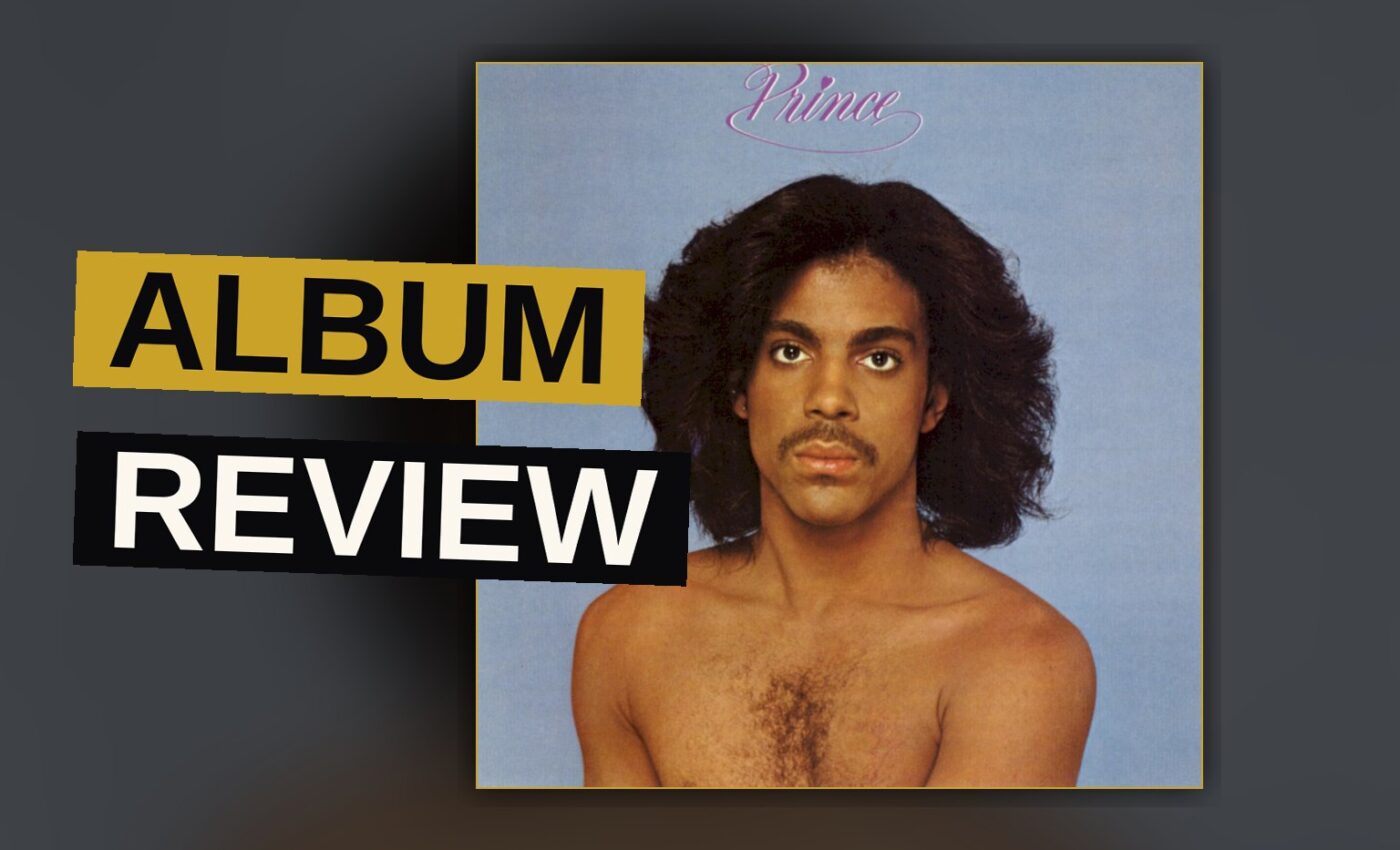
Prince’s second album is the sound of an artist finding himself in real time. Prince (1979) is the record where the musician stops being a promising debutant and starts being the singular force he would become. It is a nine-track, 40-minute statement of intent: funk, rock, new wave, and balladry all jammed together, held in place by sheer confidence and a voice that could go from a whisper to a shriek without warning.
The album is trying to do several things at once. It wants to prove For You was not a fluke. It wants to show range, to demonstrate that this young artist could write a pop single, a rock anthem, and a slow jam with equal authority. And it wants to make you dance. It succeeds on all three counts, though not without some bloat in the middle. The sequencing is the album’s biggest flaw: a run of ballads in the back half stalls the momentum that the opening tracks build so carefully.
Opening Hit: “I Wanna Be Your Lover”
The album opens with its biggest hit, and it remains the perfect introduction. “I Wanna Be Your Lover” is a two-part song: a sparse, funky verse where Prince almost raps, followed by a soaring chorus that shows off his falsetto. It is a pop song built like a funk track, and it announced him as a radio presence. The track runs 5:50, but it never drags. It is the sound of someone who knows exactly what he is doing.
The Funk Run Continues
“Why You Wanna Treat Me So Bad?” keeps the energy high, a guitar-driven funk number with a hook that bites. It is more aggressive than the opener, with a riff that sounds like it could have come from a rock band, but the rhythm section keeps it firmly in the funk lane. It is a complaint dressed as a party, and it works because Prince sells the frustration with real conviction.
“Sexy Dancer” is the purest funk on the record. The bassline is the star here, a slippery, insistent groove that locks in and does not let go. Prince’s vocals are more processed, more distant, which fits the track’s hypnotic feel. It is the song most clearly built for the dancefloor, and it is the best example of the album’s forward-looking production. The first three tracks are a flawless run, a statement of purpose that few artists could match.
Ballads in the Middle
Then the album slows down, and it stays slow for a while. “When We’re Dancing Close and Slow” is a tender, piano-led ballad that shows off Prince’s romantic side. It is well-crafted, with a gentle melody and a vocal performance that is genuinely affecting. But placed right after the funk run, it is a gear shift that takes the listener out of the groove.
“With You” is the weakest of the ballads. It is pleasant, with a light feel, but it lacks the drama and the melodic hooks of the surrounding tracks. It feels like filler, a song that exists to pad the running time rather than to add something new. “Still Waiting” is better, a ballad that builds to a stronger chorus, but by this point the album has lost its momentum. Three ballads in a row is a structural error, and it is the reason the record’s second half never matches its first.
Rock Turn: “Bambi”
“Bambi” is the album’s curveball. It is a hard rock song, with a distorted guitar riff and a vocal that is more aggressive, more raw, than anything else on the record. The lyrics are about a woman who loves other women, and Prince is not subtle about his disapproval, but the music is the point. It is a shock of energy after the ballad stretch, a reminder that this artist could go anywhere. It is not the album’s best song, but it is its most surprising, and it proves that Prince was not going to be boxed in by genre expectations.
Closing Pair: “I Feel for You” and “It’s Gonna Be Lonely”
“I Feel for You” is the hidden gem. It is a short, punchy funk-pop track with a stuttering synth line that would later become a massive hit for another artist. Here, it is leaner, more minimal, and it works as a palate cleanser before the finale. It is the catchiest song on the back half, and it shows that Prince could still write a hook even after the album’s mid-section sag.
“It’s Gonna Be Lonely” closes the record on a somber note. It is a slow, aching ballad, with Prince’s vocal pushed to the front and the arrangement kept sparse. It is a strong song on its own terms, but as a closer, it leaves the listener in a quiet, reflective place rather than a triumphant one. The album ends, in other words, the way its middle section behaves: thoughtful, but not exciting.
Comparing the Halves
The comparison between the album’s two halves is stark. The opening run of “I Wanna Be Your Lover,” “Why You Wanna Treat Me So Bad?,” and “Sexy Dancer” is as good as anything Prince would release in the next few years. The middle of the record loses the thread, and the back half never fully recovers, even with “Bambi” and “I Feel for You” providing jolts of energy.
| Track | Role on the Album | Verdict |
|---|---|---|
| “I Wanna Be Your Lover” | Opening hit, pop-funk statement | Essential |
| “Why You Wanna Treat Me So Bad?” | Guitar-driven funk, aggressive energy | Strong |
| “Sexy Dancer” | Purest groove, hypnotic bassline | Best of the funk run |
| “When We’re Dancing Close and Slow” | First ballad, tender piano-led | Good, but stalls the pace |
| “With You” | Light filler | Weakest track |
| “Still Waiting” | Ballad with a stronger chorus | Better than “With You,” still slow |
| “Bambi” | Hard rock shock, raw guitar | Surprising and essential |
| “I Feel for You” | Short funk-pop hook | Hidden gem |
| “It’s Gonna Be Lonely” | Sparse closing ballad | Strong, but ends on a quiet note |
The Verdict
Prince is a major step forward from For You. The songwriting is sharper, the production is more confident, and the range is genuinely impressive. The problem is the pacing. The first three tracks are as good as anything Prince would release in the next few years. The middle of the record loses the thread, and the back half never fully recovers, even with “Bambi” and “I Feel for You” providing jolts of energy.
On For You, Prince was still figuring out what his sound could be. On Prince, he knows. The ballads are the cost of that ambition; they show a young artist trying to prove he can do everything, even when doing everything means slowing down the record’s momentum. But the highs are high enough to outweigh the lows.
This is the true genesis of Prince’s signature sound, as the critics noted at the time and as the record itself proves. The funk, the rock, the falsetto, the one-man-band production — it is all here, in embryonic but fully recognizable form. The flaws are real, but they are the flaws of reach, not of failure.
It is a record that deserves its reputation, not just as a stepping stone but as a work that stands on its own. The ballads drag, but they do not ruin. The hits hit. The experiments land more often than they miss.
The album is a promise kept. It is the sound of a young artist delivering on his ambition. That is rare, and it is worth celebrating.
Get the Notebook.
The day's best stories and every fresh verdict, in plain English, in your inbox by seven. One email a day, no more.
- I Wanna Be Your Lover5:50
- Why You Wanna Treat Me So Bad?3:49
- Sexy Dancer4:19
- When We’re Dancing Close and Slow5:24
- With You4:00
- Bambi4:23
- Still Waiting4:15
- I Feel for You3:24
- It’s Gonna Be Lonely5:28