KEY FACTS BOX
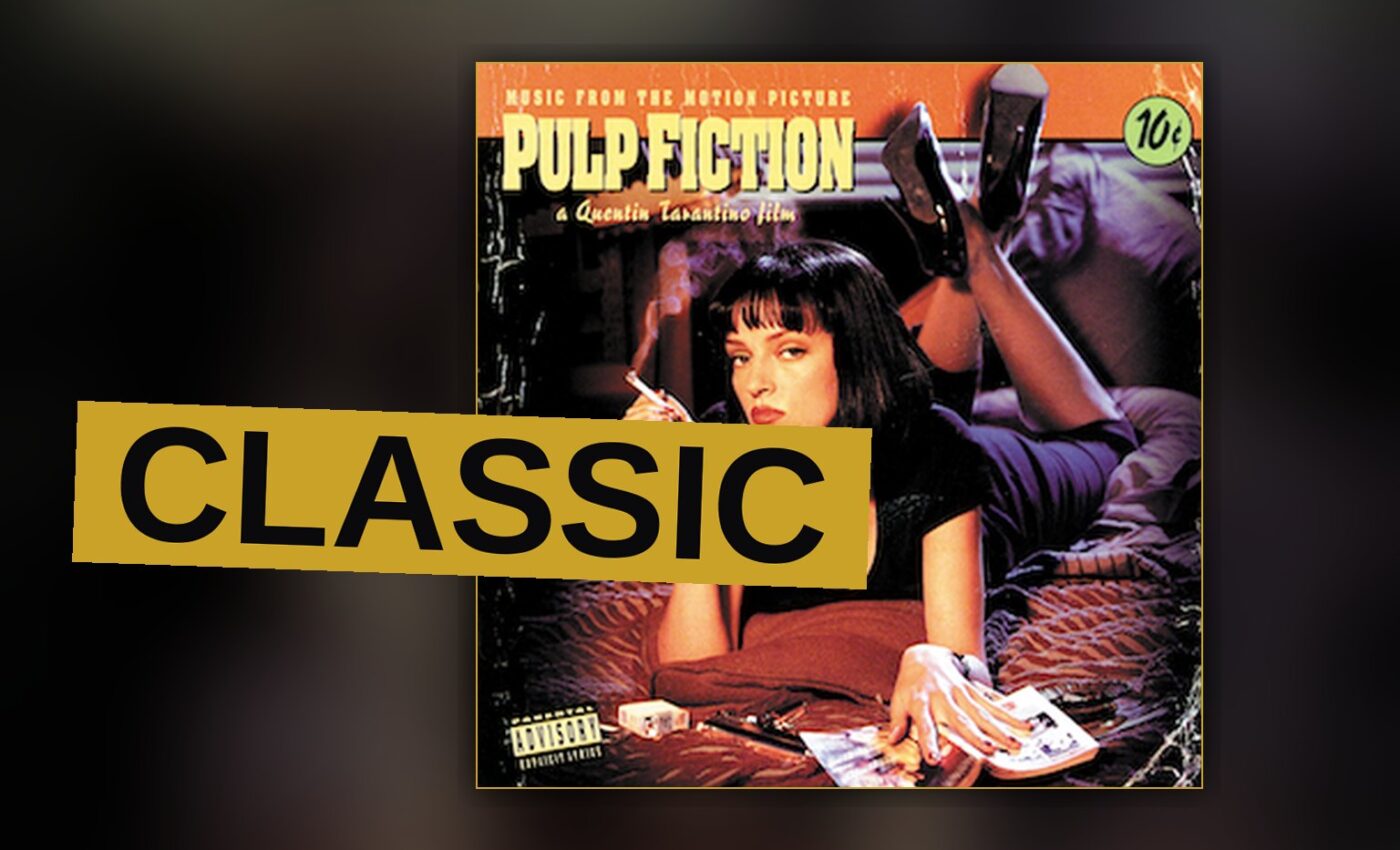
– Film: Pulp Fiction (1994)
– Director: Quentin Tarantino
– Runtime: 154 minutes
– TMDB audience score: 8.5/10
– Cast: John Travolta, Samuel L. Jackson, Uma Thurman, Bruce Willis
Pulp Fiction arrived in 1994 and rearranged the crime movie. Quentin Tarantino’s second feature told three stories out of order, let a man die in the first scene and live in the last, and turned a conversation about burgers into the most quoted dialogue of the decade. Thirty-two years later, the film still holds.
Trailer, via Miramax.
Royale with Cheese
Vincent Vega and Jules Winnfield drive through Los Angeles talking about fast food. In another movie, this conversation would be filler. Here it is the point. John Travolta and Samuel L. Jackson trade lines about European burger names, foot massages, and the difference between a Quarter Pounder and a Royale with Cheese.
Tarantino writes talk that sounds like real talk, but better. The characters repeat themselves, interrupt, and wander off the subject. They discuss the theology of a milkshake. They argue about whether a massage is sex. The plot waits while these men speak, and the film is richer for the waiting.
The hitmen arrive at an apartment to collect a briefcase. They exchange banter about the contents, which glow gold when opened. They recite Ezekiel 25:17 before killing a man. Jules delivers the speech with a calm that is terrifying. The scene is tense, then violent, then suddenly comic when a fifth man bursts from the bathroom and misses every shot.
Jack Rabbit Slim’s
Uma Thurman plays Mia Wallace, the wife of gangster Marsellus Wallace. Vincent is told to take her out while Marsellus is away. She is beautiful, bored, and unpredictable. He is nervous and out of his depth.
They eat at a retro diner where the servers dress like icons. The dance to Chuck Berry’s “You Never Can Tell” is awkward, precise, and iconic. Travolta’s hips do the work. Thurman’s fingers do the rest. The scene is pure pleasure, a moment of lightness before the dark.
The night goes wrong quickly. Mia finds Vincent’s heroin and snorts it. She overdoses. Vincent panics. He drives to his dealer’s house, where a man in a leather mask answers the door. The adrenaline shot to the heart is brutal, comic, and strangely tender. Mia wakes up gasping. The two never speak of it.
The Gold Watch
Bruce Willis plays Butch, a boxer paid to throw a fight. He does not throw it. He wins, kills his opponent, and flees to collect on his bets. Marsellus wants him dead. Butch wants to escape with his girlfriend Fabienne and his father’s watch, a family heirloom hidden up a man’s rectum for years.
Butch returns to his apartment for the watch and finds Vincent waiting. He kills Vincent with the man’s own gun. Then he runs into Marsellus in the street. A car hits Marsellus. Two men in a pawn shop capture both of them. The basement scene is the darkest thing in the film.
Butch escapes, then returns to rescue Marsellus. He picks a sword from the pawn shop’s wall and cuts down the rapist. Marsellus, freed, tells Butch to leave the city and never return. Butch rides off on a chopper with Fabienne. The story ends with a clean getaway, a rare victory in a film that deals in luck and chance.
The Briefcase
The briefcase is never explained. It glows, it is valuable, and everyone wants it. The contents are never shown. The audience is left to imagine. That is the point. The mystery is the power.
A popular fan theory holds that the briefcase may contain Marsellus’s soul. The film does not confirm this. Tarantino has consistently declined to explain the contents. The object functions as a plot engine that drives the violence forward. Its emptiness is its meaning. We want what we cannot see.
The film’s moral center is Jules. After the apartment shootout, he believes a miracle saved him. The bullets missed. He decides to retire from the life. Vincent does not understand. Jules tries to explain.
Diner Showdown
The robbery from the opening scene resumes. Honey Bunny and Pumpkin hold up the restaurant. Vincent is in the bathroom, and Jules is at the table. Jules disarms Pumpkin with calm precision. He holds a gun to the man’s head and recites his scripture again, but this time it is not a threat. It is a warning.
He lets the robbers go. He gives them money. He tells them this is mercy. Then he walks out with Vincent, and the film ends.
The scene is the film’s quietest and its loudest. Jules has changed. Vincent has not. Vincent will die later that day, at Butch’s hands. Jules will walk free. The order of scenes makes this a revelation, not a spoiler. We already saw Vincent die. Now we see him live.
Language and Legacy
Pulp Fiction is famous for its dialogue, but it is also famous for its words. The film uses the N-word repeatedly. It discusses rape as a punchline in one scene. It treats violence as comedy. These choices are uncomfortable, and they have aged unevenly.
Some critics defend the language as authentic to the characters. Others call it reckless. The film does not offer a judgment. It simply presents the speech of its world. The audience must decide.
The performances carry the weight. Travolta revived his career with a turn that is loose and funny. Jackson became a star with a monologue that is now part of the culture. Thurman made Mia a femme fatale who is also a victim and a survivor. Each actor finds the rhythm of Tarantino’s words and makes it sound natural.
The soundtrack is a mix of surf rock, soul, and pop. Dick Dale’s “Misirlou” opens the film with a frantic guitar. Urge Overkill’s “Girl, You’ll Be a Woman Soon” plays over Mia’s overdose. The music is not background. It is commentary.
Verdict
Pulp Fiction won the Palme d’Or at Cannes. It was nominated for seven Oscars and won one, for best original screenplay. It made $213 million worldwide on a budget of $8.5 million. It turned Miramax into a major studio. It changed independent film.
The film’s influence is everywhere. The nonlinear structure became a cliché. The pop-culture dialogue became a style. The dance became a reference. Tarantino did not invent any of these things, but he packaged them so well that they felt new.
Thirty-two years on, Pulp Fiction remains a shock. It is violent, funny, and deeply strange. It rewards rewatching. The order of scenes makes sense the second time. The jokes land harder. The violence hits differently.
The film’s audience score on TMDB sits at 8.5 out of 10, a number that reflects enduring popularity rather than critical consensus. The Palme d’Or and the Oscar for best original screenplay are the formal markers of its place. The real measure is simpler: people still quote it, still dance to it, and still argue about what is in the briefcase.