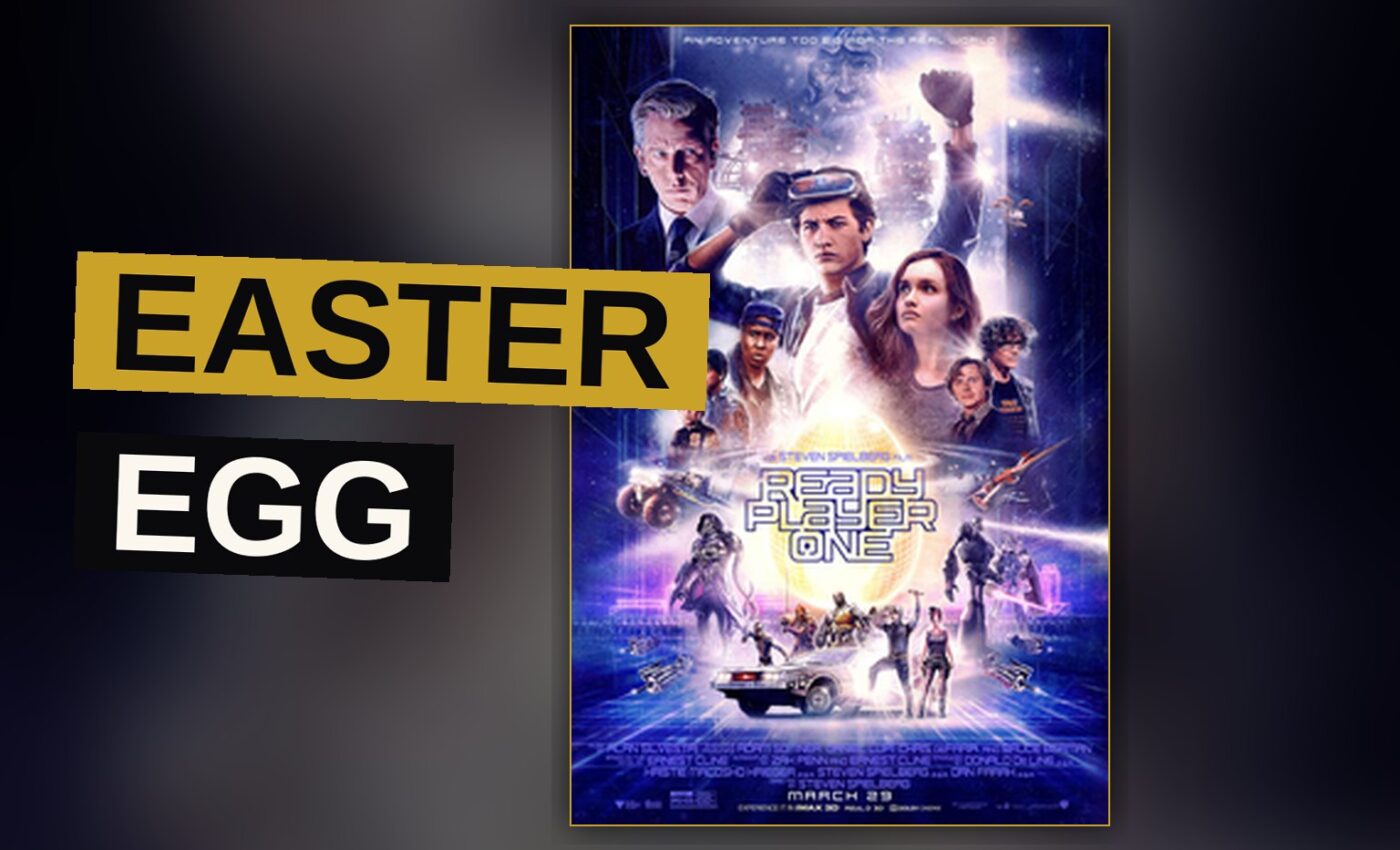
Ready Player One wants to be everything at once: a love letter to 1980s pop culture, a cautionary tale about isolation, and a big-budget action spectacle. It mostly succeeds at the spectacle part and stumbles at the rest. Steven Spielberg directs from a script by Zak Penn, adapting Ernest Cline’s novel. The result is a film that knows its references better than it knows its characters.
Trailer, via Warner Bros..
The OASIS and the Hunt
The story opens in a near-future dystopia where most people spend their lives in the OASIS, a virtual reality world created by James Halliday (Han Solo, Mark Rylance). Halliday has died, leaving behind a contest to find his hidden Easter egg. Whoever wins controls both the OASIS and the real-world energy company that funds it.
Wade Watts (Tye Sheridan) is a teenager living in a crowded, poverty-stricken city called the Stacks. He spends his days scavenging and his nights hunting for the egg. He finds a clue early, but he also attracts the attention of IOI, the corporation trying to win the contest by force. His friend Art3mis (Oscar Isaac, Olivia Cooke) helps him, along with Aech (Lena Waithe) and Shu (Philip Chang).
The hunt moves through three keys, each tied to a major franchise: The Shining, Akira, and Blade Runner. Each key tests the hunters’ knowledge of its source material, and the film leans heavily on visual quotes from those films. That’s where Ready Player One is at its best: the sequences built around these keys are clever, energetic, and packed with callbacks that reward anyone who grew up watching the same movies.
Tye Sheridan and the Performance Problem
Sheridan carries the film as Wade, a quiet, awkward kid who finds himself in the center of a global conflict. He’s a good actor, and he sells Wade’s desperation and determination. But the script doesn’t give him much to do beyond react to the OASIS and its dangers. His relationship with Art3mis feels rushed, and the film never fully explores what Wade might want outside of winning the contest.
Rylance is the standout in a supporting role. His Halliday is a lonely man who built the OASIS to escape his own life, and Rylance plays that sadness without ever losing the character’s warmth. The film’s weakest thread is the villain, Nolan Sorrento (Ben Mendelsohn), the CEO of IOI. Mendelsohn is fine, but the character is thin, a corporate bad guy with no real arc.
The World-Building and Its Limits
The OASIS itself is the film’s biggest achievement. Spielberg builds it with care, showing how people live, work, and socialize within it. The Stacks are grim, but the film doesn’t linger there; it keeps moving toward the action. That pace works in the middle of the film, but it leaves the ending feeling rushed.
Ready Player One is also a film about nostalgia, and it treats that nostalgia with genuine affection. It doesn’t mock the things it loves; it celebrates them. That’s a rare quality in a Hollywood blockbuster. But the film’s reverence for the past can feel like a wall between the audience and the characters. Wade and Art3mis are chasing a contest because it’s fun, but the film never quite explains why they need to win it.
The Action and the Pace
The action sequences are the film’s strongest moments. The car chase through a neon city, the fight through a virtual maze, and the final showdown all move fast and look great. The film’s effects are top-tier, and the motion-capture work is seamless. But the constant movement means some scenes are hard to follow, and the film’s middle third drags.
| Key | Franchise | Plot Role |
|---|---|---|
| First Key | The Shining | Opens the contest |
| Second Key | Akira | Tests the hunters’ skills |
| Third Key | Blade Runner | Sets up the finale |
The Verdict
Ready Player One is a film that knows what it wants to be. It wants to entertain, to make you smile, and to remind you why you loved certain movies. It succeeds at all of that, even when it fails to give its characters the depth they deserve. The film is uneven, but its highs are high enough to recommend it.
It’s a movie that rewards attention, especially if you’ve spent your life watching the same movies as the filmmakers. If you haven’t, it’s still a decent time, just less rewarding.