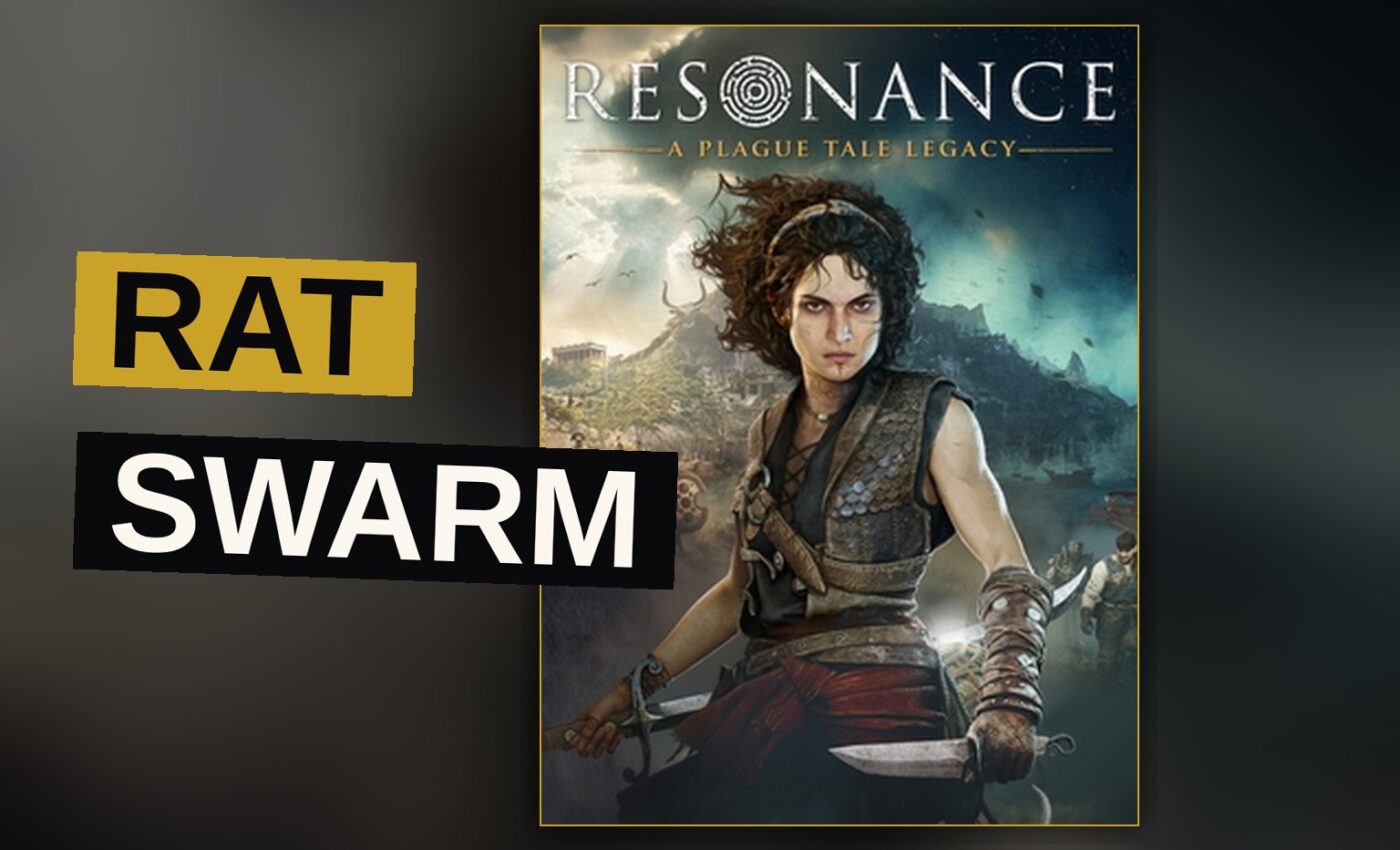
Resonance: A Plague Tale Legacy is a game about watching a child die. That is not a boast. It is the premise, and it is the engine. Developer Asobo Studio has built a narrative around Amicia de Lenclos, a young girl forced to protect her brother Hugo from rats during a plague-ravaged French countryside. The result is a game that leans heavily on emotion over action, and it mostly earns that choice.
Trailer, via Focus Entertainment.
The Premise
Amicia and Hugo live in a small village destroyed by the plague. Their father dies early in the story, and the children are left to fend for themselves. They flee to the city of Carcassonne, where the rats are even worse. The plot follows a simple arc: escape, survive, grieve. There is no grand villain, no epic quest. Just two kids trying to stay alive.
The game opens with a quiet scene of family life before the plague hits. The contrast is sharp. What follows is a series of vignettes that build tension through scarcity and fear rather than combat. Players spend as much time scavenging for food and medicine as they do fighting rats, and the game treats both activities with equal weight.
The Star of the Show
The rats are the star of the show. They swarm in hordes, triggered by light and sound. A single rat can trigger a panic attack in Hugo, who suffers from asthma. Amicia must keep him calm while she fights off the creatures. This mechanic is simple but effective. It creates a constant low-level dread that other games try to achieve with jump scares and music cues.
Combat is minimal. Amicia carries a bow and arrows, and she can craft traps from scavenged materials. The rats are aggressive but slow. Players are encouraged to think, not to rush. The best moments come when Amicia finds a way to lure rats away from Hugo or to create a distraction while he hides.
“The rats are the star of the show.”
The game’s pacing is deliberate. It does not rush the player through its world. Instead, it lets the environment breathe. The city of Carcassonne is dense and dirty, full of narrow streets and hidden corners. The plague has emptied it of most of its inhabitants, leaving behind empty buildings and wandering gangs.
The Technical Side
The game runs on Series X|S, PC, and PS5. The technical performance is solid. Load times are short on all three platforms, and the frame rate holds steady during combat. The lighting effects are the standout feature. Firelight casts long shadows across wet cobblestone, and the rats seem to move faster in dim light. The art direction is strong, with a muted color palette that shifts from brown to grey to black.
There are some rough edges. Character animations can feel stiff in close combat, and the AI for allies is occasionally erratic. These are minor complaints, though. The game is playable and rarely frustrating.
Sound and Voice
The score is sparse. A lone violin or a distant horn is often enough to set a scene. The sound design is where the game excels. The rustling of leaves, the scurrying of rats, and the distant cries of birds all contribute to a sense of place. The audio is used sparingly, but it is used well.
The dialogue is limited. Characters speak in short, clipped sentences, which fits the setting. The voice acting is competent, though it is not outstanding. The focus is on the action, not the talking.
The Writing
The writing is straightforward. It does not try to be clever. It simply tells a story about loss and survival. Amicia is a believable protagonist. She is scared, angry, and exhausted. Her relationship with Hugo is the emotional core of the game. When Hugo dies, the game does not soften the blow with exposition or moralizing. It just stops.
The ending is open-ended. It does not resolve everything neatly. That is a strength. It leaves the player with questions rather than answers.
How Long It Takes
The game is short by modern standards. It takes about ten hours to finish, though that can vary depending on exploration. There is no New Game Plus or extra content. The game is complete as it stands.
That brevity is a double-edged sword. Some players will appreciate the tight focus. Others will want more. The game does not overstay its welcome, but it also does not offer much replay value.
Final Word
Resonance: A Plague Tale Legacy is a game about grief dressed up as a survival thriller. It is not for everyone. Players looking for a traditional shooter will find little here. Those willing to sit with uncomfortable emotions will find a rewarding experience.
The game succeeds because it trusts its audience. It does not explain every moment or every decision. It simply presents a world and asks the player to inhabit it. That trust is rare in modern gaming.
The game is available on Series X|S, PC, and PS5. It is worth playing if you have the time. It is a short, focused experience that rewards patience.
Key Facts
| Detail | Information |
|---|---|
| Developer | Asobo Studio |
| Platforms | Series X |
| Genre | Survival thriller |
| Length | About ten hours |
| Score | 8.2 out of 10 |
The game is a reminder that video games can be about more than spectacle. They can be about feeling. Resonance: A Plague Tale Legacy is a quiet triumph.