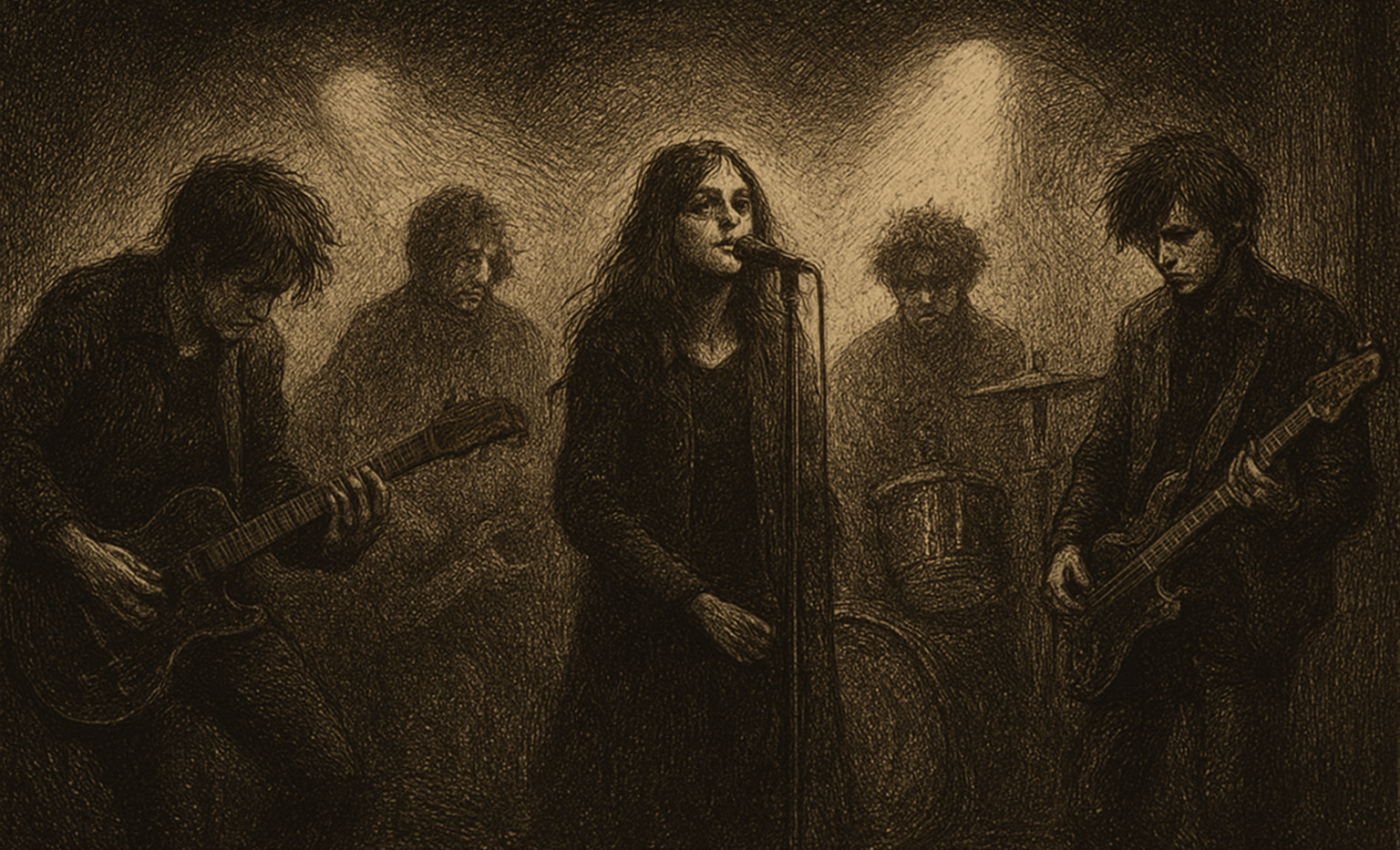
Romance is the sound of a band refusing to stand still. Fontaines D.C. built their name on jagged post-punk, but their fourth album tears up that blueprint. It pulls in pop melodies, nu-metal crunch, shoegaze haze and orchestral strings, all while keeping the emotional core that made their early records matter. The Dublin five-piece wrote this album after absorbing Japanese manga and Italian cinema, and that restless, cinematic energy runs through the record.
The result is their most adventurous work, and their best. It is bold, transformative and brilliant, the sound of a band finding new ways to say what they have always meant.
Opening With a Statement
The title track sets the terms. “Romance” feels like a door swinging open. Synths shimmer where guitars used to snarl, and the vocals float rather than bark. It is a statement of intent: this is not the same band.
“Starburster” follows and immediately complicates that idea. The track is the album’s centerpiece, a breathless, anxious surge that builds from a spoken-word verse into a full-throated chorus. It has the tension of their early work but the structure of something far poppier. This is the song that announced the album’s arrival, and it earns every bit of attention it got.
“Here’s the Thing” keeps the momentum. It is lean and direct, a rock song that does not waste a second. The guitars bite, the rhythm section locks in, and the vocal delivery is among the most confident on the record. It is the closest thing here to the old Fontaines D.C., and it proves they have not lost the sharp edges that made them.
Desire, Modernity and the Middle
“Desire” is where the album starts to sprawl. It is slower, more patient, with a chorus that feels built for a bigger room than a Dublin club. The production opens up, and the band lets the song breathe. It is a grower rather than a grabber, but it rewards the attention.
“In the Modern World” is the most ambitious thing they have attempted. It is the longest track on the record, and it uses the time to shift shape. It starts as a brooding meditation, then swells into something almost orchestral. The strings that appear in the second half are a surprise, but they land. This is the track that most clearly shows the influence of cinema, a song that feels like a scene playing out in widescreen.
“Bug” pulls things back down to earth. It is short, scrappy and a little uncomfortable, with a vocal that sounds almost unhinged. It is not the most immediate song on the record, but it adds texture. Not every track can be a single, and “Bug” does the job of keeping the album unpredictable.
Motorcycle Boy and the Run Home
“Motorcycle Boy” is a highlight. The title carries a sense of restless youth, and the song matches it. It is propulsive, with a bassline that drives the whole thing forward. The vocals sound like a man trying to outrun something, and the band matches that urgency.
“Sundowner” is the quiet one. It slows the album down just before the finish, letting the listener catch their breath. It is not a ballad exactly, but it is the closest thing here to a moment of stillness. The melody is gentle, the delivery is tender, and it works as a palate cleanser before the final push.
“Horseness Is the Whatness” is a strange title, and the song matches it. It is angular and uneasy, with a riff that feels like it could fall apart at any moment. This is the track that most clearly nods to nu-metal, and it is a risk that pays off. It is not comfortable listening, but it is never dull.
“Death Kink” is the shortest track on the record. It is also the most direct. There is no ornament here, just a tight, furious burst of energy. It feels like a release valve, a moment of pure aggression after all the experimentation.
Favourite Closes It Out
“Favourite” ends the album on a high. It is the most straightforwardly beautiful song Fontaines D.C. have ever written, a pop song in the truest sense. The chorus is huge, the melody is sticky, and it leaves the listener wanting more. It is a bold way to close a record that has spent its whole runtime defying expectations, and it works.
The song feels like a summary of everything that came before it. It has the emotional weight of their early work, the melodic confidence of their middle period, and the sonic ambition of the album as a whole. It is the sound of a band arriving somewhere new and looking back at the road they traveled to get there.
The Verdict on Romance
Romance is not a perfect album, but it is a fearless one. Not every experiment lands with the same force, and a couple of the middle tracks feel like connective tissue rather than destinations. But the highs are higher than anything the band has produced before, and the range is wider.
The album succeeds because Fontaines D.C. trusted their instincts. They did not play it safe, and they did not repeat themselves. They made a record that sounds like five people pushing each other to be better, and the chemistry is audible in every track.
- “Starburster” is the standout, a song that captures everything the album does well.
- “Favourite” proves they can write a pop song without losing their edge.
- “In the Modern World” shows their ambition is not just talk.
This is the fourth album from a band that already had three strong records to their name. It is their most assured, inventive and approachable work yet. It is also their most sonically adventurous, a record that refuses to stay in one lane.
Fontaines D.C. have been building toward something for years. Romance is the moment it all clicked into place. It is not just their finest hour. It is proof that they are still getting better. Critics have agreed, with the album earning a Metacritic score of 89 out of 100.
Get the Notebook.
The day's best stories and every fresh verdict, in plain English, in your inbox by seven. One email a day, no more.
- Romance2:33
- Starburster3:41
- Here’s the Thing2:43
- Desire3:39
- In the Modern World4:26
- Bug3:02
- Motorcycle Boy3:42
- Sundowner3:25
- Horseness Is the Whatness3:07
- Death Kink2:23
- Favourite4:16