
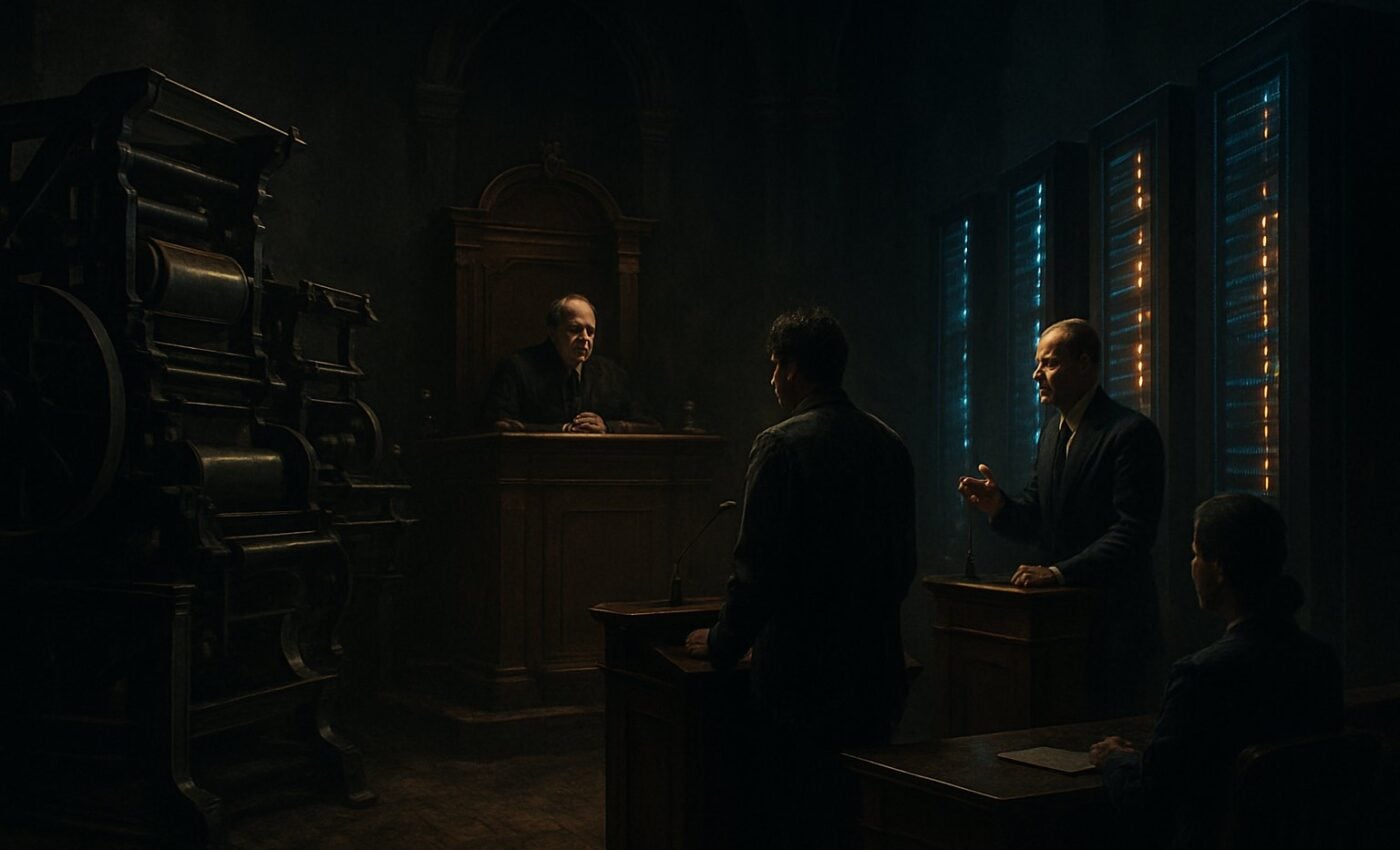
There is a certain grim satisfaction, dear reader, in beholding the printer’s ink take up arms against the machine. The Seattle Times and Newsday, two journals of no small dignity, have now gone before the tribunals of law to accuse OpenAI and Microsoft of a species of theft most singular — the taking of their gathered intelligence to feed a mechanical scribe.
The Nature of the Grievance
The complaint asserts that these publishers’ reporting — the fruit of many an hour spent in toil and much pecuniary outlay — was taken up as fodder for the training of artificial minds, without leave asked or fee paid. Worse still, say the suitors, the resulting machine does not merely learn from their words but pours them forth again, near verbatim, when questioned by the curious public. This, they contend, is no mere borrowing but an act of reproduction dressed in the false semblance of novelty.
Such accusations are not without an example already set. The New York Times has already brought its own suit upon similar grounds, and it stands in company with Ziff Davis, Merriam-Webster, and the venerable Encyclopedia Britannica, each declaring that their carefully gathered stores of fact and phrase have been swallowed whole by these machines of artificial reasoning. One begins to suspect a design, if not a conspiracy, in the appetite of these instruments.
Microsoft’s Uncomfortable Situation
Microsoft finds itself named a fellow party to the suit, for its Copilot machine draws its animating breath from OpenAI’s own construction. The publishers argue that where one profits from the theft, so too must the other answer for it. This is a reasoning as old as the law concerning those who assist in a crime, now applied to metal and mechanism rather than midnight villains and their fellows in guilt.
The Seattle Times and Newsday are not solitary in their complaint but the latest in a long train nearing four hundred local newspapers who have lodged like grievances against these same two companies. Their common lament is that the chatbot, by answering questions once directed to their own pages, deprives them of the very visits that sustain their subscription revenues. This, they say, is a pecuniary wound of the most immediate and painful kind, striking directly at the purse upon which their labor depends.
What Is Demanded
The relief sought is nothing short of total destruction. The suitors desire the destruction of every copy of their works held by the accused parties, together with the training collections and the very models raised upon them. Such a demand, if granted, would require OpenAI and Microsoft to strike the offending knowledge from the machine’s memory as though it had never been placed there. Whether such a dissolution is possible in practice, given how these instruments are made, remains a question the courts have yet to answer.
OpenAI and Microsoft have offered no reply to inquiries upon the matter, keeping a silence that may be prudence or may simply be the customary quiet of counsel before battle is joined. Their silence, however, does little to still the growing chorus of publishers who feel themselves robbed of both authorship and income by machines that were never meant to write, only to answer.
A Closing Reflection
What we behold here is no small quarrel but the opening of a wider war between the makers of words and the makers of machines that echo words. The Seattle Times and Newsday sue OpenAI and Microsoft for infringement not merely to recover what has been taken, but to test whether the old distinctions between author and imitator can endure into this age of artificial composition. Whatever the courts decide, one suspects this dispute is but the first chapter of a much longer and more melancholy tale.
Get the Notebook.
The day's best stories and every fresh verdict, in plain English, in your inbox by seven. One email a day, no more.