Speed opens with a man who cannot slow down. That is the whole engine of the thing, and it still works.
Trailer, via thecoolidge.
A Bus, a Bomb, and Fifty Miles Per Hour
Jan de Bont’s 1994 action thriller runs on a single clean idea: a Los Angeles city bus rigged by a bomber to detonate if its speed drops below 50 miles per hour. That is 80 km/h. The premise is a machine, and the film never pretends otherwise.
Keanu Reeves plays LAPD officer Jack Traven, the bomb disposal cop tasked with keeping the bus moving. Dennis Hopper is Howard Payne, an ex-cop turned extortionist who built the device. Sandra Bullock is Annie, a passenger who ends up behind the wheel.
This is de Bont’s feature directorial debut. Graham Yost wrote it. It runs 116 minutes. The tagline is “Get ready for rush hour,” which is about as honest as taglines get.
The film’s reputation rests on that premise and on the fact that de Bont, a former cinematographer, knows where to put the camera while the premise does its work.
Jack Traven, Harry Temple, and the Elevator
Speed does not start on the bus. It starts on a city elevator holding 13 people, with Traven and his partner Harry Temple, played by Jeff Daniels, working the bomb.
The two bomb disposal officers save the passengers, then confront the bomber. Harry is taken hostage. Jack shoots him — shoots his own partner — to stop the bomber. The bomber appears to blow himself up. Jack and Harry are commended at a ceremony. Then a city bus explodes in front of Jack, purely to get his attention.
Payne survived. He wants revenge on Jack, and he wants $3.7 million. He plants a second bomb on a second bus full of passengers. It arms at 50 mph and detonates below it. He warns Jack not to offload anyone.
That ransom figure matters more than most action movies bother with. Payne is not a philosopher of chaos. He is a man with a number.
Commandeering a Car, Boarding a Moving Bus
Jack commandeers a car to chase down the bus and warn the driver. By the time he reaches it, the bus has already crossed 50 mph and the bomb is armed. He boards anyway.
A street thug on the bus mistakes Jack for someone coming after him and pulls a gun. The gun goes off during the struggle. The bullet hits the driver. Annie Porter takes the wheel.
From there the film is a chain of obstacles: traffic, a gap in the freeway, and Payne watching the whole thing on television news. When Helen, a passenger played by Beth Grant, panics and tries to leave the bus, Payne detonates a smaller bomb and kills her as she falls under the vehicle. He had agreed to let the wounded driver off as a show of good faith. Helen is what the good faith costs.
The Cast That Almost Was
The casting history is its own small comedy of near-misses, and it is worth laying out because it shows how close Speed came to being a different, worse film.
- Jeff Speakman was attached to the lead when the project sat at Paramount Pictures.
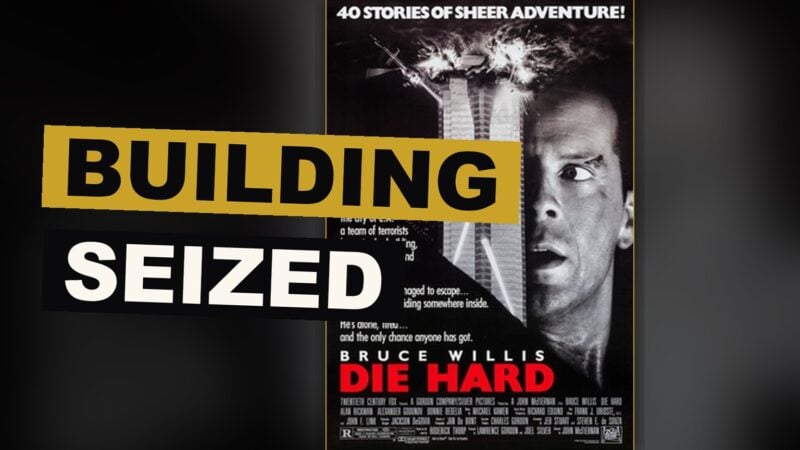
- Stephen Baldwin was offered Jack Traven and declined, saying the character resembled John McClane from Die Hard (1988).
- Richard Grieco turned it down and later said he regretted it.
- Tom Cruise, Tom Hanks, Wesley Snipes and Woody Harrelson were all considered.
- Halle Berry was offered Annie and declined, later expressing regret.
- Ellen DeGeneres was considered when Annie was written as comic relief.
- Meryl Streep, Kim Basinger and Anne Heche were offered or considered for Annie and declined.
De Bont cast Reeves after seeing him in Point Break (1991), wanting the balance of vulnerability and strength Reeves projected. Reeves trained physically and cut his hair short, a choice that worried the studio. He had previously appeared in River’s Edge (1986) with Hopper.
Annie was originally written as an African American paramedic, a detail that existed to justify her ability to drive the bus. She became a love interest instead. Bullock auditioned alongside Reeves to test their chemistry, and the audition involved physically demanding scenes.
Awards, Box Office, and the Sequel
Speed grossed roughly $350 million worldwide against a budget of $30–37 million. That made it the fifth-highest-grossing film of 1994.
At the 67th Academy Awards it won Best Sound. At the 48th British Academy Film Awards it won Best Sound and Best Editing. Those are craft awards, and they are the right awards for this film.
A sequel, Speed 2: Cruise Control, arrived on June 13, 1997. It performed poorly and critics widely lambasted it, citing Reeves’s absence and the change in setting.
The Release Window, Laid Out
| Date | Event |
|---|---|
| June 7, 1994 | Speed premieres |
| June 10, 1994 | 20th Century Fox releases Speed in theaters |
| 1994 | Film grosses roughly $350 million worldwide |
| 67th Academy Awards | Speed wins Best Sound |
| 48th British Academy Film Awards | Speed wins Best Sound and Best Editing |
| June 13, 1997 | Speed 2: Cruise Control released |
What the Bus Actually Costs
Here is the case for Speed at 7.8: the film understands that a constraint is more interesting than a spectacle. Fifty miles per hour is a rule, and rules generate tension because the audience can do the math. Every time the bus slows, you feel it. De Bont shoots the freeway gap and the traffic weave with a cinematographer’s eye for where the danger sits in frame, and the editing awards reflect that the film is assembled, not just staged.
The performances hold up their end. Hopper plays Payne as a working professional of grievance, not a cartoon. Reeves keeps Jack plain and procedural, which is the correct register for a man whose job is to not make a mistake. Bullock is the discovery here — she takes a role that was rewritten into a love interest and makes Annie the most competent person on the bus.
The weaknesses are real. The elevator opening is a full act of setup before the film’s actual idea arrives, and it plays as a warm-up. The comic-relief instincts around Annie’s introduction date the film. And the third act, once the bus leaves the freeway, trades the clean rule for a set of looser ones.
None of that undoes the central achievement. Speed is a film built on a single mechanical fact, and it never cheats that fact until it has to. That is rarer than it sounds.
Where Speed Sits in 1994
The film landed in a year crowded with action, and it beat most of it by being smaller. A bus is a cheaper, tighter arena than a skyscraper or a battleship, and the film’s budget reflects that modesty. It spent $30–37 million and returned roughly $350 million. The ratio is the story.
The Academy gave it Best Sound. The British Academy gave it Best Sound and Best Editing. Those two categories are the ones a film like this wins when the film is doing exactly what it set out to do.
What matters most is the rule. Speed is remembered for 50 miles per hour, not for a villain’s speech or a stunt. The rule is the star, and everything else — Reeves, Hopper, Bullock, the freeway gap, the television news feed Payne watches — exists to service it.
The Verdict on Speed
Speed earns its 7.8. It is not a great film in the sense of having anything to say, and it does not try to have anything to say. It is a great machine, and machines that run this cleanly for 116 minutes are worth the ticket.
The film’s one genuine idea — that a bus cannot slow down — is enough. De Bont knew it. Yost wrote it. Reeves and Bullock sold it. Hopper gave it a face. The sequel proved the point by removing the constraint and the lead and getting nothing back.
What to watch for on a rewatch: how little the film relies on the bomb itself. The threat is a number on a speedometer. The tension is arithmetic. That is the trick, and it is still a good one.
Get the Notebook.
The day's best stories and every fresh verdict, in plain English, in your inbox by seven. One email a day, no more.