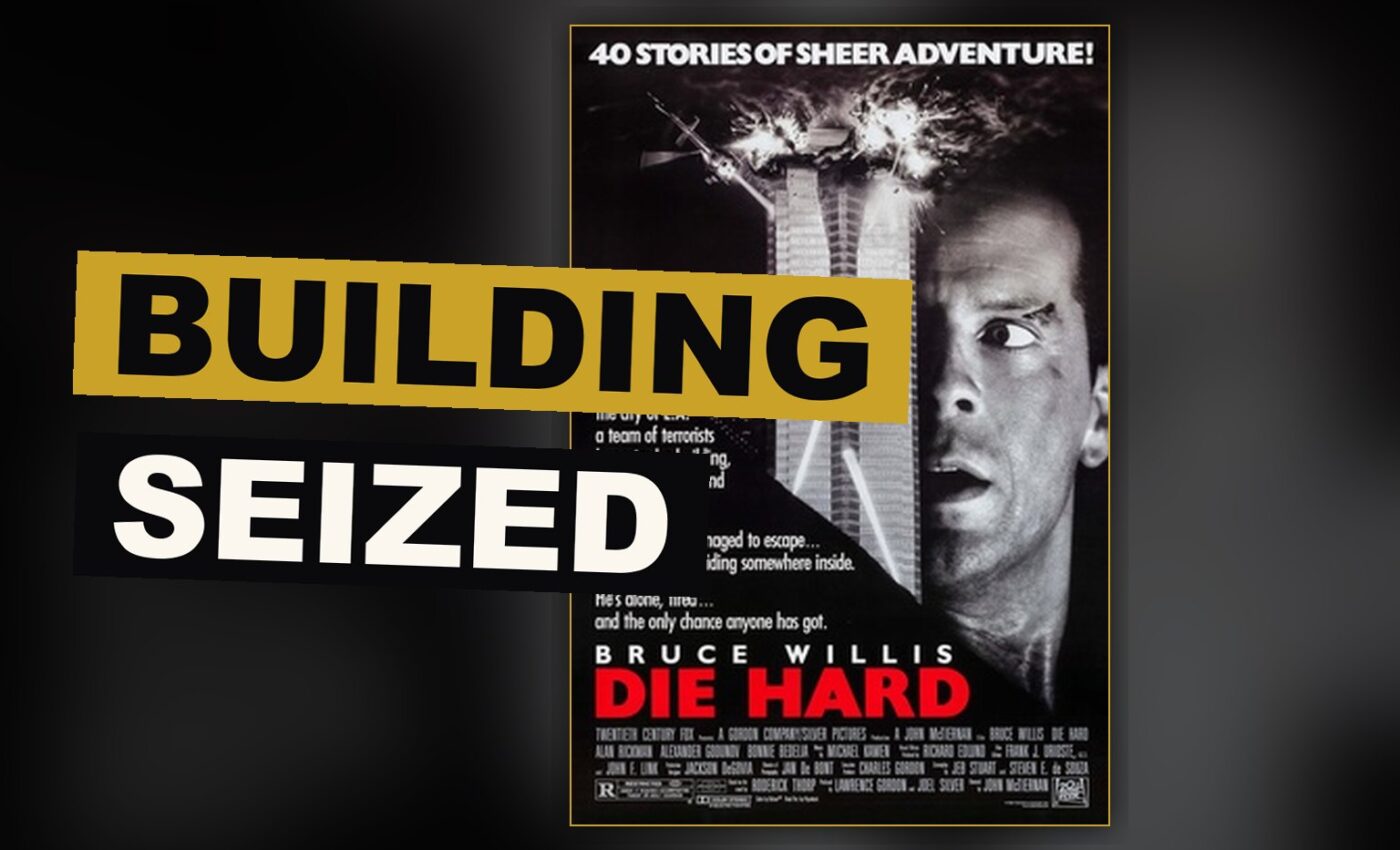
A detective with no shoes and no backup takes on a dozen armed men inside a large office building in Los Angeles. That is the entire premise of “Die Hard,” the 1988 action film directed by John McTiernan, and it remains one of the tightest premises in Hollywood history.
Inside the Building
The story follows a New York police officer visiting his wife, from whom he is separated, at her company’s holiday party when armed men take over the building. The director confines nearly the whole film to that single building, turning elevator wells, air ducts and unfinished floors into one continuous battlefield. The choice pays off.
Every hall and passage becomes familiar ground. The plan of the building never feels vague or random.
The lead actor brings a beaten, quick presence to his part that set an example for many action heroes who followed. He bleeds, he walks with a broken step, he mutters under his breath, and he never stops looking like a man who would rather be anywhere else.
The man who plays the head of the group that seized the building, in his first screen part, makes the villain a rare kind: calm, quietly funny, and truly clever, which makes him more dangerous rather than less.
Now I have a machine gun. Ho ho ho.
The Work Behind the Chase
The director builds excitement through real acts of daring rather than show for its own sake. The falls and fights were staged with real people and real risk, and the film’s cuts keep the pace fast without losing track of who is where in the building.
The camera work is easy to follow, so the audience always understands what is at stake in each moment. The script gives the officer a reason to fight beyond staying alive: his marriage. That thread keeps the danger tied to something human.
It also gives the closing scenes a feeling that action alone could not supply. The officer on the ground outside the building, who becomes the hero’s only ally by radio, adds heart to a story that could easily have turned cold and mechanical.
Their exchanges carry real feeling. They give the audience someone else to care about beyond the man moving through the walls of the building.
A Standard the Genre Still Chases
Few action films from that period have aged as well. “Die Hard” set an example that many later films have tried to copy without matching it, largely because the people at its center are as well drawn as the action itself.
The film balances humor, danger and pressure in a way that still feels fresh. “Die Hard” earns its place as a high mark of the action genre.
It is tight, well made and sure of its own premise, held together by two performances that have not faded with time.