
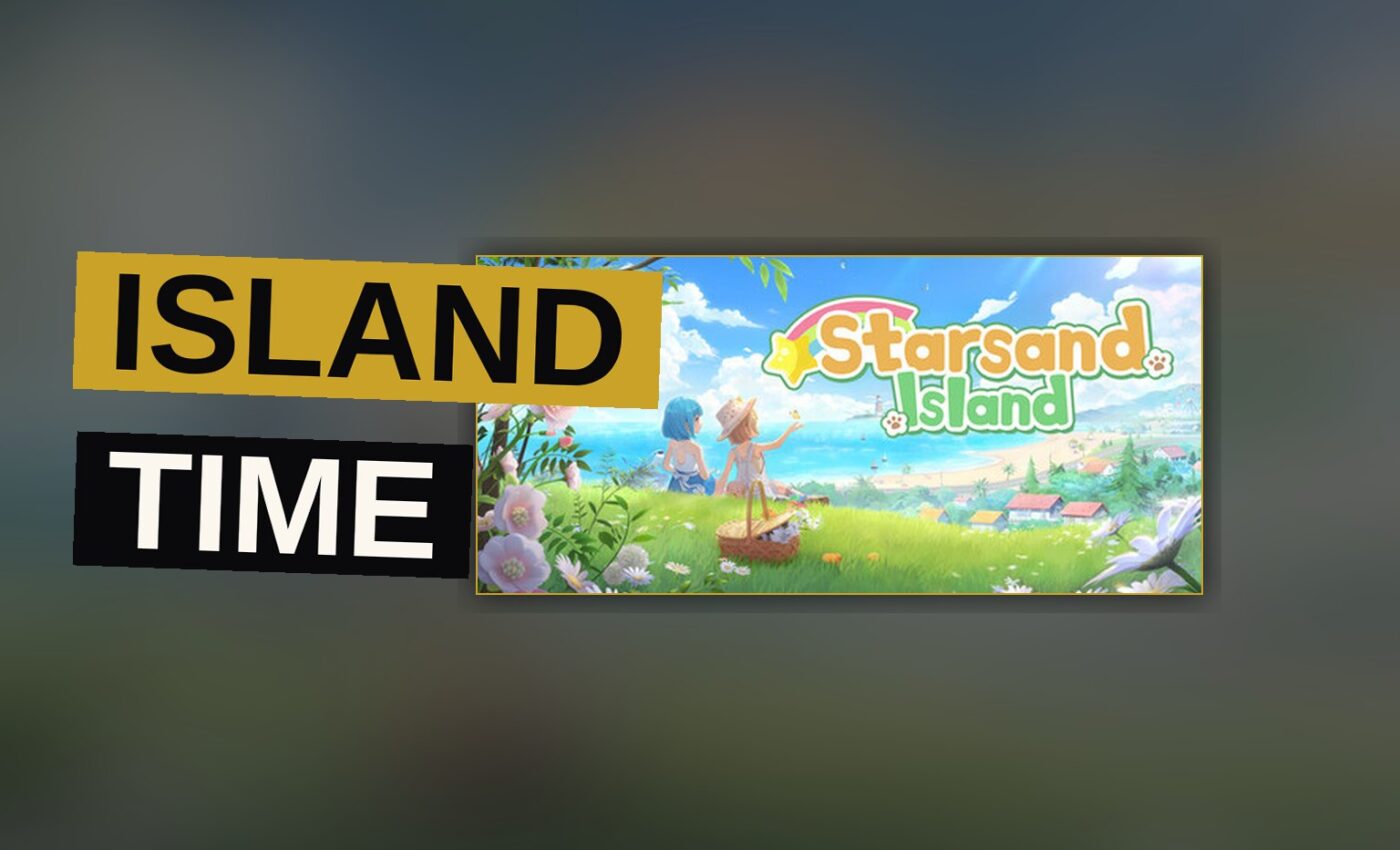
Starsand Island asks players to leave the city behind. Seed Sparkle Lab’s life simulation game sends them to the childhood town of Starsand, where they fish, farm, raise animals and get to know the locals. It is in Steam early access now, with the 1.0 version set to launch on 18 August 2026. The developer lists it for Xbox Series X|S, Nintendo Switch 2, PlayStation 5, PC and Mac.
It is a crowded field. Life sims have spent a decade promising calm and delivering chores. Starsand Island mostly delivers calm. It also has a real problem with what it asks of your time.
Trailer, via Galaxies Showcase.
Starsand, and the friend who hands you a guide
The setup is simple and familiar. The player character moves to Starsand, the place where they grew up. Solara, a childhood friend, gives the player a guide at the start that explains how to make progress.
That guide is the game’s spine. It lays out the careers a player can choose: angler, crafter, explorer, farmer or rancher. Each one is a different way to spend a day, and each one feeds the same loop. Fish or harvest, craft or sell, improve the town, repeat.
Seed Sparkle Lab has built the island as a sandbox with romance on top. The player can nurture relationships with the NPC inhabitants, and those relationships are not decoration. They are the point. Starsand is a small town, and the game treats its residents as the reason to stay.
The player character is customizable. The source lists the perspective as third person and bird’s-eye or isometric. Our read is that the isometric angle suits building and planning, while the third-person angle suits walking the island and standing in it. That is our observation, not something the game states.
The DIY system carries the whole game
If Starsand Island has a single mechanic that decides whether a player stays past the first week, it is the DIY system. It is how the world gets customized, and it is how the multiplayer works: friends are invited in to help build.
That is a smart pairing. A life sim’s worst enemy is a player who runs out of things to want. Building removes that ceiling. The island is not a fixed set of plots to fill. It is material.
The careers feed it. An angler brings in fish. A farmer brings in crops. A rancher brings in animals and their products. A crafter turns all of it into something worth placing, and an explorer goes out to find what the island is hiding. Five paths, one economy.
It is the explorer that the game underuses. Starsand Island has secrets — the game promises players can learn the locals’ secrets — but the career list treats exploration as one option among five rather than the thread that ties the town together. The game is at its best when it is asking a player to go somewhere and find something. It spends more time asking them to water something.
Romance, friendship and the people of Starsand
The romance and friendship system is the emotional core, and Starsand Island is honest about what it is. This is a game where a player can befriend or fall in love with the locals, and the relationships are built the same way everything else is: through repeated, small acts.
That is the correct design. A romance that can be bought with a single gift is not a romance. A romance that grows because a player showed up every day is.
Solara is the anchor. She is the childhood friend who hands over the guide, and she is one of the first relationships the game establishes. It is a canny choice. The player arrives in a town they supposedly know, and Solara is the proof. She is the one person who makes Starsand feel like a return rather than a move.
The problem is the same one every game in this genre has. The NPCs have to be worth the hours. Starsand Island gives its residents secrets and a friendship system to uncover them, but it does not give them much to do while you wait. The town is a place to work, not a place to be.
Multiplayer is the feature that changes the math
Most life sims are solitary. Starsand Island is not. It supports single player and multiplayer, and the multiplayer is built directly into the DIY system. Friends come in and help build.
That single decision changes how the game ages. A solo life sim is a list of tasks. A shared one is a project. The player who invites a friend into Starsand is not just getting help with a wall. They are getting a reason to log back in.
It is also the feature most likely to expose the game’s limits. Multiplayer building only works if the building is deep enough to support more than one person’s ideas. Starsand Island’s customization is broad, but the game does not promise the kind of structural freedom that turns a sandbox into a workshop. Two players can build a paradise. They may run out of paradise to build.
The early access run, and what it cost
Starsand Island did not arrive fully formed. It came to Steam early access on 11 February 2026, with the 1.0 version set to launch on 18 August 2026. The island is still being built, and the parts that feel like scaffolding are the parts still under construction.
The game’s own description makes a large promise:
Customize your world with our DIY system, and invite friends to help build your dream paradise!
That is the pitch, and it is the right pitch. Whether the game keeps it is a judgment, not a fact we can source, and on the evidence so far the keeping is still in progress.
What Starsand Island gets right, and what it does not
The game’s strengths are clear. It is calm without being empty. It has a real economy behind its five careers, a building system that gives that economy a purpose, and a relationship system that treats the town’s people as the reason to play rather than a side attraction. The art of a life sim is making a player want tomorrow, and Starsand Island understands that tomorrow is a person, not a crop.
Its weaknesses are just as clear. The career structure spreads the game thin. Exploration — the one path that could give Starsand a story — is one option among five. The town is populated but not yet alive in the way the best games in this genre manage.
None of that is fatal. Starsand Island is a game about slow progress, and it is not finished being one. The question is whether Seed Sparkle Lab keeps building after 1.0.
The verdict on Starsand Island
This is a good life sim with a strong core and an unfinished edge. The DIY system is the real thing, and multiplayer turns it into something a player can share. The five careers give the island a working economy. Solara gives it a heart. The romance and friendship system gives it a reason to return.
What holds Starsand Island back is scope. It wants to be a farming game, a fishing game, a crafting game, an exploration game and a romance game at once, and it does each of them well enough without doing any of them better than the games it is competing with. The explorer career is the clearest example. A town with secrets should make finding them the main event. Starsand Island makes it a hobby.
There is a version of this game — one more year of development, one more pass on the NPCs, one more reason to leave the farm — that is genuinely special. The bones are here. The island is here. Solara is here.
What is missing is the pull. Starsand Island gives players a beautiful place to live and a long list of things to do in it. It does not yet give them a reason to care about what happens next. That is the difference between a game you play for a month and a game you play for a year, and it is the difference Seed Sparkle Lab has to close.
Get the Notebook.
The day's best stories and every fresh verdict, in plain English, in your inbox by seven. One email a day, no more.


