
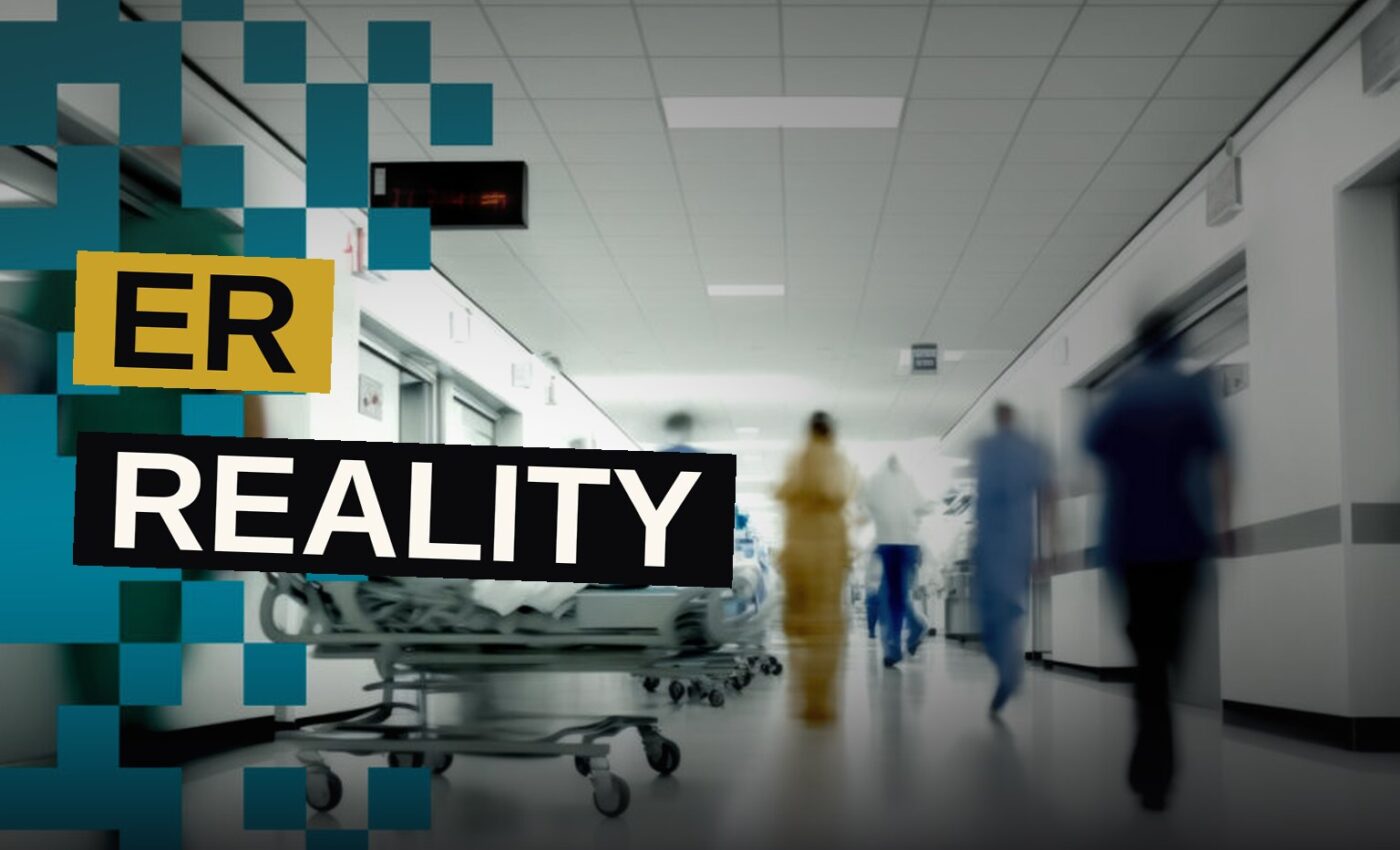
The medical drama “The Pitt” is getting praised for its realism, and STAT’s AI Prognosis newsletter says the show captures the chaos of a real emergency department. The newsletter’s author draws a direct line between the show and actual ER shadowing visits, describing the experience as “dropping in on the worst day of someone’s life, but doing it over and over every 40 minutes, for eight to 12 hours, without enough resources.”
The newsletter’s headline question is blunt: AI scribes only fix a tiny slice of the problem. But the full argument is behind STAT’s paywall, and the available text supports only that headline and the section header — not a detailed case about what the scribes can or cannot do. The piece is a subscriber-exclusive guide to artificial intelligence in health care and medicine, delivered every Wednesday.
The Pitt’s Realism
The newsletter author admits to being only halfway through season two of “The Pitt” but is already convinced. “Everyone is right — it is extremely compelling television,” the piece reads.
What the author has witnessed during ambulance ride-alongs and ER shadowing is reflected in the show’s relentless pace, its steady flow of patients, and its persistent lack of resources. The ER is where staff handle the worst moments of strangers’ lives, repeatedly, for hours on end, without enough tools to do the job comfortably. The author describes the experience of shadowing as dropping in on the worst day of someone’s lives, again and again, every 40 minutes, for eight to 12 hours, with insufficient means at their disposal.
That context matters for the newsletter’s main argument.
AI Scribes and the Headline Question
The issues with the newsletter’s headline poses the central question: whether AI scribes actually fix the emergency room’ are laid out in its own section header, which offers an answer in a single direction — “AI scribes only fix a tiny slice of the problem” — even though the argument backing that claim is locked behind the paywall.
The text sets forth a limited case. A newsletter questions whether AI scribes actually resolve anything. The headline and section heading imply the answer is negative, or at least incomplete.
The article itself does not say how the scribes operate, where they are placed, or what the “tiny slice” comprises. That information is behind the paywall, part of the subscriber-only material. The complete report is reserved for STAT+ members, who gain access to deep analysis, newsletters, premium gatherings, and news alerts.
A Quiet Space and a Cassette Player
The newsletter opens with a brief personal note before turning to healthcare. The writer admits it is difficult to avoid the world’s fixation on productivity and efficiency, and even more challenging to make yourself sit quietly without distraction.
The cure comes from a single Instagram handle: wandering_cassettes. It’s a page that posts clips of Fisher Price tape machines playing songs within various settings. One specific video is described by the author as “particularly calming”, and they say all of them are “timeline cleansers.”.
A brief pause has been placed in the newsletter’s schedule. The writer will spend next week working on a major new piece rather than sending it out, and the return to readers’ inboxes is set for Sept. 23.
The Return Date and the Big Story
The author has stepped away from the newsletter for a single week to focus on a major new piece of writing. That absence begins next week, with the writer stating the newsletter will be gone then while the work proceeds. The stated date for the newsletter’s return is Sept. 23.
The available text does not reveal the story’s subject, where it will be placed, or when it will be published past the newsletter’s return date. What is certain is that the pause is brief and the newsletter will go back to its usual Wednesday schedule.
Key Dates and Details
- The newsletter will be off next week, returning Sept. 23.
- The author is halfway through season two of “The Pitt.”
- The wandering_cassettes Instagram account posts videos of Fisher Price cassette players.
- The ER experience is described as “eight to 12 hours” of repeated exposure to patients’ worst days.
What the Available Text Supports
The part of the newsletter that readers can see performs three distinct functions. It promotes a TV show for its sense of realism. It offers a personal observation about discovering calm amid a culture that fixates on productivity. And it raises a question about the use of AI writing assistants in hospital emergency departments.
The available text does not present the whole case for AI scribes. The headline and section heading point toward an argument, yet the reasoning backing it up is set aside for STAT+ subscribers. That arrangement is part of the newsletter’s design, described as a subscriber-only guide.
The contrast with “The Pitt” sets the scale of what is at stake here. What makes the show compelling is its honesty about the chaos, and the author of the newsletter has seen that disorder up close. The question of whether AI scribes actually address that chaos is what draws readers into the subscriber-only analysis.
The newsletter’s framing is consistent throughout. The show’s realism is established through the author’s direct experience. The AI scribes question is posed but not answered in the visible text. The personal note about the cassette account offers a moment of calm before the heavier material.
The newsletter’s closing line asks the question directly. For those who don’t have a STAT+ subscription, the takeaway is the question itself. The promise of a bigger story to come sits at the end of the newsletter, and the full argument for why AI scribes only address a small fraction of the problem has to wait until the paywall drops.
Source: statnews.com
Get the Notebook.
The day's best stories and every fresh verdict, in plain English, in your inbox by seven. One email a day, no more.