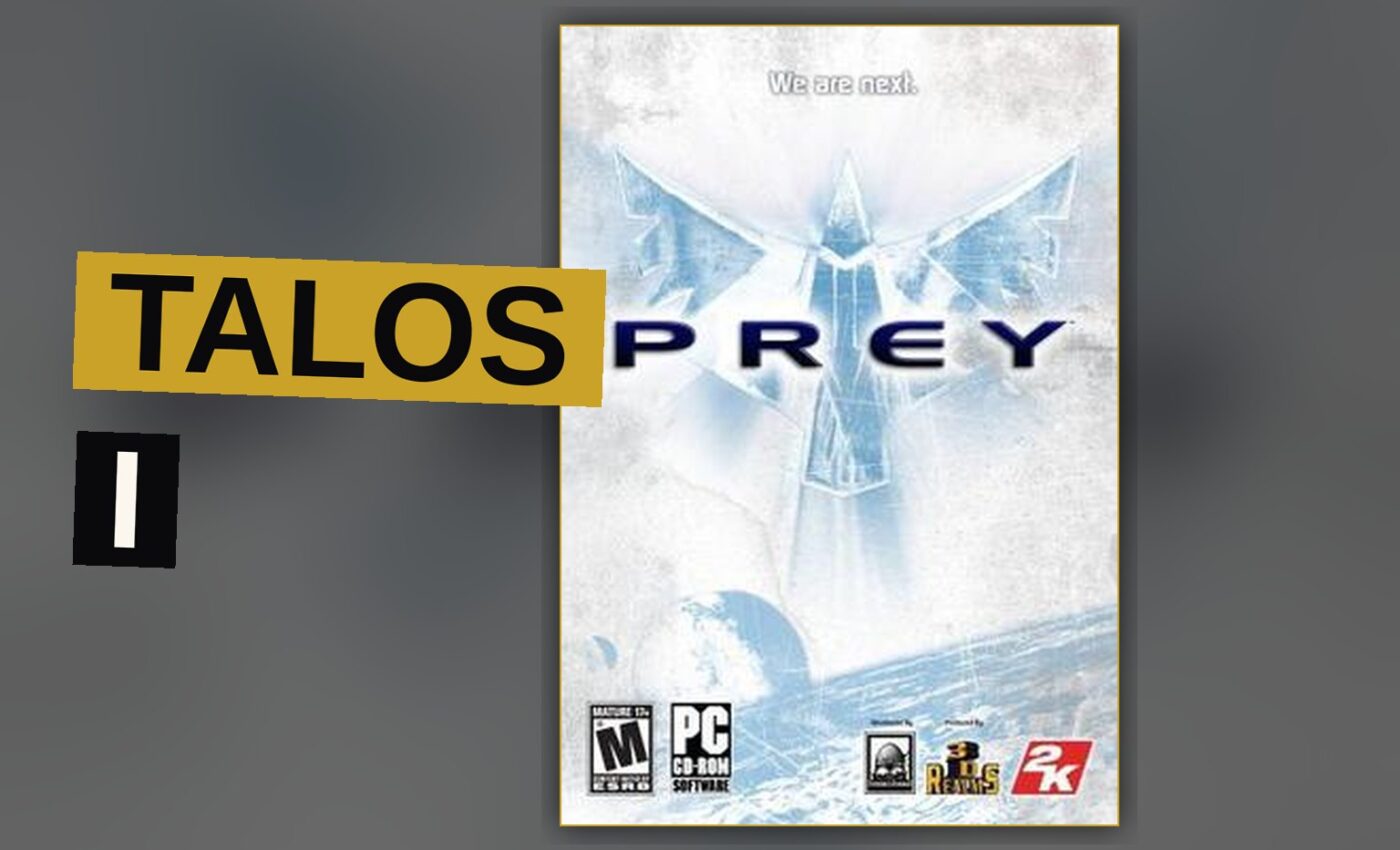
Prey is a game about being trapped. You are Morgan Yu, a scientist aboard the space station Talos I, and the thing hunting you is a black, oily substance called the Typhon. It can look like a coffee mug, a corpse, or your own reflection. It is one of the best immersive sims ever made, and it is also a game that asks you to question whether you are the hunter or the hunted.
The setup is classic science fiction. Morgan wakes up in a luxurious apartment, goes to work, and watches the world glitch. A routine experiment goes wrong, and suddenly the station is overrun. The opening sequence is a masterclass in disorientation. You are told you are the key to humanity’s survival, but you are also told you might be the monster. The game trusts you to figure out the truth, and it rewards patience with a story that twists like a knife.
Arkane Studios, the team behind Dishonored, built this. They took the DNA of System Shock and Deus Ex and made it their own. The result is a dense, layered sandbox where every locked door has three solutions. You can hack, you can smash, or you can find the vent. The game never punishes you for choosing one path, but it always makes you feel clever for finding another.
Trailer, via IGDBcom.
Talos I and Its Secrets
Talos I is the real star of Prey. It is a sprawling, interconnected labyrinth of laboratories, cargo bays, and living quarters. The station has a history, and you piece it together through emails, audio logs, and the corpses of the people who failed to escape. It is a sad place. The crew had plans, dreams, and petty grudges, and the Typhon ended all of it in a single night.
The station is also a playground. The game gives you a tool called the GLOO Cannon early on, and it becomes your best friend. You can spray it on walls to make platforms, on fires to put them out, and on enemies to freeze them in place. It is a simple idea, but it opens up the level design in ways that feel genuinely creative. You are never just walking from point A to point B. You are always looking up, sideways, and through windows, searching for the path the designers did not mark.
Exploration is the core loop. Every office has a drawer, every drawer has a note, and every note has a clue. The game rewards the curious with upgrades, weapons, and lore. It also punishes the careless. The Typhon are everywhere, and they are not always where you expect them. A mimic can be a chair one second and a razor-toothed nightmare the next. The tension never fully lifts, and that is the point.
Fighting the Mimics and Phantoms
The enemies in Prey are a mixed bag. The mimics are the iconic ones, small and skittering, and they are terrifying in the early hours. The phantoms are tougher, humanoid shapes that throw energy blasts. The nightmare is a towering brute that appears at random and chases you across the station. Each one requires a different approach, and the game is generous with options.
You can fight the Typhon with guns, but the game encourages you to think bigger. You can lure them into a room and seal the door. You can set a turret and watch it mow them down. You can use the environment itself, like a fire suppression system or a broken window that sucks everything into space. The best moments in Prey come when you solve a fight like a puzzle, not a firefight.
The Typhon also have a secret. As you progress, you unlock neuromods, the game’s upgrade system. These let you enhance Morgan’s physical abilities, but they also let you mimic the Typhon. You can turn into a mug, a turret, or a phantom. It is a powerful tool, but it comes with a cost. The game tracks your choices, and it uses them against you in the ending. The moral weight is real, and it makes every upgrade decision feel significant.
The Neuromod Dilemma
The neuromod system is the heart of Prey. You find these injectable devices throughout the station, and each one grants a new skill. The human tree covers hacking, repair, and stealth. The Typhon tree covers telekinesis, mind control, and shapeshifting. The game lets you mix and match, and it never locks you out of content. You can be a pure human, a pure alien, or something in between.
The catch is the station’s AI, a cheerful voice named January. It warns you that using too many Typhon mods will turn you into one of them. The warning is vague, but it hangs over every decision. Do you take the power that makes the game easier, or do you stay pure and struggle? The answer is not simple, and the game respects that. The ending changes based on your choices, and it is worth seeing multiple times.
The combat itself is serviceable. The weapons are standard: a pistol, a shotgun, a wrench. The feel is solid, but it is not the draw. The draw is the flexibility. You can hack a turret to fight for you, then use telekinesis to throw a heavy object at a phantom, then finish it with a shotgun blast. The game never forces you into a single playstyle, and that freedom is what makes it special.
Morgan Yu’s Fragmented Memory
The narrative is a slow burn. Morgan is a scientist who volunteered for an experiment, and the experiment went wrong. The game opens with a memory loss, and you spend the rest of the run recovering your past. You learn about your brother, Alex, who runs the station. You learn about your work on the Typhon. And you learn that you may have been the one who let them loose.
The writing is sharp, and the voice acting is strong. Morgan is a silent protagonist, but the people around you are not. January is a calm, rational voice in your ear. Alex is a manipulative presence who claims he wants to help. The crew members you find in logs are human, flawed, and often tragic. The story does not spoon-feed you answers. It lets you find them in the corners of the station, and that makes the payoff feel earned.
The game also has a sense of humor. There is a side quest involving a stolen chocolate bar, and it is genuinely funny. There is a character named Danielle who sings opera, and her logs are a highlight. The tone is not grimdark. It is weird, sad, and occasionally hopeful. That balance is hard to pull off, and Prey does it well.
Sound Design and Atmosphere
The audio design is excellent. The ambient hum of the station, the clang of metal, the distant screams of a phantom—it all builds an atmosphere of dread. The music is sparse, but it lands when it appears. A piano motif plays during key moments, and it is haunting. The sound of a mimic transforming is a wet, crackling noise that will stick with you.
The game is nine years old now, and the graphics show their age. The art direction is strong, with a retro-futurist look that feels like the 1960s imagined the future. The lighting is moody, and the station feels lived-in. There are some rough textures and stiff animations, but the overall package is cohesive. The game runs well on PC, PS4, and Xbox One, though load times can be long on the older consoles.
Difficulty and Replay Value
Prey is not an easy game. The early hours are brutal, and the Typhon will kill you often. The game does not hold your hand. It gives you a map, a goal, and a warning, and then it lets you go. You will get lost. You will run out of ammo. You will die to a mimic that was a chair. That is the experience, and it is not for everyone.
The difficulty is also adjustable. You can lower it to story mode and breeze through, or you can crank it to nightmare and suffer. The game respects your choice. It does not judge you for playing on easy, and it does not reward you for playing on hard beyond the satisfaction of survival. The balance is fair, and the challenge is the point.
The game also has a New Game Plus mode, which lets you carry over your upgrades. It is a nice touch for players who want to try a different build. The replay value is high, and the game rewards a second playthrough with new details and a different ending.
The Twist Ending
The ending of Prey is divisive. It is a twist, and it recontextualizes everything you have done. Without spoiling it, the game asks a big question: what is real? The answer is not clean, and it leaves you with more questions than answers. Some players hate it. Others love it. It is a bold choice, and it fits the themes of identity and memory that run through the whole game.
The final act is weaker than the rest. The Talos I exterior is a slog, and the enemy placement can feel unfair. The climax is a conversation, not a boss fight, and that will disappoint some players. But the game earns its ending. It is not a cop-out. It is a conclusion that makes you think about the choices you made, and that is rare in a blockbuster.
Final Verdict
Prey is a game that respects your intelligence. It trusts you to explore, to experiment, and to make your own choices. It is not a power fantasy. It is a survival horror puzzle box, and it is brilliant. The flaws are real: the combat is uneven, the final act drags, and the load times are long. But the highs are high. The station is a wonder, the Typhon are terrifying, and the story sticks with you.
Here is what the game does best, in order:
- The opening hour is the best tutorial in the genre.
- The GLOO Cannon is the most creative tool in the game.
- The Typhon are the best enemies in any Arkane title.
- The neuromod choice is the most meaningful decision in the game.
- The ending is the most divisive moment in the game.
It is a shame that Prey did not sell better. The industry moved on, and Arkane moved on to other projects. But the game has found a cult following, and it deserves it. If you like immersive sims, if you like System Shock, if you like being smart about your games, then Prey is for you. It is a masterpiece that was ahead of its time, and it has aged better than most games from its year.
Play it. Take your time. Read the emails. Look in the corners. And remember: that chair is not a chair.