Super Ghouls ‘n Ghosts came out for the Super Nintendo console as a direct sequel to Ghouls ‘n Ghosts, and more than three decades later it still stands as one of the hardest platformers ever put out for that machine. Capcom built the game around the knight Arthur, sent once again to save Princess Prin Prin from a demon lord. The idea is simple. The playing of it is brutal.
The Knight’s Gear
Arthur’s ability to rise a second time while still in the air, along with his outer suit, are the game’s key additions. Take one hit and the suit breaks away, leaving Arthur bare; take a second hit and he dies at once. Players can also change to a golden version of the suit, which opens up a charged magic strike for each item Arthur carries, but the cost is that even more damage will take it away.
That balance of danger and gain shapes every stage. Enemies gather from the ground, from above and from the scenery itself, and the level design punishes both hesitation and carelessness alike.
The six stages repeat a second time after the first playthrough, a demand required to reach the true ending. That choice alone has kept the game a subject of debate among longtime players. Some see it as a harsh way to draw out the game; others see it as an honest extension of the arcade original’s punishing design.
The Super Nintendo hardware lets Capcom pack in detail the arcade original and the earlier home game could not manage. Scenery changes from graveyards to icy heights to a burning final approach to the demon lord’s home, each drawn with sprite work that still reads as clear today. The music matches the tone, resting on thick, driving compositions that push urgency into every screen.
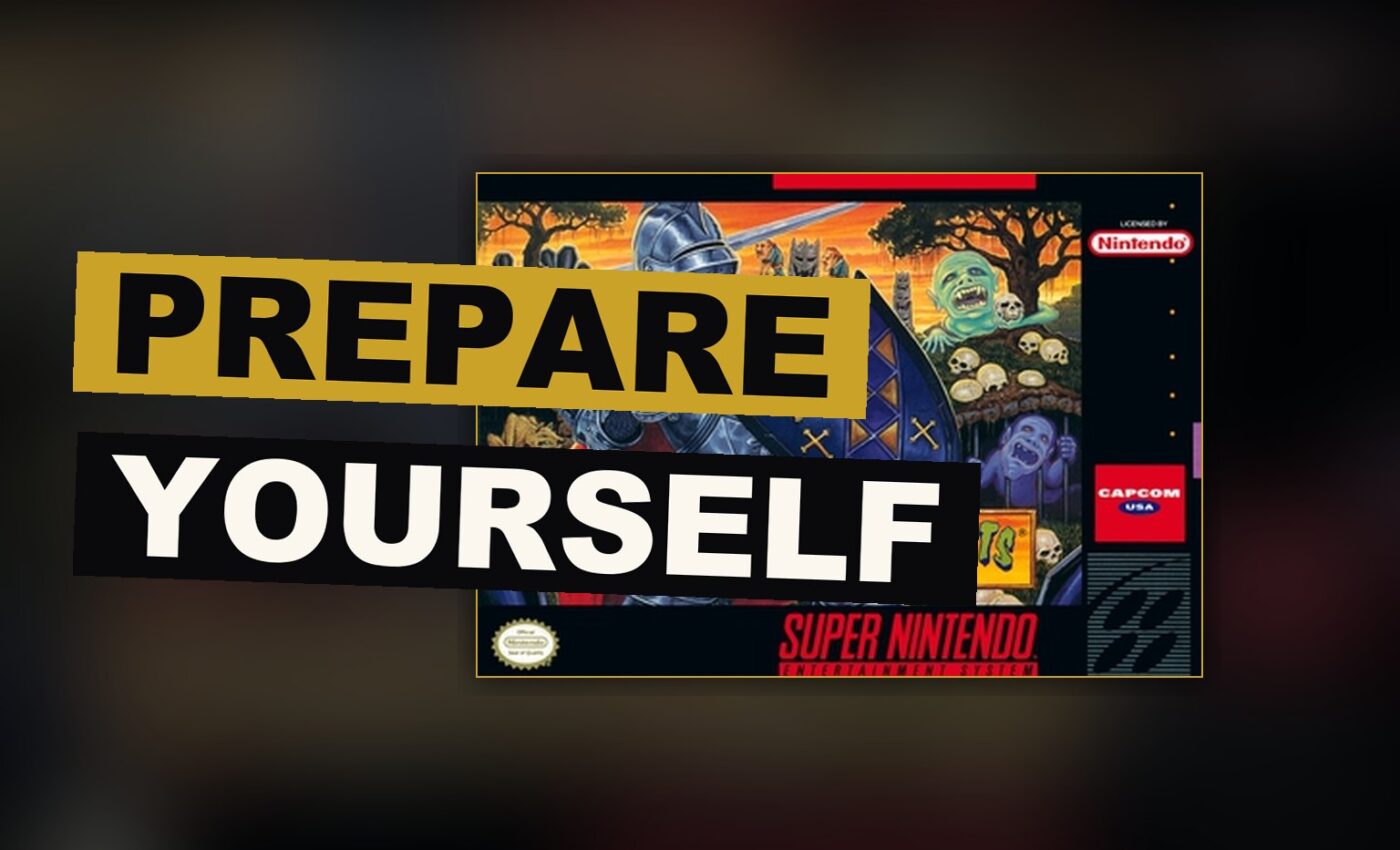
“Prepare yourself”
That line, printed on the packaging and repeated in the game itself, sums up the whole experience. Nothing about Super Ghouls ‘n Ghosts eases a player in.
Arms and Challenge
Arthur’s set of arms returns from the earlier games and grows further, giving him more ways to strike back. Changing his gear on the fly changes how a player handles a given group of foes, and finding the right item for a stage is part of the challenge. The variety keeps repeated attempts from feeling like plain repeat, even when a player cannot get past the same part for a long while.
Fights against bosses rest on learning enemy motion through repeat attempts more than quick timing alone. Losing to a boss after a long trial through a stage can feel like a heavy blow, and the lack of save points early in the game adds to the difficulty.
The game’s design is not built for comfort.
| Stage | Setting | Main Danger |
|---|---|---|
| 1 | Graveyard | Wandering dead, floating enemies |
| 2 | Village ruins | Large foes |
| 3 | Icy heights | Cold hazards |
| 4 | Sky fortress | Foes attacking from above |
| 5 | Lower depths | Groups of demons |
| 6 | The demon lord’s home | The demon lord himself |
The table above reflects a single playthrough; as noted, the game asks for a second pass through all six stages to reach its true end, a demand that separates casual players from those willing to master its ways.
Super Ghouls ‘n Ghosts punishes mistakes harshly, asks for repeat attempts, and makes players learn stages again that they had thought finished. But its suit system, wide set of arms and confident level design give it a lasting charm that few platformers from its time can match. The difficulty is real, and so is the reward of finally beating it.