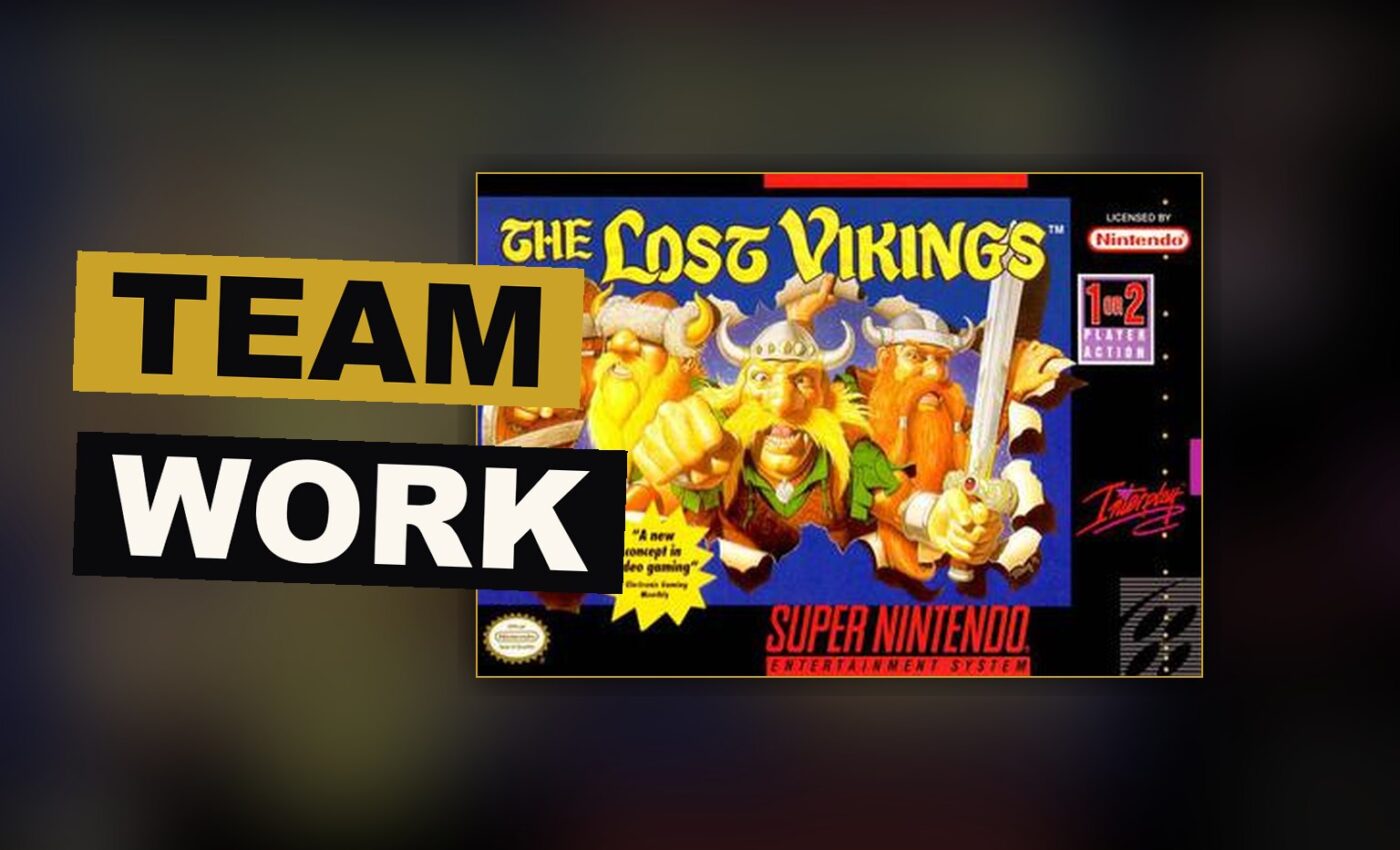
Three Vikings walk into a puzzle. That is the idea behind The Lost Vikings, and the game rarely lets you forget it. Each of the three heroes has one skill, one weak point, and no way to finish a level alone.
Three Heroes, One Problem
One Viking runs fast and springs far. A second fights with a sword and a bow. A third carries a shield that stops attacks and can carry him down from a height. None of the three can do the job alone.
The game asks players to switch between all three, again and again, to line up their skills against a single wall in front of them. A locked door might need the archer’s shot to hit a switch. An open drop might need the shield turned upward, with the other two riding on top of him. The puzzles build on that trick from the first level to the last.
The design makes for a clear order of how the levels teach you to think:
- Levels that test one skill alone, so you learn how it works.
- Levels that force two Vikings to work together at once.
- Levels that need all three at once, often against a clock.
Switching Between Heroes
The view follows the Viking a player has picked, not all three at once, and that choice shapes how puzzles get solved. Moving one hero out of sight while the other two wait behind can make it easy to lose track of where danger sits. Getting through a level often means switching back and forth, checking on a Viking left in a tight spot before moving him again.
Players who want fast action will find little of it here. The Lost Vikings is not built for haste, and it does not try to be.
Where It Comes From
The game began life at a small studio that would later grow into a much larger name in games. It carries that early identity: a small, careful puzzle game built around one idea that holds up across dozens of levels. The design lets the levels keep surprising the player without ever changing the rules beneath them.
“None of them can do the job by themselves.”
That single fact sums up the whole design. Working as a team is not a choice in The Lost Vikings, it is the entire game.
Falling or dying sends a level back to its start, and dying comes easily when three characters must be moved through the same danger one after another. Patience matters more than quick hands here. Players who rush will lose a Viking to a hazard that a careful approach would have caught.
The humor helps carry the game through its harder passages of levels. The three heroes trade jokes as they move through each stage, giving the puzzles a lighter tone than the difficulty might suggest. It is a small touch, but it keeps the game from feeling like dull labor.
The Verdict
The Lost Vikings works because its central idea is simple enough to explain in one line and rich enough to fill a whole game. The three heroes and their combined skills ask real thought from the player, level after level, without ever feeling worn out. The switching between views and the harder later levels are real weak points, and they keep the game short of greatness.
Still, what The Lost Vikings sets out to do, it does well. It is a puzzle game with real personality, built on an idea that still feels clever decades on.