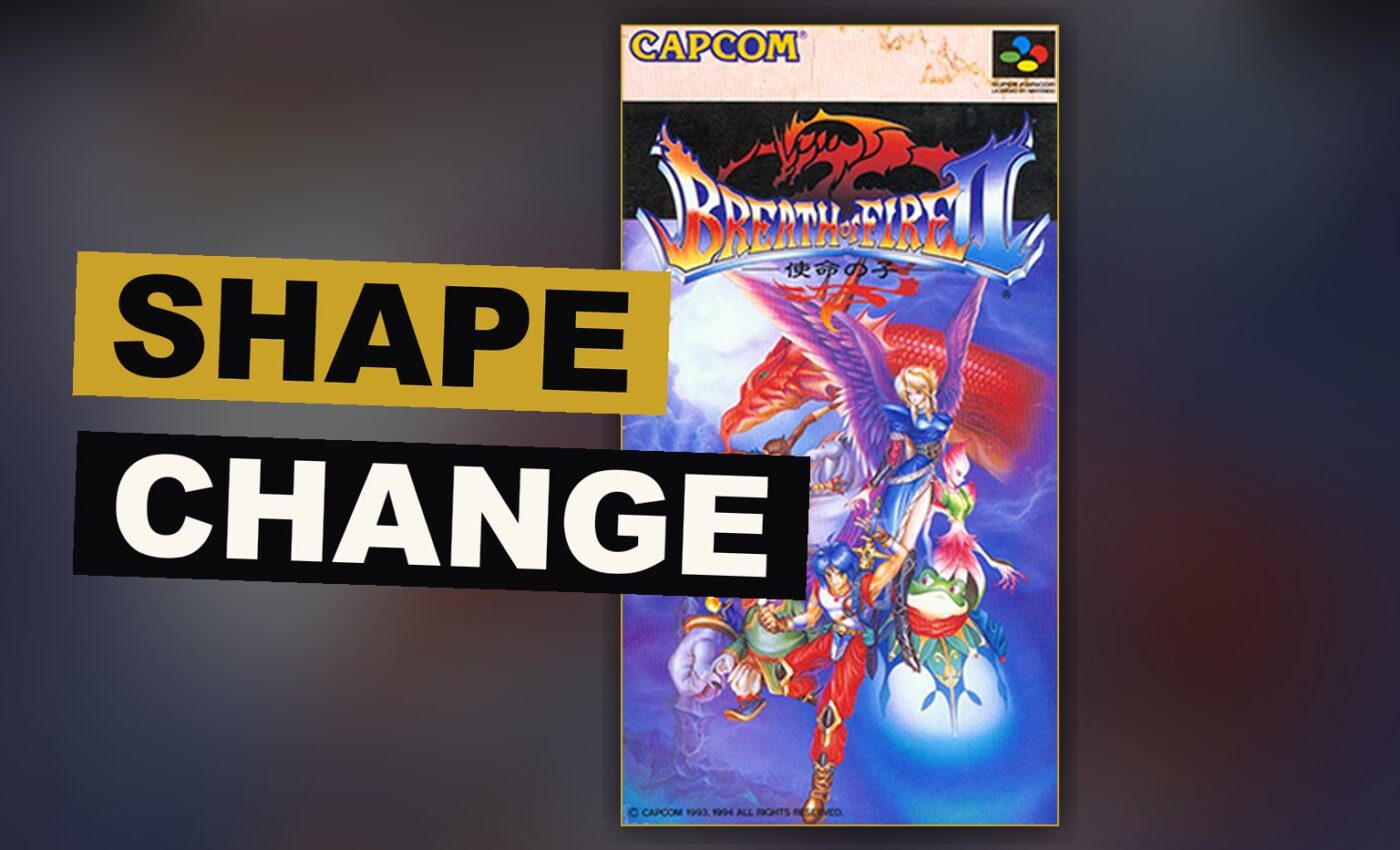
Breath of Fire II asks players to sit through a difficult opening before it earns its keep. The Super Nintendo game, a sequel built around a hero whose family line carries the power to change form, follows a party of companions who can also change their shapes. The first hours move at a tedious pace and the writing often reads strangely, as if put together in haste. Stay with it, and the game opens into a much bigger, stranger adventure than its start suggests.
A Difficult Script
The English text is the game’s most obvious weakness. Lines land badly, jokes miss, and story points sometimes need a second read to follow. Longtime players of the series have often pointed to the writing as the wall that keeps new players from giving Breath of Fire II a fair chance.
The trouble goes beyond the words on screen. Early side quests and conversations in town can feel cut off from the main story, leaving players doubtful of what the game wants of them in its opening hours.
The opening hours are tedious because the game gives players little sense of direction and few reasons to care about the people they meet in town.
Where the Game Finds Its Footing
Once the party grows and the world opens up, Breath of Fire II settles into its own rhythm. Characters can change into different forms during fights and while moving through the world, and this adds a layer of thought to a system that the first few hours never hint at. Dungeon design grows more daring, and the back half of the game turns toward ideas that feel heavy for a game of its time.
- The power to change form, used both in fights and to reach new places
- A system for building a settlement by bringing people to live there
- A story that grows more daring and harder to sum up as it goes on
- A larger cast of party members than most games of its kind offered at the time
That mix of ideas gives Breath of Fire II more weight than its difficult start would lead a player to expect.
Fights and Systems
Battles follow the standard alternating method common to the genre, but the power to change form keeps fights from feeling the same each time. Changing a character’s form while deep in a dungeon can open a path that was closed before, linking the ability to finding new places as much as to winning fights.
The settlement system stands out as a genuine surprise. Players bring people into a home base and watch it grow, a feature rarely tried elsewhere on the same console. It is a small piece of the whole, but it gives the game a sense of something building over time beyond the main quest.
The Verdict
Breath of Fire II is a game of two parts. The first is a weak, badly worded opening; the second is a far more sure and daring set of hours. The writing problems and the tedious start keep it from standing among the most loved games of its console’s time, but the ideas beneath the surface, changing form, building a settlement, and a story willing to go to darker places, reward the players who push past the rough beginning.
“the power to change form during fights and while moving through the world adds a layer of thought”
Breath of Fire II is not a lost classic, and it is not a failure either. It is a game whose ambition moves faster than its early execution, held back by a poor script but held up by real invention in its systems. The score, matching the wider critical view of the game, is 6.5 of 10.