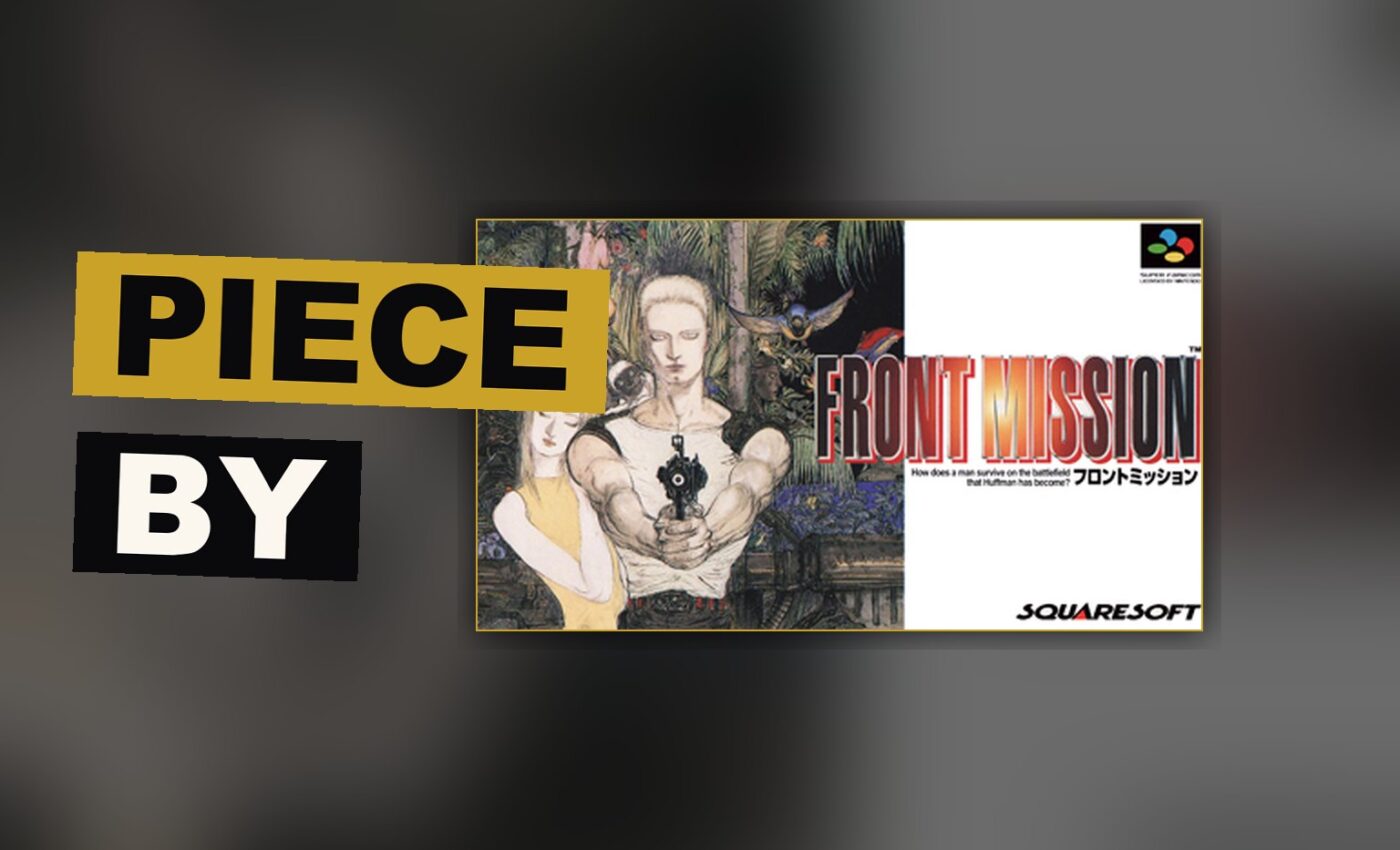
Front Mission arrived on the Super Nintendo as a tactics game built around giant piloted machines that fight limb by limb. It asks players to think slowly, move with care, and treat every battle as a puzzle with many pieces. That patience pays off more often than it frustrates.
The Fighting System
Battles happen on a grid, and each machine is made of separate pieces: arms, legs, body, and head. Damage a piece enough and it stops working; destroy the body and the pilot goes down for good. This method, piece against piece, gives fights a mechanical honesty other tactics games pass by. Players aiming to take away an enemy’s arm can do so by aiming fire at that single piece, changing the shape of a fight without ending it at once.
The cost of this depth is time. Menus take a while to move through, and turns can pile up when a mission fills the field with many machines. Nobody would call the pace quick.
Story and Setting
The tale follows a war between two nations, told through a small cast of pilots whose fates depend on choices made in earlier missions. The story does not reach for spectacle. It stays close to its people and lets the stakes of each fight carry the weight instead.
Where Front Mission earns real credit is in its will to let failure matter. A machine lost in battle can be gone for good, along with the pilot inside it. That lasting loss forces a kind of caution rarely asked for by games of its time.
Building the Machines
Outside of battle, players can take apart their machines and put them back together, changing parts, gear, and setups between missions. This is a deep system, perhaps deeper than the game needs to be for its length, but it rewards players who want to build a strong team rather than just win the next fight.
| Element | Strength | Weakness |
|---|---|---|
| Fighting System | Aim at single pieces adds real depth | Heavy pace, heavy menu use |
| Story | Grounded war, close to its people | Small scope, low spectacle |
| Machine Building | Deep gear and part choices | Deep systems can be more than the reward late in the game |
| Presentation | Clear mission ground | Little variety across stages |
Presentation
The look of Front Mission does not push the Super Nintendo hardware in bold ways. Mission fields are plain rather than striking, and enemy designs repeat more than they should. What the look does well is being plain and clear: players always know which piece of a machine they are aiming at and what the odds of a hit look like before they act.
Sound design plays a quiet part rather than a lead one. Music sets a steady tone for missions without asking for attention, which suits a game more interested in choices than mood.
Front Mission is not a game built for quick sessions or a fast start. It asks for patience, planning, and a will to lose a machine for good when a mission goes wrong. Players who accept those terms will find a tactics game with more depth than its plain look suggests. Those looking for a fast game or spectacle should look elsewhere.