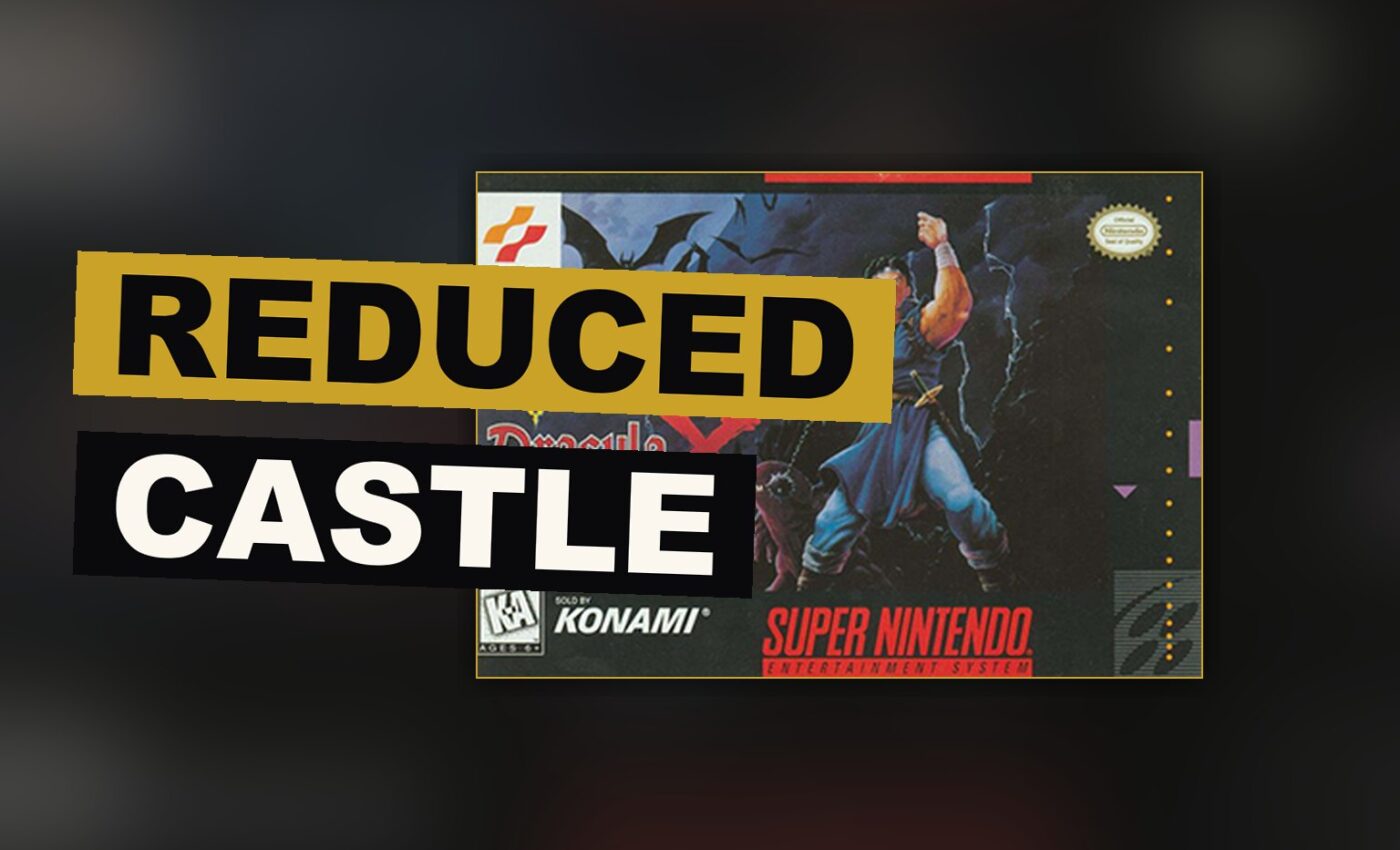
Castlevania: Dracula X asks players to walk a familiar path with fewer steps than they remember. The game trims content from earlier versions of the same story, and the cuts show. Still, the instrument in hand strikes well enough to hold attention.
The Setup
Players again take control of a hunter moving through Dracula’s castle, stage by stage, toward a final meeting with the count himself. The order of stages is fixed. Levels branch only in small ways, and the game pushes players forward rather than letting them search about freely.
The story is thin, delivered mostly through short scenes between stages. It exists to give reason for the instrument, the fire, the guardians, and the final meeting with Dracula. None of it asks much of the player beyond following along from one stage to the next.
Level Design
The arrangement of each stage favors careful footing over open searching. Enemies are placed to punish careless moves, and several parts of each stage demand repeated tries before they open up. The game rewards patience more than haste, at least until a player has learned where the dangers sit.
Some standout elements:
- Falling stairs that force quick decisions
- Narrow edges over open drops, paired with enemies that push players back
- Save points placed within longer stages that ease the sting of repeated deaths
- Boss rooms that remove extra scenery to focus on the fight itself
That last point matters. The fights against bosses are where Castlevania: Dracula X feels most sure of itself, with clear moves and fair chances to land hits. Few other parts of the game show this much care in their design.
Sound and Appearance
The music holds up well. Several tracks carry real weight, and they do more to set mood than the short scenes between stages manage to do. A player moving through the later stages will likely remember the music longer than any single fight.
In appearance, the game is solid rather than remarkable. The main character and enemies read clearly against the scenery behind them, which matters more than fine detail when the action grows busy on screen. Colors are chosen with care, even where the scenery itself is simple.
What’s Missing
Compared with other versions of this same story, this version leaves things out. Whole stages are gone. Other characters and paths found elsewhere are missing here. Players coming in expecting the full experience will notice these omissions at once, and nothing in the game itself explains their absence.
This is the game’s chief trouble. It is not that what remains plays badly — it does not. It is that so much of the accompanying material has been taken away that the final work feels like a piece of something larger, one that holds back rather than pushing the series forward.
Difficulty and Flow
The rise in difficulty is severe in places, most of all in the later half. Enemies placed near drops and dangers punish hesitation, and a number of moves across broken floor ask for careful timing that the game does not always make plain beforehand.
The flow of play suffers a little because of this. Long runs without a save point can turn small mistakes into repeated failure, which checks the sense of forward motion rather than building excitement.
Even so, the core handling of the character stays steady throughout. The main instrument, the extra items carried alongside it, and the way the character moves from platform to platform all work the same way each time, which keeps annoyance from turning into a feeling that the game is treating the player badly.
Castlevania: Dracula X holds back. It delivers a solid action game with strong music and firm boss fights, wrapped around a reduced version of a story told more fully elsewhere. Those devoted to the series will find enough here to reward a look, but the missing content keeps it from standing among the best of its kind.