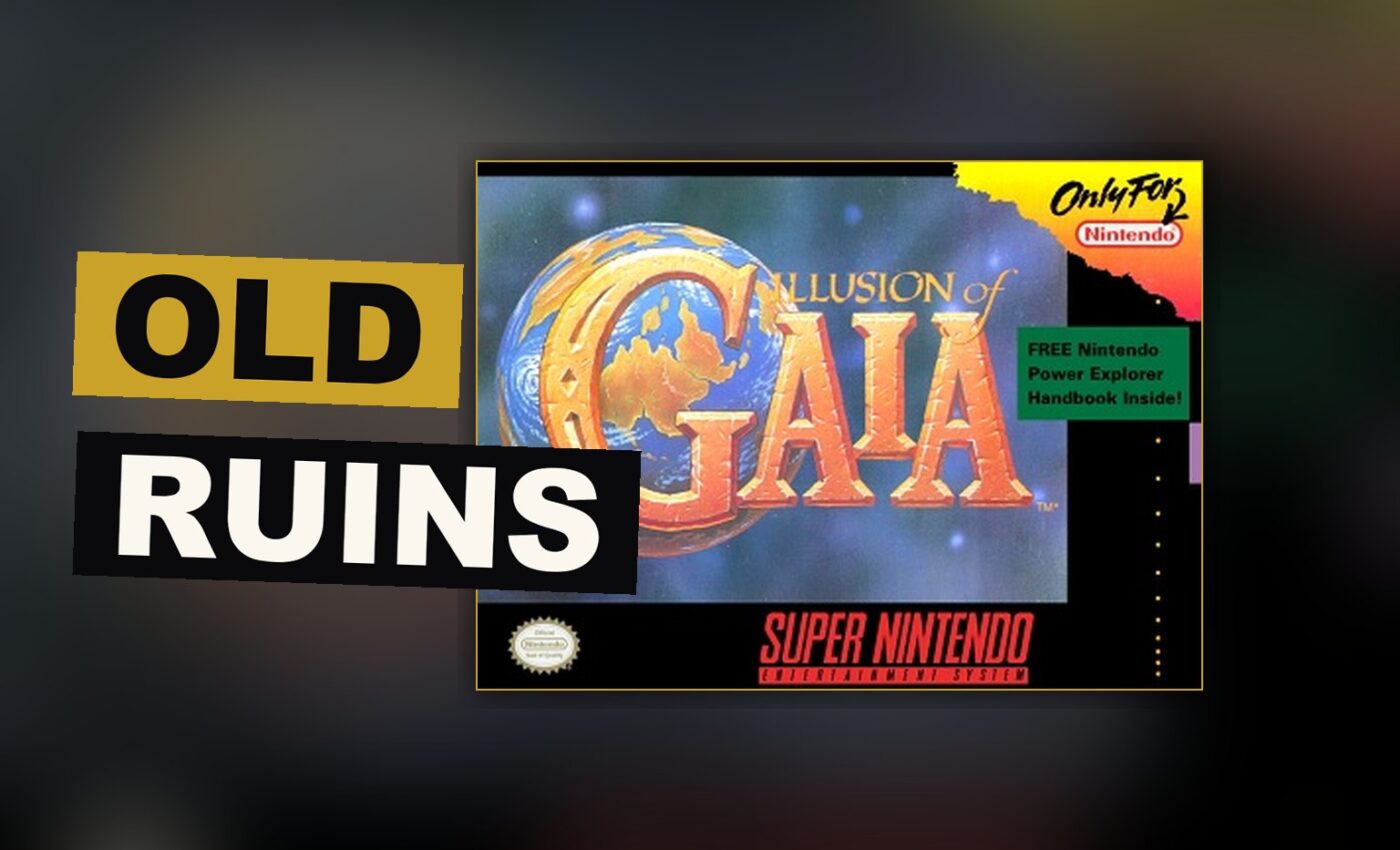
Illusion of Gaia asks players to switch between three forms, cross ancient ruins made into puzzle boxes, and carry a story about loss that lands harder than most games on the Super Nintendo ever attempted. It came from a studio abroad and was published by Enix, and it still holds up as one of the system’s finest games.
Will’s Journey
The hero, Will, travels across a set of famous ruins turned into levels. He fights as Will, but the game gives him two other forms — a swift spirit form and a knight form — each with a different feel in a fight. The spirit form hits fast but is weak. The knight form hits hard but is heavy on its feet. Switching between the two within a level keeps the fighting from growing dull.
The action itself stays simple. Attack, avoid, manage a small set of items. That simplicity works because the game does not depend on depth in the fighting to carry it.
Story and Tone
Illusion of Gaia does not hold back on grief. Characters die. Friends disappear. The tone sits closer to a quiet, sad adventure story than most games of its time offered. What little is said is said with purpose, and the game trusts silence in places most games would fill with talk.
The music backs that tone well, without pushing too hard. Quiet piano lines mark the sad moments better than any scene could.
Path Through the Game
The game moves through its ruins in a set order, and that order is part of what makes it work — each stop plays like its own short story with its own puzzle logic.
| Stop | Setting | Focus |
|---|---|---|
| 1 | First ruin | Learning to fight |
| 2 | Stone ruins | Working out puzzles |
| 3 | Great wall | Sneaking past danger |
| 4 | Distant temple | Spirit form takes over |
| 5 | Desert monument | Knight form takes over |
| 6 | Final chapters | Story’s end |
Travel back through finished ground is rare. Screens between stops appear fast. The pace rarely drags, even when a puzzle holds things up.
The fighting, for all its charm, never grows much beyond its opening hours. Boss fights repeat the same moves, and the challenge stays even well before the credits roll.
Illusion of Gaia is not the deepest game on the Super Nintendo, and it does not try to be. What it offers instead is mood, care, and a story willing to sit with sadness longer than most games of its time dared to. That mix still holds up.