
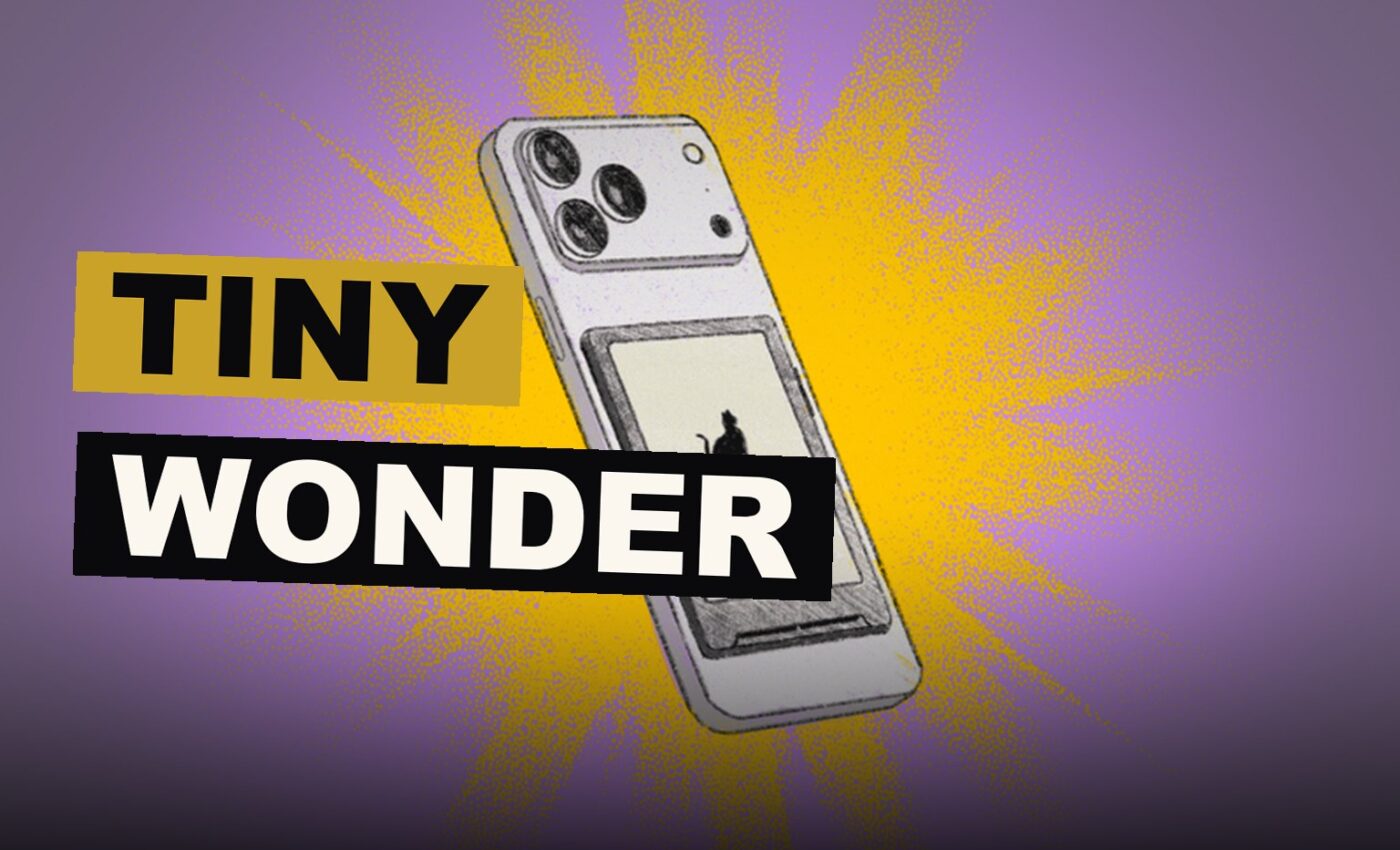
A $70 e-reader the size of a credit card has become a subject of wide discussion online, and the reason is simple: the writer who tested it calls it the best piece of technology they have purchased in years.
The device is called the Xteink X3. It’s made by a China-based company, sells on Amazon for $69, and sits at the top of Amazon’s list of newest e-readers, ahead of several Kindles. It sticks to the back of a phone, is small enough to add almost no bulk to a pocket, and looks at first glance like the kind of cheap item sold on Temu and TikTok Shop.
Reading Through The Power Broker
One writer for The Atlantic tried out the X3 by paging through Robert Caro’s The Power Broker on it for 10 hours over several weeks. The book itself runs 1,344 pages and weighs enough that some readers have cut their copies apart just to carry them.
The results were striking. In the two months before buying the X3, the writer finished only one book. In one month with the device, they finished three books without much effort, and the amount of time they spent looking at their iPhone each day dropped by 25 minutes.
The name Xteink does not inspire much trust on its own. It reads like something out of an AI-slop meme rather than a real brand. The company’s own website is full of AI-generated images of people holding the device. Even so, TikTokers and YouTubers have been telling followers since May, when the X3 first appeared on Amazon, to buy it right away.
Why Small Wins
The X3’s tiny size is not a weakness. It’s the reason it works. Each “page” on the device holds only a paragraph or two of text, which the writer says pushes them to keep turning pages without noticing. A YouTuber who reviewed the X3 called this effect the “TikTokification of reading.”
That phrase sounds strange, but the writer treats the result as a good one. Instead of opening Instagram during idle moments — waiting in line, sitting through Netflix ads — the writer now opens the X3 instead. The device is rough in build, imperfect, and at times hard to manage. Still, the display, though roughly half the size of the smallest Kindle screen, was large enough to read with ease. After three straight hours reading The Power Broker, the writer said their eyes were not tired.
Where $70 Falls Short
The X3 is plain hardware. It has no touch screen, no color display, and no light for reading in the dark. Xteink has since put out the X4 Pro, a larger and more costly model with a reading light and touch screen. The software built into the X3 struggles to show book covers or lay out some text correctly, and there is no simple way to move purchases from Amazon to it, unlike with a Kindle.
People who own the device have started fixing those problems themselves. A firmware built by users, called Crosspoint, upgrades the X3 in several ways, adding reading statistics, more text styles, and the ability to save pages as images. Late last month, Crosspoint added support for Libby, the library reading app.
A Following Beyond Its Price
The X3 has picked up a following well beyond its price tag. People have shared images of it on trips to the Austrian mountains and the Aegean Sea. Others have mounted it to their kitchen hood to display recipes, or built three-D-printed parts for it, including custom reading lights and, in one case, a case shaped like a gun.
Here is how the X3 compares with other devices mentioned in the reporting:
| Device | Price | What it offers | What it lacks |
|---|---|---|---|
| Xteink X3 | $69 | Small enough to attach to a phone, light weight | No touch screen, no light for the dark, rough software |
| Xteink X4 Pro | Higher than X3 | Reading light, touch screen | Larger than the X3 |
| Other popular e-readers | Not given | AI-powered recaps, finer displays, Android operating systems on some models | Larger than the X3 |
Part of a Wider Turn Toward Simple Gadgets
The writer frames the X3’s rise as a reaction to a dull run of consumer electronics in 2026. Laptops, smartphones, and tablets keep growing thinner and stronger, but that does not always feel like real progress. Apple is said to be preparing a folding iPhone soon, though Samsung already put out a folding phone back in 2019. At the same time, Amazon recently took away the ability for people to download books they already own and move them to devices outside the Kindle line.
Set against that, cheap devices that can be changed by users, coming out of China, have been filling the space left behind. The article points to cooling devices made by JisuLife and Civpower, popular for helping people get through summer heat, and to small projectors and earbuds made by a well-known brand, both Wirecutter-recommended, as part of the same change.
The X3 isn’t refined, and it isn’t pretending to be. Its appeal, by this account, comes from being cheap, small, and odd enough to make reading feel new again — a rare thing in a lineup of gadgets that mostly just make old ideas thinner.
Source: theatlantic.com
Get the Notebook.
The day's best stories and every fresh verdict, in plain English, in your inbox by seven. One email a day, no more.