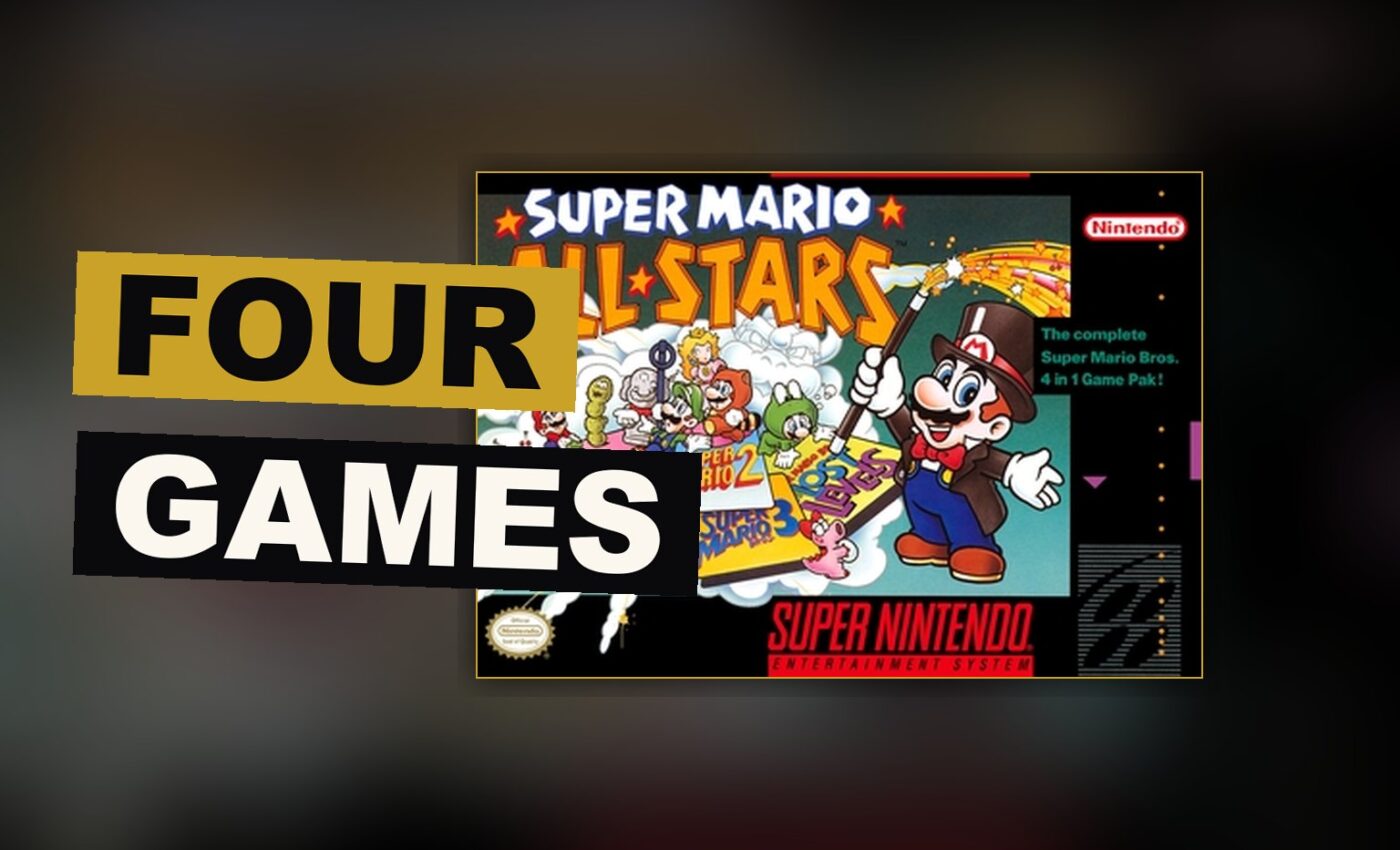
Super Mario All-Stars gathers four games on one cartridge: Super Mario Bros., Super Mario Bros. 2, Super Mario Bros. 3, and Super Mario Bros. The Lost Levels. Each has been given new art and new sound. The result plays like a show where visitors can touch the exhibits.
What Changed From the Originals
New art is the whole point of Super Mario All-Stars. Sprites are bigger, scenery carries more detail, and the colors take advantage of hardware the original cartridges never had. Music has been arranged anew with fuller sound, though the tunes stay familiar.
None of the four games play any different at their core. Running distances, enemy order and level order remain as they were. That matters, because it means Super Mario All-Stars keeps what worked before while giving it a new look.
A save feature has been added across all four titles. That alone changes how Super Mario Bros. 3 and The Lost Levels feel to play, since both were long and harsh on their original hardware.
The Four Games, Side by Side
Super Mario Bros. still holds up as a tight, steady platformer. Super Mario Bros. 2 remains the odd one in the set, built on different rules and a different cast of enemies than the rest of the series. Super Mario Bros. 3 is the clear high point of the set, with its world arrangement and item variety. The Lost Levels, meanwhile, is the hardest of the four by a wide margin, built as a harder sequel for players outside the country where the first game came from.
Here is how the four games sit in the set, from easiest to hardest:
| Game | Original Home | Difficulty in the Set |
|---|---|---|
| Super Mario Bros. | Home consoles, early appearance | Moderate |
| Super Mario Bros. 2 | Home consoles, early appearance | Moderate |
| Super Mario Bros. 3 | Home consoles, later appearance | Moderate to High |
| The Lost Levels | Never sold outside its home country before this set | Highest |
The sound work deserves note. The original tunes carry through the new arrangements without losing their character, even as the sound grows fuller. The new art does not change any of the four games’ look so much as make it clearer and give it more room on a bigger screen.
Not every change lands the same. Some players have said the new sprites occasionally change how enemy hitboxes read, which briefly makes precise moves in Super Mario Bros. 3 harder to judge. It is a small issue.
Value of the Set
Four full games on one cartridge is a large offer by any measure. Super Mario All-Stars gives new players a simple way into the older Mario library without needing the original hardware, and gives longtime players a good reason to return to The Lost Levels, a game many outside its home country never had a chance to play before.
The save feature alone extends the set’s practical life. Players can now work through Super Mario Bros. 3’s world at their own pace, rather than in single long sessions with no break.
Super Mario All-Stars asks little of players beyond a wish to enjoy four related games back to back.
Super Mario All-Stars succeeds because it respects the material it is built from. The new art and sound update the presentation without disturbing what made the four original games work. Super Mario Bros. 3 remains the best part, The Lost Levels offers a real test for series veterans, and the save feature makes both simpler to recommend than their original versions ever were.
Critics have generally agreed that Super Mario All-Stars stands as an especially strong set, and that agreement holds up on replay. The four games are different enough from one another to keep the set from feeling repeated, and strong enough on their own to justify the cartridge.
Super Mario All-Stars earns its name as one of the better sets on its home hardware. It does not try to remake four games that already worked, it simply shows them at their best.