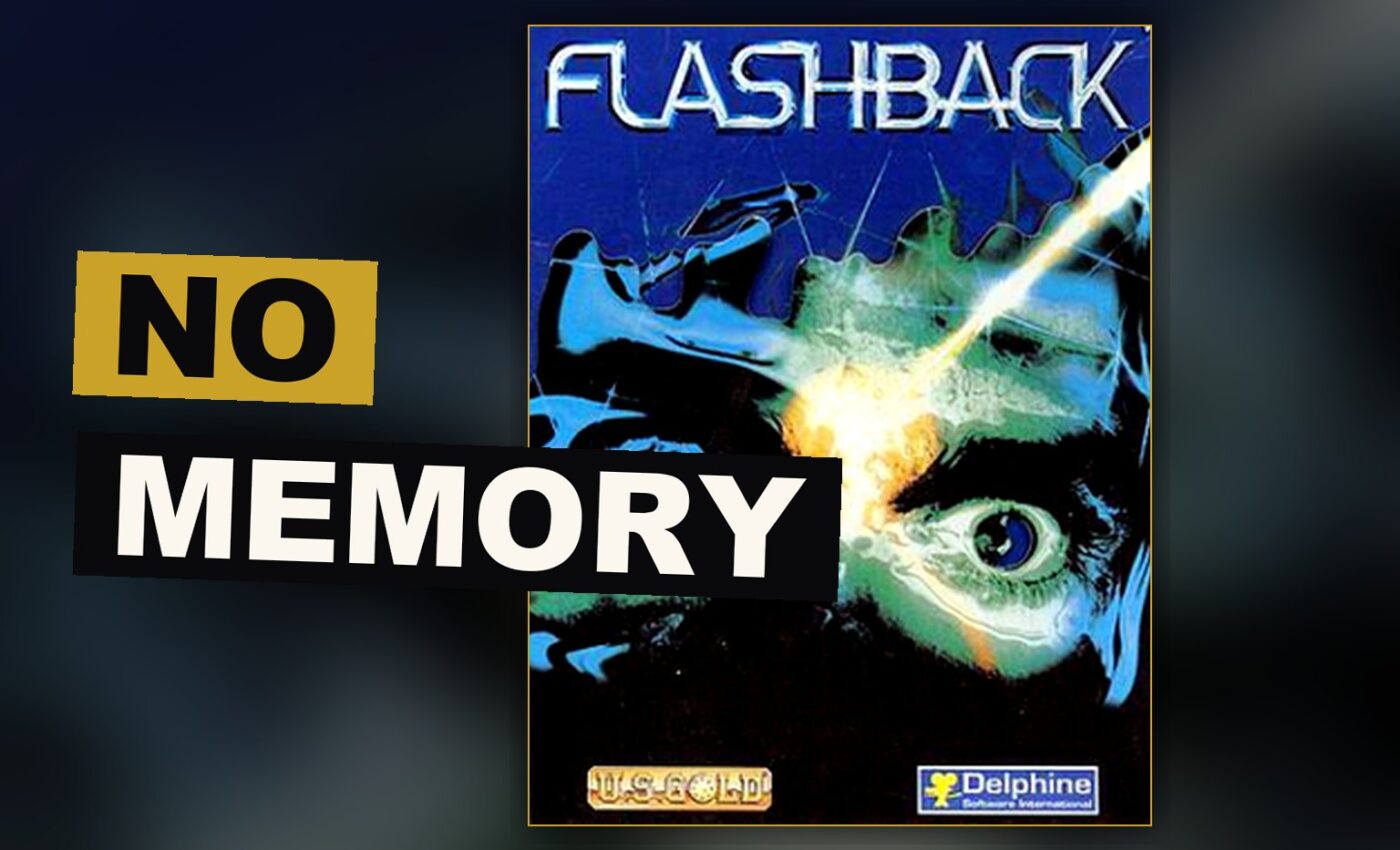
Flashback drops the hero into a strange future with no memory, no clear friend, and a city full of danger. The game asks for patience. It rewards close attention to its world, its puzzles, and its harsh style of motion and timing.
The World Begins
The hero wakes on an alien world with his memory gone. He does not know how he got there. The story unfolds slowly, through short recordings found along the way and brief animated scenes that break up the action. Nothing is explained fast. Every player must piece the story together for himself.
This quiet start will not please those who want fast answers. But it gives the world a sense of mystery that stays present through much of the game.
Motion As Art
The motion in Flashback is the first thing anyone notices. Every run, spring, and roll looks smooth and full of weight, closer to a short film than a game. The figures move with a grace not common in games made for the SNES during that period, a difference the developers achieved by tracing over filmed human motion, frame by frame, to give the hero a natural way of moving through danger.
The result still holds up well today. Even simple actions, like rising to a high place or rolling clear of an attack, carry a sense of real weight and care.
Puzzles Without Mercy
The motion is also the source of most of the game’s difficulty. A single bound, timed wrong, can mean sudden death. This can frustrate a new player, but it also gives the game a distinct feel once the timing is learned through repeated failure.
Flashback is not a simple game of shooting. Enemies matter less than the world around the hero. Doors need switches. Switches need power. Power needs a path that is not always plain to see.
The puzzles are reasoned once solved, but rarely easy to guess at first sight. Some rooms demand real trial and error, with no guide beyond careful looking and memory. That pace will not suit every player, but it gives each level a sense of weight and purpose.
What Holds Up And What Does Not
Not every part of Flashback has aged equally well.
- The motion and design of the world remain the strongest parts of the game.
- The puzzles give real satisfaction once a solution falls into place.
- The rise in difficulty means many deaths come from a badly timed bound rather than a mistake in thought.
- Places to save progress are few, so a small mistake can cost real time and effort.
- The story, while full of interest, moves slowly and depends on recordings a player may choose not to read.
The rise in difficulty comes not from poor design but from a style built around exact timing, and it demands real patience from anyone who plays it through.
The Numbers Behind It
- Platform: SNES
- Kind of game: adventure built on thought and careful timing
- Known method: figures traced over filmed human motion
- Critical score: 8.6 out of 10
Flashback is built on mood, motion, and careful design rather than plain force or noise. Its animation still looks remarkable, its puzzles still demand real thought, and its difficulty still tests patience at every turn. Some of its rough edges remain rough, and its pace will test those who want quick reward. But taken as a whole, the game still stands as a high point among the SNES library.