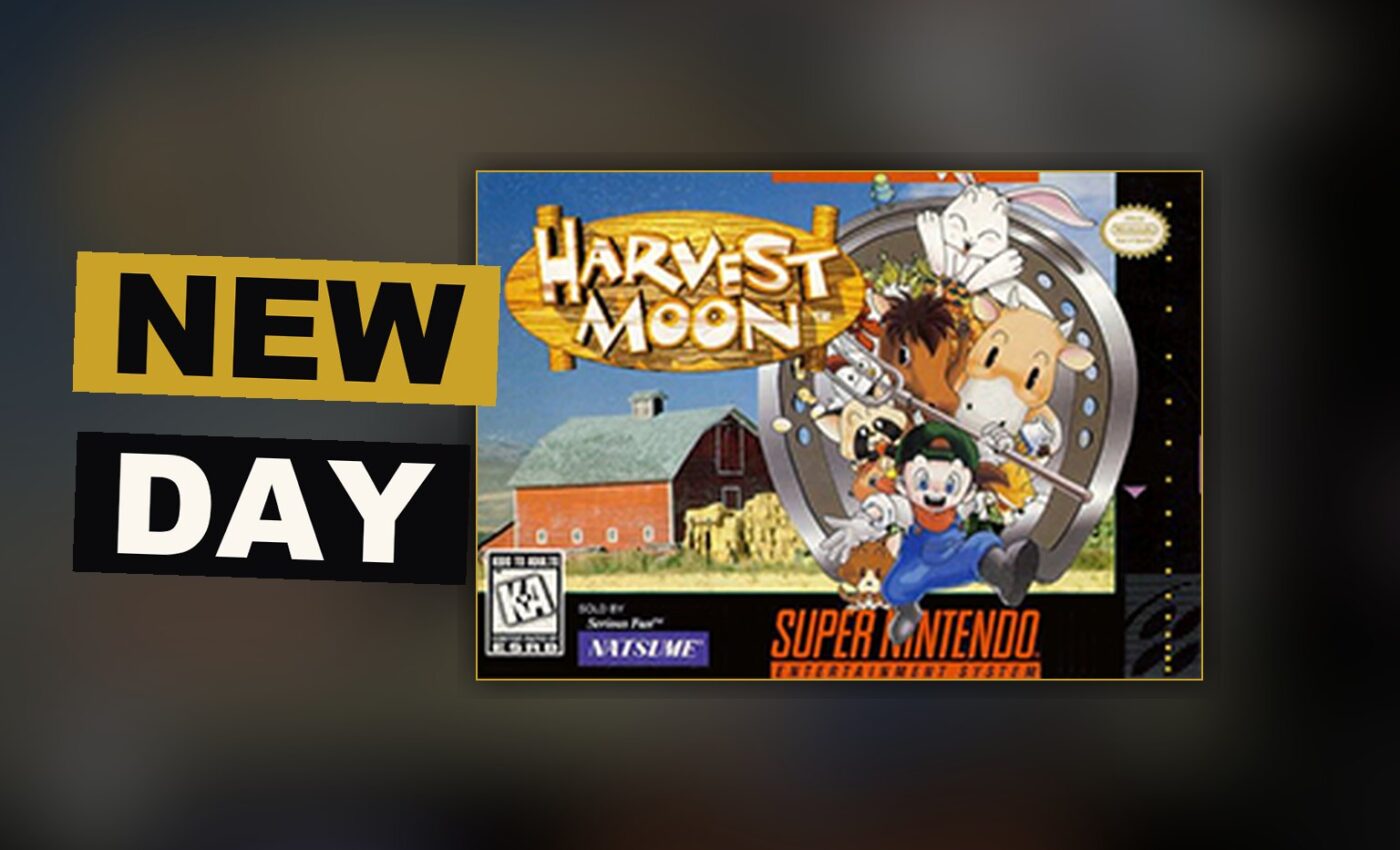
Harvest Moon arrived on the Super NES and quietly changed what a farming game could be. It trades battle and quests for tending fields, watering the soil and raising animals, and it turns the passing of days into the whole point of play.
The Daily Task
The game hands players a neglected farm and a calendar. Fields need water. Cows need feeding. Chickens need tending. Miss a day and the work grows harder.
Seasons change the course of work. Spring brings early produce into the ground. Summer opens the field to other kinds of produce. Fall brings its own round of autumn crops, and winter shuts most farming down, forcing players to plan ahead or manage with less.
| Season | Main Task | Key Produce |
|---|---|---|
| Spring | Sowing seeds | Early produce |
| Summer | Watering fields | Field produce |
| Fall | Gathering harvest | Autumn crops |
| Winter | Animal Care | None |
Life Beyond the Field
Farming is not the only system here. Players can visit the town, build relationships with its people, and eventually marry one of several candidates. None of it moves quickly. Progress comes in small steps, day by day, season by season.
That pace will not suit every player.
Some will find the gradual gathering of daily duty calming. Others will find the course of days wearing thin, since many days come down to the same round of watering, feeding and checking on the animals. The game does not hurry toward an ending. It simply continues, year after year, until the farm looks the way the player wants it to look.
Sound and Sight
The pixel art is simple but clear. Fields, animals and villagers are easy to read at a glance, which matters when the game is asking players to track dozens of small details across a growing farm. The music plays gently behind the action, never demanding attention, which fits a game built around patience rather than haste.
Each morning brings the farm’s clock back to its start, and the design depends on that small, repeating turn rather than any single grand ending.
It is a game about daily labor, patience and small, steady gains.
There is no final battle waiting. There is only the next day, and the next set of duties.
The controls can feel heavy when managing a full farm under time pressure. Some players will wish for faster tools or quicker steps, especially once the labor increases in later years. The game does not explain its systems well at the start, either, leaving new players to learn the calendar and its costs through trial and error.
Harvest Moon is not built for spectacle, and it does not try to be. It is a game about daily labor, patience and small, steady gains, and it does that job well enough that its influence still shows up in farming games made decades later. IMDb users have rated the game 8.1 out of 10, and that number holds up.