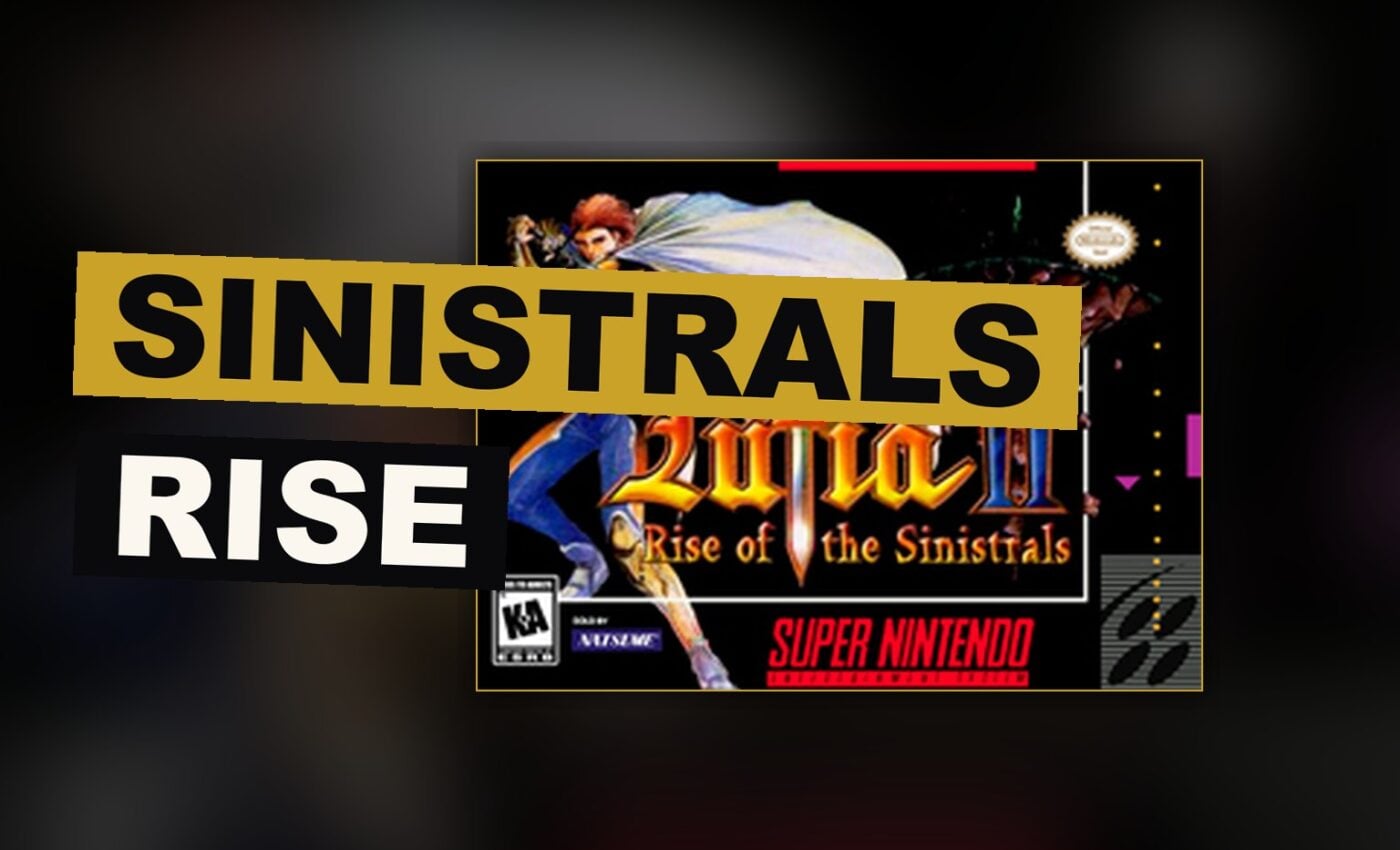
Lufia II: Rise of the Sinistrals is a prequel that solves the problem prequels usually create. It tells you how the story ends before you start, then makes the journey worth taking anyway.
Developed by Neverland and published in Japan in 1995 by Taito, the game reached North America and Europe in 1996 through Natsume and Nintendo respectively, for the Super Nintendo Entertainment System. It is the second entry in the Lufia series, and it is the best one.
A Swordsman From Elcid
The game is set 99 years before Lufia & the Fortress of Doom. The protagonist is Maxim, a swordsman from the town of Elcid, born with a natural ability to fight and destined to destroy the Sinistrals.
A mysterious woman named Iris tells him to go on a journey. That is the whole setup, and it is enough. The story explains how the Sinistrals first appeared and why mankind went to war with a group of godlike beings.
Maxim gathers the Heroes of Legend along the way. Tia, his childhood friend, carries a romantic interest in him. Guy is a wandering warrior who joins after Maxim rescues his sister. Dekar serves as bodyguard to Prince Alex of Bound Kingdom. Lexis is a brilliant inventor. Artea is an elven bowman. Selan commands the Parcelyte army and becomes Maxim’s wife in mid-story.
The antagonists are four. Daos, the Sinistral of Terror, leads them and seeks an ultimate weapon. Gades, the Sinistral of Destruction, is credited with destroying two entire cities. Amon, the Sinistral of Chaos, is a brilliant tactician. Erim is the Sinistral of Death.
Dungeons Without Random Battles
Lufia II keeps the turn-based RPG format of its predecessor and adds puzzle work on top. Dungeons no longer have random encounters. Monsters appear on the map and can be avoided if the player wishes.
Motion in dungeons is turn-based. Monsters do not move unless the player does. That single change reframes every room. You are never ambushed by a dice roll. You are ambushed by your own impatience.
Maxim gains tools and weapons usable only in dungeons, similar to The Legend of Zelda titles. A bow and arrow, bombs, a hookshot. Along with his sword, these stun monsters temporarily and interact with obstacles. Dungeons lean hard on puzzles, and there are hundreds of them, ranging from simple to extremely challenging.
The overworld is a different matter. Monsters there are encountered randomly. The party supports up to four characters at once. Transportation faster than walking includes a warping spell, a boat modified into a submarine, and a blimp. The game also includes casino minigames: Pachinko Slot, Black Jack, Slot Machine, Stud Poker, and Action Bingo.
IP Skills and the Gear Trade-Off
Battles run on the standard options: Fight, Use Item, Use Magic. The addition that matters is IP Skills, attached to weapons, armor and accessories.
Each character’s IP bar fills when taking damage. IP Skills deplete varying amounts of charge when activated. Players can freely equip and customize characters with sets of weapons and armor for different IP skill effects, and apply them while using tactics during battles.
IP Skills themselves cannot be customized. That constraint is the smartest thing in the combat system. It forces a real choice between a newer, stronger piece of gear and an older, weaker one that carries a useful skill. Most RPGs let you keep both. Lufia II makes you pick, every time, for the whole run.
Capsule Monsters
Capsule Monsters are special creatures found only on specific locations of the world. Once found, they join the party in battle. They evolve by consuming weapons, armor, or special fruits.
This is a tamagotchi loop bolted onto a fantasy epic, and it should not work. It does. Feeding a monster your spare sword is a better resource decision than selling it, and it gives every chest a second purpose.
The system sits alongside the four-character party rather than replacing anyone. It is optional depth, not a tax.
What Holds Up and What Doesn’t
The turn-based dungeon movement is the design decision that carries the whole game. It turns combat into a positioning problem and puzzles into a timing problem, and it makes the two systems share a language instead of sitting in separate rooms.
Here is the ranking of what Lufia II does best:
- Dungeon design, where puzzles and visible monsters combine into one continuous test.
- The IP Skill gear trade-off, which makes equipment a decision rather than an upgrade treadmill.
- Capsule Monsters, an evolution system that rewards hoarding instead of punishing it.
- The cast, which is large enough that some members get less room than they deserve.
- The casino minigames, which are fine and entirely beside the point.
The weakness is the same one the first game had. The story is a prequel, so the ending is fixed before Maxim swings a sword. The game knows this and spends its time on the people instead. Selan’s arc, in particular, does more work than the plot mechanics require.
The Sinistrals are a strong set of villains on paper. Daos wants an ultimate weapon. Gades has two cities to his name. Amon thinks. Erim ends things. Four gods, four distinct roles, and the game gives each one a job to do rather than a personality to monologue.
A Prequel That Earns Its Place
Lufia II: Rise of the Sinistrals is a 1995 Super Nintendo RPG that understood something most of its peers did not. Removing random encounters from dungeons is not a quality-of-life feature. It is a statement that the player should be making decisions, not rolling dice.
The puzzle emphasis could have turned every dungeon into a chore. Instead, the tools, the visible monsters, and the turn-based movement lock together into something that still feels deliberate. The IP Skill system adds a genuine cost to getting stronger. The Capsule Monsters add a second economy on top of the first.
It is not flawless. The prequel structure drains tension from the main plot, and the cast is too large for the screen time available. The casino games are filler. None of that undoes the core.
This is the high point of the Lufia series, and one of the more thoughtful RPGs on the Super Nintendo. It earns its reputation.
Get the Notebook.
The day's best stories and every fresh verdict, in plain English, in your inbox by seven. One email a day, no more.