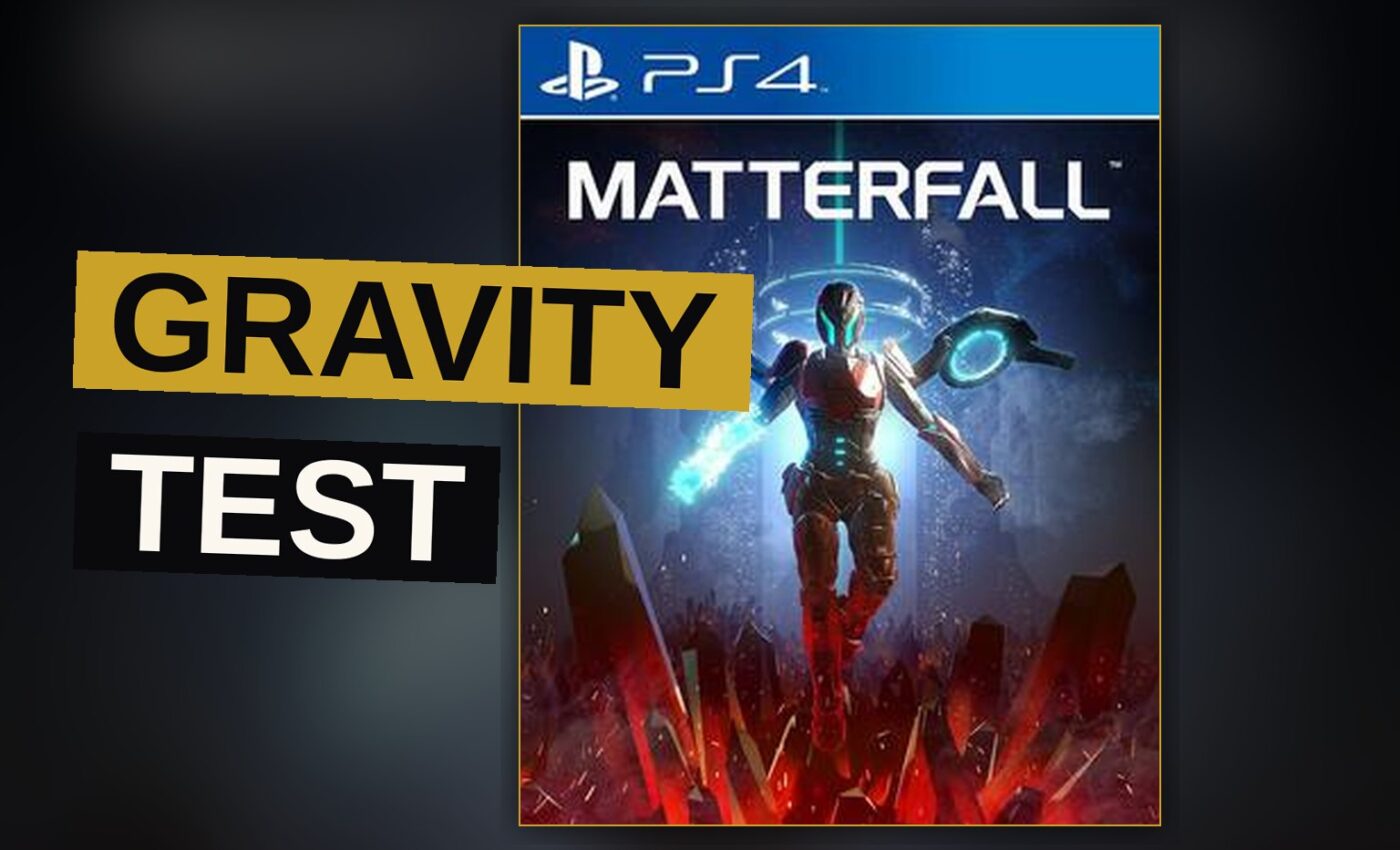
Matterfall asks players to solve puzzles by manipulating gravity and mass, and that core idea is clever enough to carry a whole game. But the execution stumbles often enough that the final product falls short of what its premise promises. This is a game that understands physics better than it understands fun.
Trailer, via IGDBcom.
The Premise
The setup is simple: Matterfall drops players into a series of chambers where gravity can be reversed, doubled, or redirected entirely. Objects move according to their mass, and the trick of each puzzle is figuring out which objects need to be heavy and which need to be light. It sounds elegant on paper, and in moments it delivers on that promise.
The game presents itself as a series of rooms, each one a small test of logic before moving on to the next. That structure works well for the early hours, when the rules are fresh and the solutions feel genuinely surprising. As the game goes on, though, the repetition starts to show.
Where It Works
Matterfall’s best moments come when the physics behave in unexpected ways. A platform that rises because it has been made too light, or a ball that rolls in the wrong direction because its weight has shifted — these are the kind of puzzles that stick with you after you finish them. The game’s visual design also helps: the chambers are clean, bright, and easy to read, which means players can see what is happening to an object even when the camera moves quickly.
The difficulty curve is gentle at first, which is a smart choice. New players get time to understand the basic rules before the game starts throwing multiple layers of manipulation at them. Once the game opens up, though, the difficulty spikes suddenly, and some of the later puzzles require a level of patience that the earlier levels did not prepare players for.
Where It Falls Short
The pacing is the game’s biggest problem. Matterfall leans heavily on repetition, and the middle portion of the game drags badly as the same handful of tricks are recycled across room after room. Players who enjoy a steady stream of new ideas will find themselves frustrated by the lack of variety, while those who prefer grinding through similar problems will likely grow bored.
Some of the puzzles are also poorly communicated. Objectives are not always clearly stated, and the game occasionally expects players to guess what they are supposed to do next. That guessing can be rewarding when the solution finally clicks, but it can also feel like a waste of time when the answer turns out to be obvious in hindsight.
The game’s presentation is solid but unremarkable. The music is pleasant without being memorable, and the sound effects do a good job of reinforcing the physics at play. There is nothing here that stands out as particularly innovative, but there is also nothing that feels out of place.
The Numbers
Here is a quick look at how Matterfall’s strengths and weaknesses break down:
| Element | Strengths | Weaknesses |
|---|---|---|
| Physics mechanics | Creative, satisfying solutions | Occasionally confusing objectives |
| Visual design | Clean, easy to read | Repetitive in the middle stretch |
| Difficulty curve | Gentle start, sudden spike | Poorly communicated objectives |
| Pacing | Engaging early | Middle portion drags badly |
The table shows a game that is strong in concept but weak in delivery. The physics engine is the star of the show, but the supporting cast lets it down.
What Stays With You
Despite its flaws, Matterfall has a few puzzles that stay with players long after they finish the game. These are the moments when the game’s central idea truly clicks, and they justify why anyone would want to play it in the first place.
Here is a list of the game’s standout puzzles, ranked by how memorable they are:
- The room where gravity is completely flipped, forcing players to rethink what “up” and “down” mean.
- The chamber that requires players to balance the mass of several objects at once, creating a delicate chain reaction.
- The puzzle where the player character herself becomes part of the physics equation, changing her own density to solve a problem.
- The final sequence, which brings together everything the game has taught about mass and gravity in a single, tense room.
These are the moments that make Matterfall worth playing, even when the rest of the game struggles to hold attention.
The Final Word
Matterfall is a game that gets one big idea almost perfectly, but it spends too much time repeating that idea instead of building on it. The physics puzzles are inventive and satisfying, but the pacing and repetition hold the game back from greatness. For players who enjoy a good brain teaser, there is plenty to appreciate here. For everyone else, the middle stretch will be a slog.
The game’s strongest qualities are its puzzles, and its weakest are the systems that support them. The physics engine deserves credit for being clever and consistent, but the level design and pacing need work. Matterfall is a promising idea that needed more polish.
Get the Notebook.
The day's best stories and every fresh verdict, in plain English, in your inbox by seven. One email a day, no more.