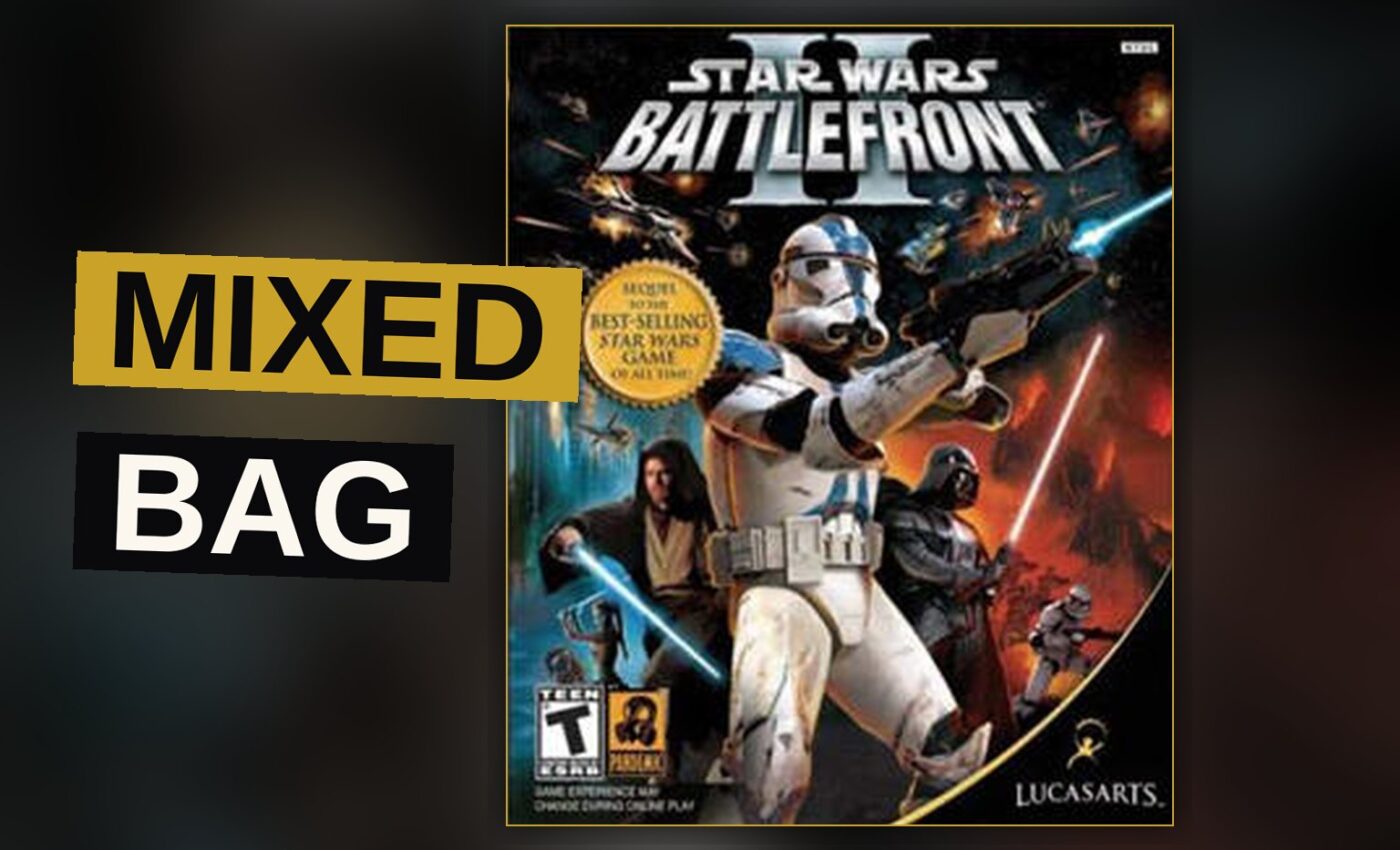
Star Wars Battlefront II launched in 2017 with a target on its back. Not from players who doubted DICE could build a bigger sequel to the 2015 reboot — but from a progression system that tied loot boxes to gameplay advantages. EA disabled microtransactions, then overhauled the progression system. What survived is a first- and third-person shooter spanning all three Star Wars eras, with more maps, more modes and more content than its predecessor.
Trailer, via EA Star Wars.
Iden Versio and Inferno Squad
The single-player campaign, built by Motive Studios, follows Iden Versio, commander of the Imperial special ops unit Inferno Squad. Janina Gavankar plays her. The story sits between Return of the Jedi and The Force Awakens, during the final year of the Galactic Civil War. Iden is captured aboard the Rebel cruiser Invincible Faith, frees herself with help from her ID10 droid Dio, and rejoins her squadmates Del Meeko (T. J. Ramini) and Gideon Hask (Paul Blackthorne) on the Corvus.
At Endor, Inferno Squad watches the second Death Star burn. Admiral Garrick Versio (Anthony Skordi) — Iden’s father — informs his daughter of the Emperor’s death. A messenger droid then conveys the late Emperor’s final command: Operation: Cinder, an order to devastate loyal Imperial worlds as punishment for his death. When Cinder targets Iden’s homeworld of Vardos, she and Del refuse to slaughter civilians. They defect to the Rebel Alliance.
That turn is the campaign’s best idea. A soldier who follows orders until the orders turn on her own people is a cleaner motive than most Star Wars games attempt. The story then runs toward the Battle of Jakku, with Iden facing her father and the vengeful Hask. Del’s side trip to Pillio, where he meets Luke Skywalker (Matthew Mercer) and questions the Empire, plants the doubt early. It works.
Fifteen Maps, Eight More Since
Battlefront II ships with 15 locations: Kamino, Kashyyyk, Naboo, Mos Eisley, Yavin IV, Hoth, Cloud City, Endor, Death Star II, Jakku, Takodana and Starkiller Base on the ground, plus Ryloth, Fondor and the Unknown Regions in space. Eight more arrived after launch — Crait, Jabba’s Palace, Kessel, Geonosis, Felucia, Ajan Kloss, Scarif and the space-only D’Qar. Some ground maps stay locked to specific modes.
The three-era structure is the real draw. Clone Wars battles pit the Galactic Republic against the Confederacy of Independent Systems. The Galactic Civil War puts Rebels against the Empire. The Resistance fights the First Order. Each faction fields its own soldiers — clone troopers, battle droids, stormtroopers — and its own starfighters.
Soldiers Play the Same, Starfighters Do Not
Here is the split that decides how long you stay. Soldiers across every faction have identical controls and differ only in appearance. Starfighters carry unique abilities and play differently from one another. That means the ground game leans on classes, reinforcements and vehicles for variety, while the space game gets it for free.
The class-based structure gives ground battles a role for everyone, and heroes and villains from across the films let you break the rules when you earn them. Space battles are where the game’s personality lives, though. Criterion Games handled the starfighter gameplay and mechanics, and it shows.
The Loot Box That Changed Everything
Before launch, players found that loot boxes were tied to progression and could hand over substantial gameplay advantages for real money. EA defended the system at first. That defense made things worse. The company eventually disabled microtransactions, then overhauled progression entirely.
Then came years of free content updates that added the eight maps above and kept expanding what the game offered. A launch defined by a pay-to-win scandal became a game supported long after most shooters go quiet. That reversal is the story of Battlefront II.
What to Expect, Mode by Mode
| Mode | Players | What you do |
|---|---|---|
| Campaign | Single player | Play Iden Versio’s story across the Empire and New Republic |
| Ground battles | Multiplayer | Class-based soldiers, reinforcements, vehicles, heroes |
| Space battles | Multiplayer | Starfighters with faction-unique abilities |
| Co-operative | Multiplayer | Team up against AI-controlled opposition |
The campaign carries the weight of the package. Multiplayer is where the hours go, and the co-op mode adds a third option alongside the competitive modes.
The Verdict on Battlefront II
Battlefront II earns a 7.2 out of 10. The campaign gives the Empire a face and then lets that face change sides. The three-era map list is generous, and the starfighter combat is the sharpest thing in the box.
The problems are structural. Identical soldier controls across factions flatten the ground game into a cosmetic choice. The loot box controversy defined the game’s launch, and the overhaul that followed is what kept it alive. The campaign ends before it should.
What matters most is the recovery. EA disabled microtransactions, overhauled progression, and kept shipping content for years. That is not a small thing in a genre built on annual resets. Battlefront II is not the best shooter of its generation. It is the one that listened, and that counts for something.
7.2 of 10.
Get the Notebook.
The day's best stories and every fresh verdict, in plain English, in your inbox by seven. One email a day, no more.