
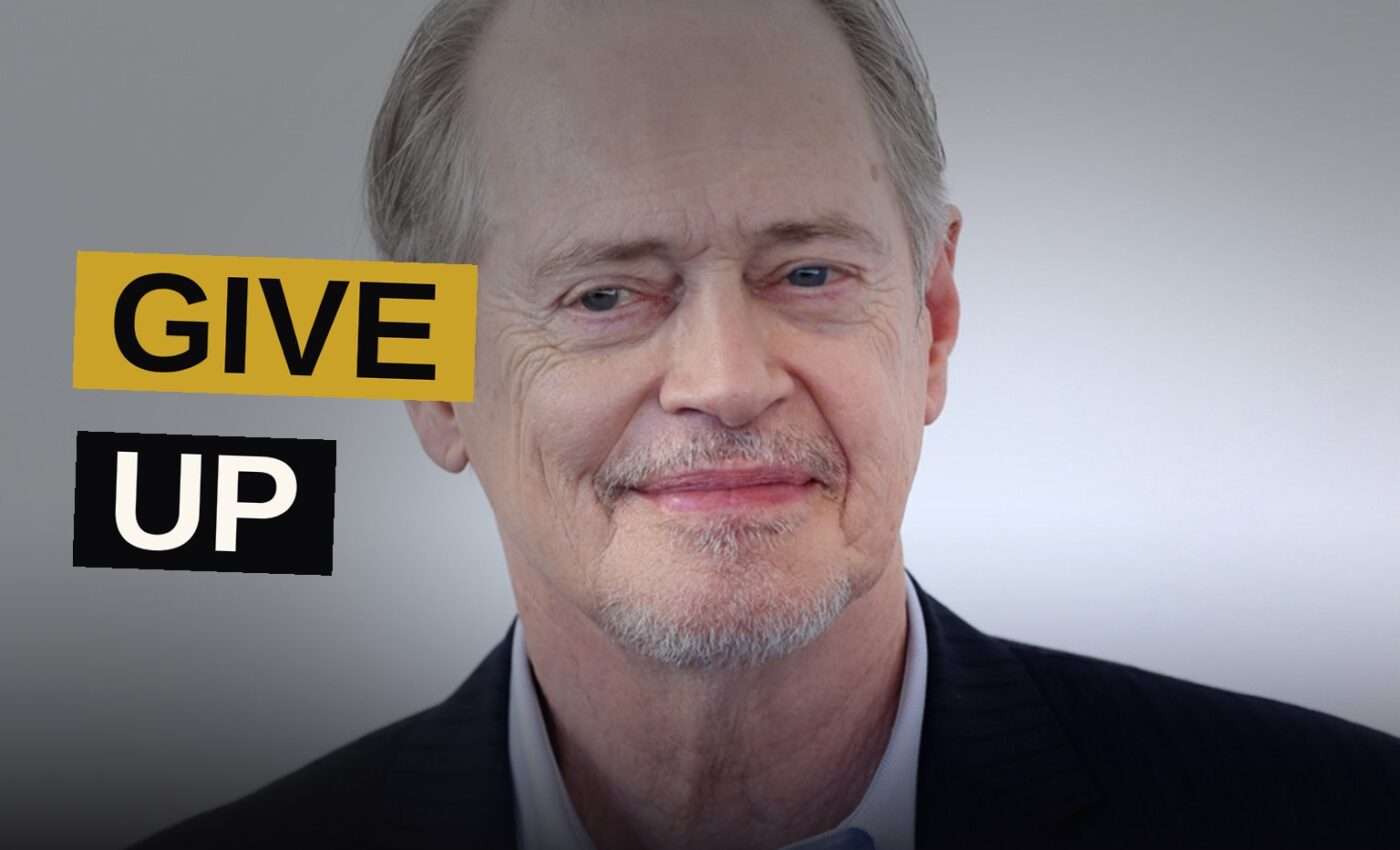
Steve Buscemi says acting means giving up control — and he should know. The veteran actor has spent decades in front of the camera and behind it, and he tells The Talks that the moment you step onto a film set, you hand over a piece of yourself.
“I don’t worry about having control so much,” Buscemi said. “I think as an actor when you go in, you are sort of giving up that control unless you’re directing the film yourself.”
From Reservoir Dogs to Boardwalk Empire
Buscemi’s breakout came in Quentin Tarantino’s “Reservoir Dogs,” and he followed it with a career that zigzags between big-budget fare and indie projects. His resume includes “Fargo,” “Con Air,” “The Big Lebowski,” and “Ghost World.” He has also directed “Trees Lounge,” “Animal Factory,” and “Interview.”
On TV, his major debut was the 1989 miniseries “Lonesome Dove.” His credits include “The Sopranos,” “Philip K. Dick’s Electric Dreams,” “Curb Your Enthusiasm,” “Poker Face,” and “Big Mouth.” He has been nominated for eight Primetime Emmy Awards, winning once for Outstanding Short Form Variety Series for “Park Bench With Steve Buscemi.” He also won a Golden Globe for playing Nucky Thompson in “Boardwalk Empire.”
Trust the Director
Buscemi says the quality of the person calling the shots matters more than any single actor’s grip on a scene. “Film is collaboration, and I think all of the really good directors surround themselves with the best people,” he said.
He went further when asked about trusting the director. “I think the more you trust your director, the more you’re willing to put yourself out there and take more risks and not be afraid,” he said.
The Trust Test
Buscemi cited Armando Iannucci’s “The Death of Stalin” as proof. Playing a real-life historical figure was “intimidating,” he admitted, but he put faith in the script’s interpretation of the character.
“I don’t really think about emotions, it’s more about behavior and reactions and that really depends on the director and the writers and the other actors,” he said.
When asked if trust only applies on set, Buscemi said it carries over to the editing room too. “All of the good things that you think that you’re bringing to the film will actually be in the film,” he said.
More Quotes
Buscemi has talked about acting and directing elsewhere. Here is what he said:
| Quote | Context |
|---|---|
| “TV is tough. It’s a tough pace. You might think directing TV would prepare you for directing a film. In my case, it’s the other way around.” — Salon, 2000 | On the difference between TV directing and film directing |
| “I think that most of the directors that I’ve really enjoyed working with, like [Jim] Jarmusch and Tom DiCillo and Alex Rockwell, they all have a love for actors.” — The Guardian, 2001 | On directors who treat their crews well |
| “Nothing’s really changed for me over the years. I like telling stories about people with problems.” — Mother Jones, 2007 | On his enduring interest in storytelling |
What He Has Said
In the Salon interview, Buscemi said TV directing prepared him for films in the opposite direction. “You’re shooting an hour’s show in seven days. That’s a lot of material. So you have to be incredibly focused, especially in an ensemble show like that where you’re dealing with a lot of actors.”
In the Guardian interview, he praised directors who love their actors. “That’s something that I tried to do,” he said.
In the Mother Jones interview, he kept it simple. “Relationships are interesting to me. Not just between men and women but fathers and sons, brothers and sisters and friends.”
A Career Built on Giving Up Control
Buscemi has been acting for decades and directing for nearly as long. He has worked with Tarantino, Iannucci, Jim Jarmusch, Tom DiCillo, Alex Rockwell, and the Coen brothers. He has won an Emmy and a Golden Globe.
His latest project is FX’s “Far Cry,” where he co-stars alongside Rob Mac and Lizzy Caplan.
The Paper’s View
Buscemi’s joke about giving up control unless you’re directing yourself is a charmingly self-aware admission from a man who has done both. It is also a useful reminder: on a film set, nobody is running the show alone. The best performances come from actors who let go and trust the people around them.
Get the Notebook.
The day's best stories and every fresh verdict, in plain English, in your inbox by seven. One email a day, no more.