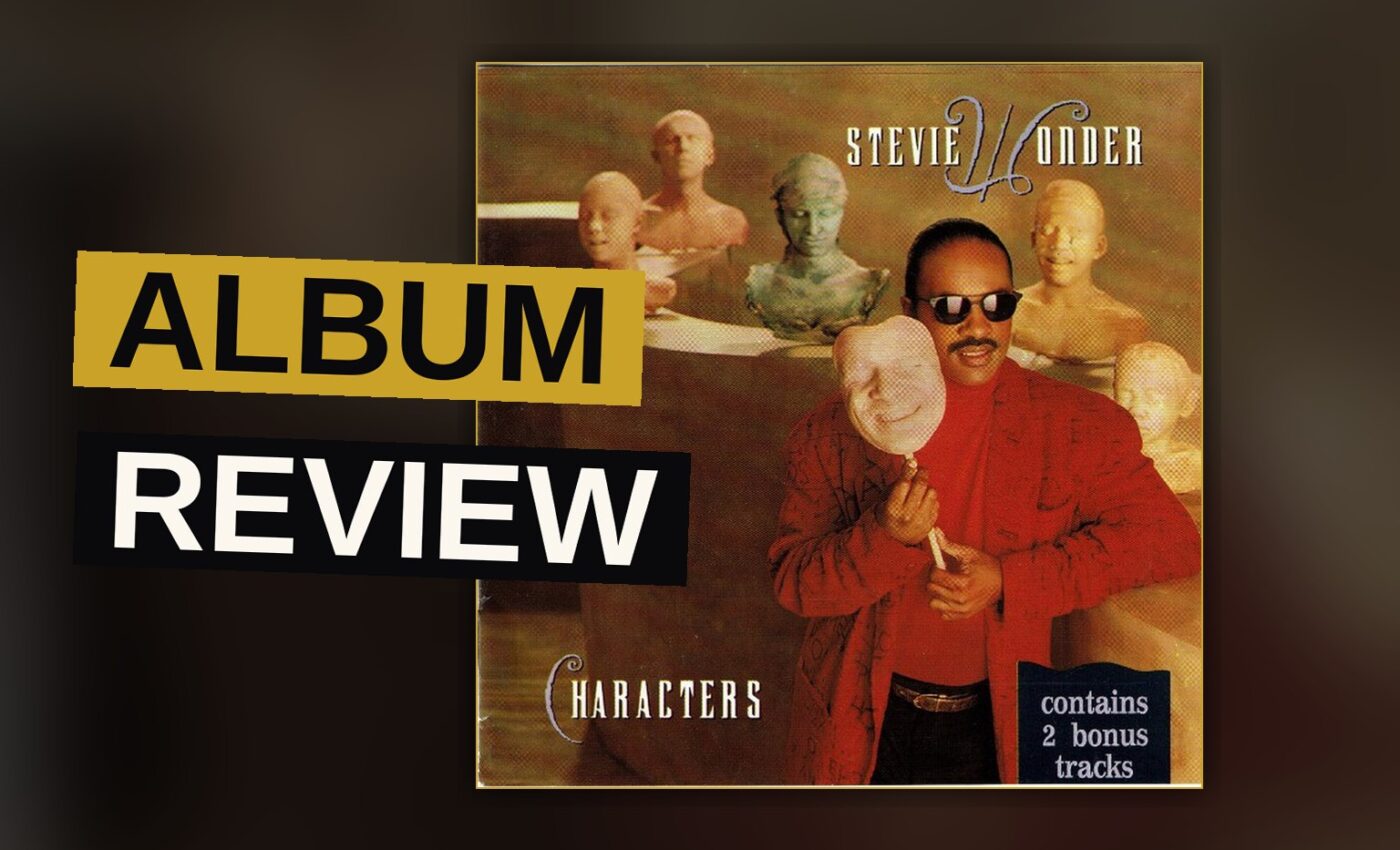
Stevie Wonder’s 1987 album Characters is a one-man band statement, written, produced, and performed almost entirely by Wonder himself. It arrives after a decade of increasingly uneven records, and it is trying to do something specific: prove that the man who defined the 1970s pop-soul sound could still command a room alone, without a battalion of collaborators. The album runs 61 minutes across 12 tracks, and it is less about radio dominance than about personal expression. Wonder is not chasing the charts here; he is chasing a conversation with himself.
The record opens with a declaration of faith, and it does not let go easily.
You Will Know Opens the Record
“You Will Know” is the mission statement, and it is a heavy one. Nine lines in, Wonder assumes the voice of God to assure sufferers that everything’s gonna be all right, and instantly you lose heart. But then the chronic self-importance disappears, and what remains is a spacious, gospel-tinged plea that works because Wonder’s conviction is so plain. The song is a slow burn, building from a simple piano figure into a full choir of overdubbed voices. It is not subtle, and it does not want to be.
“Dark ’n’ Lovely” follows with a lighter touch, a funky ode to Black beauty that rides a crisp synth bassline. It is playful, a little dated in its production, but the groove holds. “In Your Corner” is the first real stumble, a mid-tempo ballad that never quite finds a hook. The melody wanders, and Wonder’s vocal, usually so elastic, sounds restrained. It is the kind of track that fills space without earning it.
“With Each Beat of My Heart” rights the ship. This is classic Wonder balladry — a tender, patient love song that lets the rhythm section breathe. The arrangement is clean, the vocal is warm, and the song’s five-and-a-half-minute runtime feels earned. It is one of the record’s clear highlights.
Skeletons and the Funk Pivot
“One of a Kind” is a minor track, a self-affirmation anthem that is pleasant but forgettable. The production is glossy, and the lyrics drift toward platitude. But then comes “Skeletons,” and the album snaps into focus. This is the track that critics singled out, and rightly so. It is a sharp, funky rebuke aimed at hypocrisy and hidden agendas, built on a rubbery bassline and a staccato horn arrangement. Wonder’s vocal is urgent, almost angry, and the song’s political edge cuts through the record’s softer tendencies. It is the most immediate thing here, and it still sounds alive today.
“Get It,” a duet with Michael Jackson, is the album’s commercial play. It is lightweight, a synth-pop confection that pairs two of the biggest voices of the era. Jackson’s presence is a jolt, and the two trade lines with visible enjoyment. It is not deep, but it is fun, and it provides a necessary jolt of energy after the heavier first half. “Galaxy Paradise” follows and loses most of that momentum. The track is a spacey, mid-tempo groove about an imagined utopia, and it meanders. Wonder’s wordplay is clever, but the song lacks a strong melodic center.
The Long Run and the Slow Close
“Cryin’ Through the Night” is a return to ballad territory, and it is a mixed result. The vocal is strong, but the song’s structure is predictable, and the chorus does not land with the force Wonder clearly intends. It is the kind of track that would have been a B-side in his prime. “Free” is better. A loose, jazzy number about liberation, it gives Wonder room to scat and stretch. The track feels improvised, and that looseness is a virtue. It is one of the record’s most relaxed moments.
“Come Let Me Make Your Love Come Down” is a slow, sensual jam that works in small doses. The groove is deep, and Wonder’s vocal is intimate, but the song overstays its welcome by a minute. The closer, “My Eyes Don’t Cry,” is the real test. At over seven minutes, it is the longest track on the album, and it earns its length. The song builds from a spare piano intro into a sweeping, gospel-inflected finale. Wonder’s vocal is raw, and the emotional payoff is genuine. It is a bold way to end a record, and it lands.
The Shape of the Record
Characters is not a concept album, but it has a shape. The first half leans toward introspection and faith, the middle pivots to funk and pop, and the final third settles into a long, slow exhale. The sequencing is deliberate, and it rewards a full listen rather than track-by-track consumption. The production, very much of its 1987 moment, uses heavy synth pads and digital drums. Some of it has aged poorly, but Wonder’s voice and songwriting carry the material.
The record’s weaknesses are real. “In Your Corner,” “One of a Kind,” and “Galaxy Paradise” are filler, and they pad the runtime past what the material justifies. Wonder’s tendency toward self-indulgence, a recurring critique of his later work, is present here. He trusts his instincts completely, and sometimes that trust produces a seven-minute closer that works, and sometimes it produces a four-minute track that does not.
But the strengths are substantial. “Skeletons” is a genuine classic, and “You Will Know,” “With Each Beat of My Heart,” and “My Eyes Don’t Cry” are strong additions to his catalog. The album is not a return to the unimpeachable run of his 1970s peak, but it is not trying to be. It is a personal record, made by a man who had nothing left to prove and decided to prove it anyway.
- “Skeletons” — the clear standout, sharp and funky.
- “My Eyes Don’t Cry” — a patient, powerful closer.
- “With Each Beat of My Heart” — classic Wonder balladry.
- “You Will Know” — bold, if overreaching.
- “Get It” — a fun, lightweight duet.
- “Free” — loose and jazzy.
- “Dark ’n’ Lovely” — dated but groovy.
- “Come Let Me Make Your Love Come Down” — good, too long.
- “Cryin’ Through the Night” — competent filler.
- “Galaxy Paradise” — meandering.
- “In Your Corner” — forgettable.
- “One of a Kind” — the weakest track.
Final Call
Characters is a flawed, ambitious, and often rewarding record. It is not the album that will define Wonder’s legacy, but it shows his restlessness. He could have coasted on past glories; instead, he made a solo album that demands attention, even when it does not always deserve it. The highs are high enough to forgive the lows, and the record’s best moments are as good as anything he made in the decade.
The filler is a problem, and the production dates the album more than any other factor. But the core of the record — Wonder’s voice, his melodies, his willingness to reach for the divine and the personal in the same breath — remains strong.
It is a good album, not a great one. It is the work of a genius taking a break from being a genius, and that is okay.
Get the Notebook.
The day's best stories and every fresh verdict, in plain English, in your inbox by seven. One email a day, no more.
- You Will Know5:00
- Dark ’n’ Lovely4:39
- In Your Corner4:31
- With Each Beat of My Heart5:55
- One of a Kind5:11
- Skeletons5:25
- Get It4:33
- Galaxy Paradise3:51
- Cryin’ Through the Night5:48
- Free4:12
- Come Let Me Make Your Love Come Down5:22
- My Eyes Don’t Cry7:08