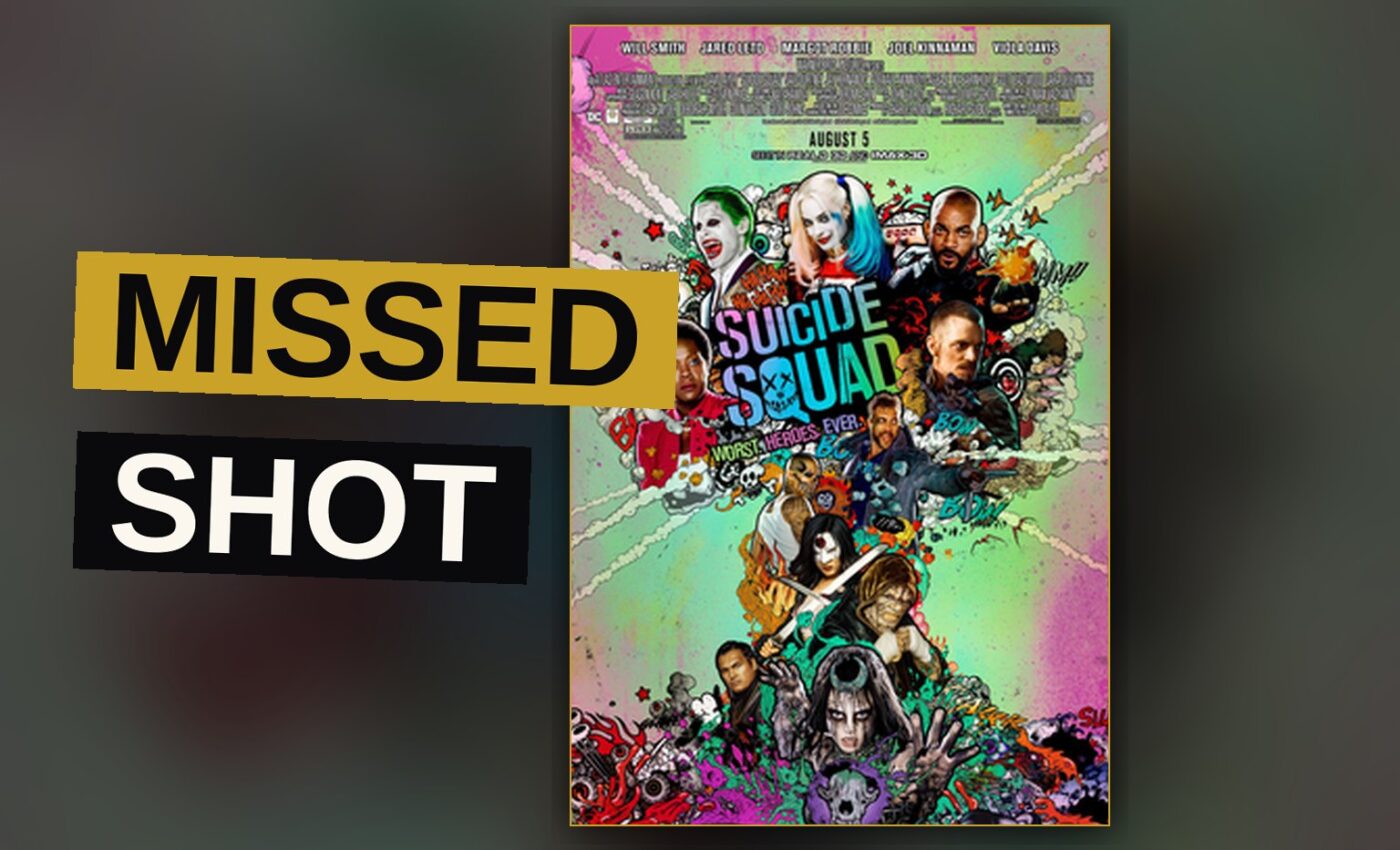
Suicide Squad should have been an easy win. The DC Comics villain team-up had a killer premise, a cast full of charisma, and a marketing campaign that sold it as a chaotic, rock-and-roll spin on the superhero genre. The trailers were electric.
The promise was simple: a bunch of bad guys forced to do good, or die trying.
The movie landed in 2016 to a storm of noise. It made money, but the reception was brutal. The TMDB audience score sits at 5.9 out of 10 from 22,396 votes. That number reflects what viewers thought, not what critics wrote. The truth is that Suicide Squad is a mess of clashing tones, studio interference, and wasted potential. It never decides what it wants to be, and that indecision is its fatal flaw.
Trailer, via Warner Bros..
Waller’s Pitch and the Mission
Amanda Waller, played by Viola Davis, decides that metahumans are a threat too big to ignore. Her solution is Task Force X, a collection of incarcerated villains fitted with explosive implants in their necks. Step out of line, you die. Succeed, you get time off your sentence.
Rick Flag, played by Joel Kinnaman, leads the team. The roster includes Deadshot, a master assassin played by Will Smith; Harley Quinn, the Joker’s girlfriend, played by Margot Robbie; Boomerang, a thief played by Jai Courtney; Killer Croc, a brute played by Adewale Akinnuoye-Agbaje; Diablo, a fire-wielding gangster played by Jay Hernandez; and Slipknot, played by Adam Beach.
The mission is simple. A witch named Enchantress has escaped her restraints and threatens to destroy the world. Stop her. That is the whole story.
Harley and Deadshot Carry the Film
Margot Robbie is electric as Harley Quinn. She brings manic energy to every scene, making the character feel alive even when the script gives her nothing. Her costume is comic-accurate, her accent is playful, and her presence is undeniable. She is the heart of the film.
Will Smith does heavy lifting too. Deadshot is a cold-blooded killer, but Smith plays him with a warm, paternal edge. His scenes with his daughter are the only moments of genuine emotion. He makes a repellent character feel relatable.
Viola Davis is the other standout. Her Waller is a ruthless pragmatist who sees people as assets to be spent. She is terrifying in her calmness.
The rest of the cast is wasted. Boomerang is a one-note joke. Killer Croc is a CGI creature with no personality. Diablo’s tragic backstory arrives in a single exposition dump. Slipknot is introduced and killed off so fast his death becomes a punchline.
The Joker That Wasn’t
Jared Leto’s performance was hyped for months. He sent used condoms to his co-stars. He stayed in character on set. He was going to be the definitive take on the Clown Prince of Crime.
None of that makes it to the screen. The Joker appears in roughly ten minutes of footage, most of it flashbacks involving Harley Quinn. He is not a threat. He is a prop, a tattooed man with grills on his teeth who shows up, says something cryptic, and disappears.
The Joker-Harley relationship is the emotional core, but it never gets room to breathe. We see them fall in love in a montage set to a pop song. We see him rescue her at the end. None of it lands because the film refuses to commit to their romance being twisted or genuine.
Leto is trying something. But the script and editing betray him.
Reshoots and the Tone Problem
Reports from the time said the studio panicked after the negative reception of Batman v Superman: Dawn of Justice and ordered reshoots to lighten the tone. The result is a film that feels like two different movies spliced together.
The first half is a series of music-video-style introductions. Each character gets a montage set to a hit song, explaining who they are and why they are in prison. It is fun in the moment, but it kills momentum. The second half is a generic action movie, with the Squad fighting faceless CGI monsters in a dark cityscape. The shift is jarring.
The tone is all over the place. It wants to be edgy and irreverent, but also sincere and heroic. It ends up neither funny enough nor dramatic enough.
The soundtrack is a constant reminder of this confusion. Songs like “Ballroom Blitz” and “Bohemian Rhapsody” play over action sequences, trying to inject fun the visuals do not support. It works in Guardians of the Galaxy, but that film had a consistent voice. Suicide Squad does not.
The Action and the Enchantress Problem
The action is competent but forgettable. There is a chase through the streets, a fight in a subway, and a final showdown in a giant portal that looks like a bad video game. The choreography is fine, but there are no stakes.
Enchantress, played by Cara Delevingne, is a complete waste. Her costume looks like a rejected concept from The Fifth Element. Her plan is vague, her motivation unclear, and her final form is a CGI monstrosity with no personality. She is a plot device, not a character.
The film tries to give her a connection to Rick Flag, who was her lover before she turned evil. But we are told they were in love, never shown it. She is just a thing to be fought.
The Numbers Behind the Mess
Suicide Squad was a box office hit, grossing over $745 million worldwide. It won an Academy Award for Best Makeup and Hairstyling. But it also marked a low point for the DC Extended Universe.
| Element | Verdict |
|---|---|
| Margot Robbie as Harley Quinn | Strong, charismatic, wasted by the script |
| Will Smith as Deadshot | Relatable, grounded, the emotional anchor |
| Jared Leto as the Joker | Underwritten, underused, a footnote |
| The action sequences | Competent but forgettable |
| The villain | A CGI mess with no personality |
| The editing | Disjointed, reportedly reshuffled by the studio |
| The tone | Confused, never commits to comedy or drama |
Ranking the Squad Members
The film tries to sell the idea that these are bad people doing good things. It never earns that idea. Deadshot is a killer but also a loving father. Harley is a psychiatrist who fell for a madman. Diablo killed his own family. These are dark stories, treated with the depth of a bumper sticker.
The Squad never feels like a team. They are thrown together, fight a few monsters, and win. No bonding, no conflict, no growth.
- Harley Quinn — The only one with real personality, carried by Robbie’s performance.
- Deadshot — Too sympathetic to be a villain, but Smith makes him watchable.
- Amanda Waller — Not a Squad member, but Davis steals every scene she is in.
- Boomerang — A joke with no punchline.
- Diablo — A tragic backstory delivered flatly.
- Killer Croc — A CGI prop.
- Slipknot — Killed off before he matters.
The Score, Plainly
Suicide Squad is a film that tries to be everything and ends up being nothing. It has a great cast, a fun premise, and a killer soundtrack. But a weak script, chaotic editing, and a laughable villain sink it.
It is not a disaster. It is watchable, even enjoyable in stretches.
The TMDB audience score stands at 5.9 out of 10 from 22,396 votes. That is fair. It is a middle-of-the-road movie, neither good enough to recommend nor bad enough to hate. It is simply there, a colorful blur of missed opportunities and half-formed ideas. In the end, that is the saddest thing of all.