Ten years of story come down to one siege. Harry Potter and the Deathly Hallows: Part 2 opens with the trio hunting Horcruxes and ends with the Battle of Hogwarts, a full-scale war for the school’s walls. It is the shortest film in the series and the most relentless.
Trailer, via Warner Bros..
Gringotts Break-In
The film wastes no time. Harry, Ron and Hermione break into Gringotts within the first act, ride a dragon out of the vault, and return to Hogwarts to find it under threat. From there, the movie becomes a series of set pieces: the Room of Requirement burns, the bridge collapses, and the castle’s defenders face waves of Death Eaters.
David Yates directs with a steady hand. He lets the scale breathe — hundreds of extras, towering giants, a swarm of Dementors — but keeps the camera on faces. When Professor McGonagall animates the castle’s stone soldiers, it lands because Maggie Smith sells the moment with quiet fury. The action is clear, not chaotic. You always know who is fighting whom and why.
Snape’s Memory
The film’s emotional core arrives in a Pensieve. After Snape dies, Harry takes his memories and watches a life’s worth of hidden loyalty. Alan Rickman, who had played Snape as a coiled mystery for eight films, finally gets to show the man underneath. The sequence runs long and quiet, and it earns every second.
That memory reframes the entire series. Snape loved Lily Potter, protected Harry because of her, and carried a double agent’s burden for years. The revelation does not excuse his cruelty, but it explains it. Rickman’s performance here is the best in the franchise, and the film trusts him to hold the screen without action or music.
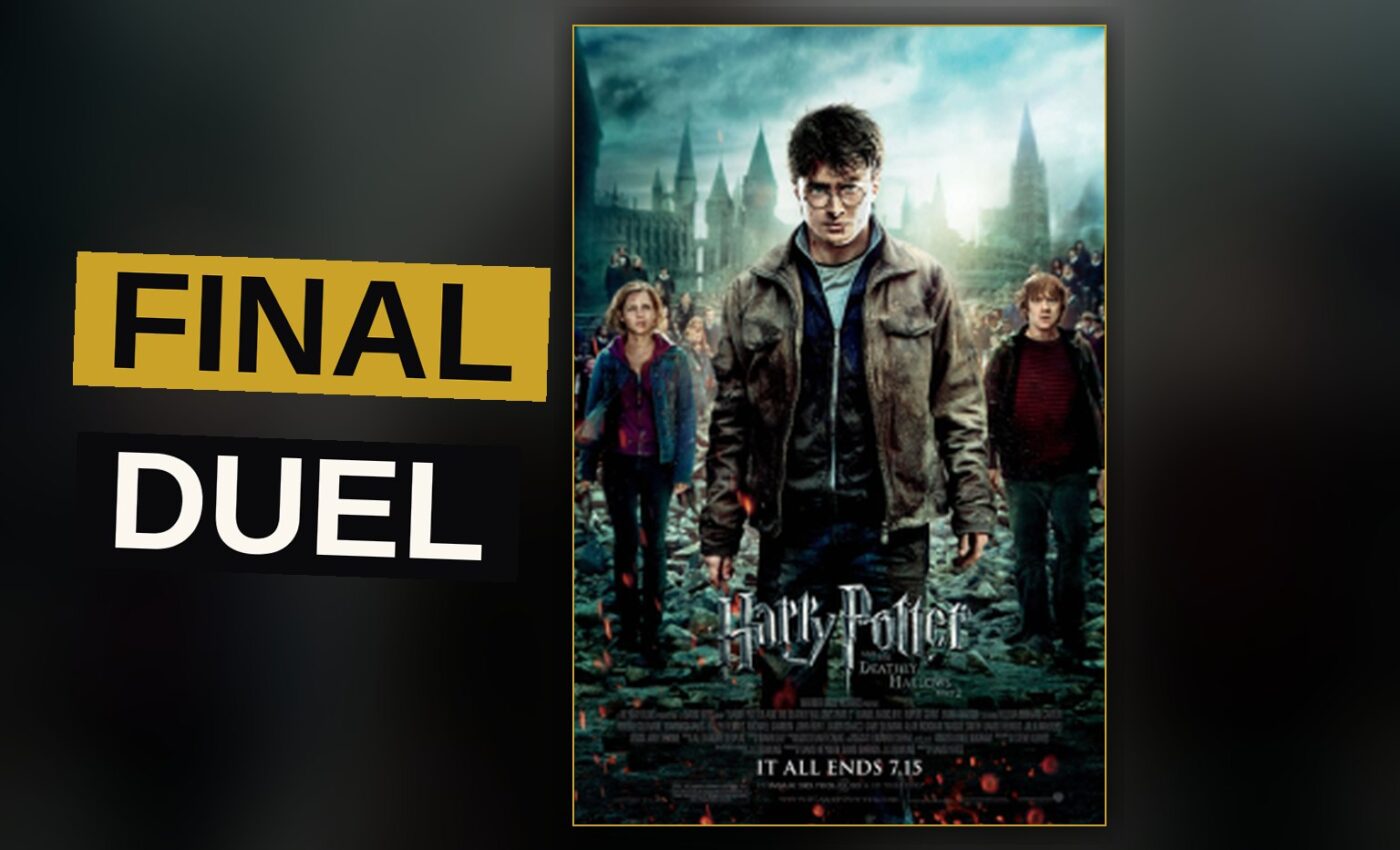
The Final Duel
Harry and Voldemort meet in the Great Hall, circled by witnesses. The duel itself is brief — spells clash, Voldemort falls, his body crumples like a discarded robe. There is no grand speech, no slow-motion triumph. Harry explains the Elder Wand’s true allegiance, and Voldemort dies by his own curse.
It is a quiet ending for a loud war. Some fans wanted more spectacle. But the film understands that Harry’s victory was never about power. It was about choice, and the choice was made long before the duel began.
Epilogue at Platform 9¾
Nineteen years later, Harry and Ginny send their son off to Hogwarts. Ron and Hermione stand beside them, and Draco Malfoy nods from across the platform. The makeup ages the actors convincingly, and the scene closes the story with a warm, domestic calm.
It is a sentimental ending, and it works. After so much death, the film earns a moment of peace. The score, by Alexandre Desplat, swells gently, and the train pulls away.
Strengths and Weaknesses
What the film does well, it does very well:
- Pacing — it compresses the final book’s sprawl into a tight two hours and ten minutes.
- Supporting cast — Helena Bonham Carter plays Hermione disguised as Bellatrix with manic glee; Ralph Fiennes makes Voldemort more human and more frightening.
- The trio — Radcliffe, Grint and Watson carry the series’ end with visible maturity.
- Emotional payoff — Snape’s memory reframes the entire saga.
One weakness: the film rushes some emotional beats. Fred Weasley’s death is a single shot, and Lupin and Tonks get barely a mention. The book gave those losses room to breathe; the movie moves past them. But the story’s scale leaves little time, and the movie chooses momentum over mourning.
Harry Potter and the Deathly Hallows: Part 2 is a satisfying conclusion to a decade-long arc. It honors the books, rewards the fans, and stands on its own as a war film with a heart. It is not perfect. It is close.