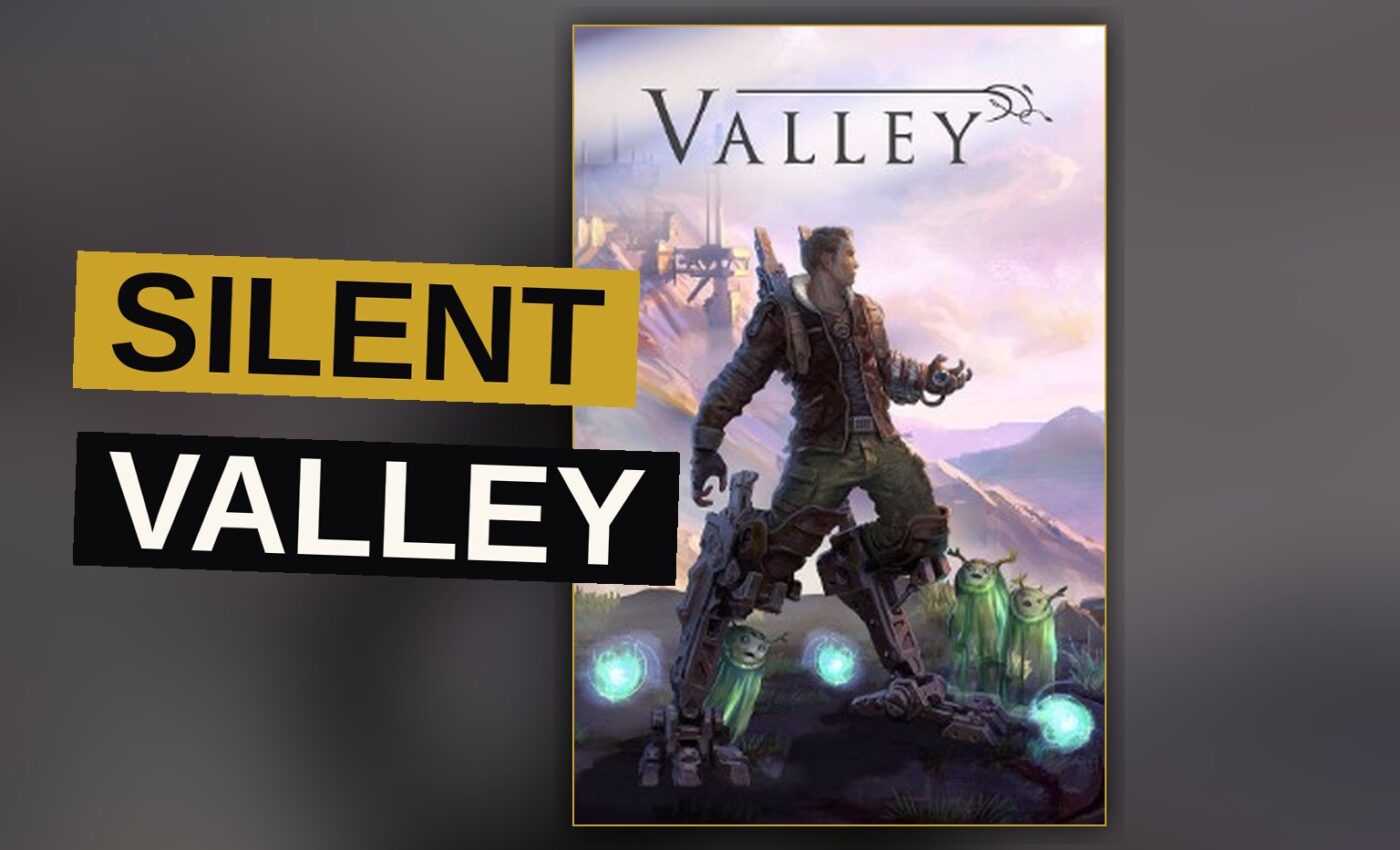
Valley is a game about patience, curiosity, and the slow reveal. It asks nothing of you except to look around, and it rewards that attention with some of the most generous puzzle design in recent memory. Released in 2016 for PS4, Linux, PC and Mac, it remains a quiet standout in a genre crowded with loud spectacle. The game’s publisher, Campo Santo, is best known for the acclaimed detective thriller Knee-Deep, but Valley is a different beast entirely — a small, handcrafted world built for contemplation rather than action.
The premise is simple. You play as a man who wakes up in a valley, surrounded by strange machines and no memory of how he got there. The story unfolds through environmental storytelling — notes, recordings, and objects scattered across the landscape — rather than dialogue. There is no combat, no urgency, and no timer. The goal is to find your way out, but the journey is the destination.
The Valley Itself
The setting is the heart of Valley. It is a lush, verdant valley, filled with rolling hills, waterfalls, and dense forests. The art direction is stunning, with painterly lighting that makes the world feel alive. Each area has its own color palette and mood, from the golden sunsets of the open fields to the misty depths of the forest caves. The sound design is equally impressive, with ambient music that shifts subtly depending on where you are. Birds chirp, wind rustles, and distant machinery hums, creating a sense of immersion that few games achieve.
The puzzles are the real draw. They are logical, fair, and often involve multiple steps. You might need to collect a tool in one area to solve a lock in another. The game rarely holds your hand, but it also never punishes you for failing. If you get stuck, you can backtrack freely, and the solutions are always rooted in the world itself. There is no hidden button or obscure clue; everything you need is somewhere nearby, waiting for you to notice it.
Here is a brief rundown of the kinds of puzzles you’ll encounter:
- Mechanical contraptions that require you to manipulate gears and levers
- Environmental hazards that test your timing and coordination
- Logic puzzles involving pattern recognition and spatial reasoning
- Exploration-based challenges that reward curiosity and observation
The game is structured around a series of zones, each with its own distinct feel. Some areas are dense with content, while others are more sparse. This variety keeps the pacing fresh, even when you’re spending ten minutes on a single room. The difficulty curve is gentle, but it ramps up steadily enough that the final stretch feels earned.
The Story
The narrative is sparse, but it is effective. Through audio logs and handwritten notes, you piece together fragments of a larger history. The valley is a place of scientific experimentation, and the people who lived here were driven by ambition and fear. The story doesn’t hit you over the head with exposition; it lets you discover the threads at your own pace.
There is a melancholic undertone to the whole affair. The valley is a place of beauty, but it is also a place of loss. The characters you meet through the artifacts are not present, but their voices linger. The game trusts you to connect the dots, and it rewards that trust with a payoff that lands harder because it was built slowly.
The ending is deliberately ambiguous, and it leaves you with questions rather than answers. That is a deliberate choice, and it fits the tone of the game. Valley is not interested in neat conclusions. It is more concerned with the process of discovery and the emotional weight of finding your way through a strange, beautiful place.
The Technical Craft
Valley runs smoothly on all its platforms, though the PC version offers the best performance. The frame rate is stable, and the loading times are minimal. The controls are simple — movement, interaction, and camera rotation — but they are responsive and intuitive. The game does not require a controller, but it is clearly designed with one in mind. The menus are clean, and the interface is unobtrusive.
The game is short by modern standards, clocking in at around four to six hours. That brevity is a feature, not a bug. Valley respects your time, and it ends before it overstays its welcome. There is no filler, no padding, and no repetition. Every moment counts.
The soundtrack is a highlight. It is a mix of ambient textures and composed pieces, and it changes dynamically based on your location. The music swells during moments of discovery and fades during quiet exploration. It is a subtle touch, but it enhances the experience significantly.
Comparing It To Other Games
Valley shares DNA with other puzzle games, but it distinguishes itself through its focus on exploration. It is similar to the work of developers like Team Ika, whose games often feature handcrafted worlds and careful pacing. However, Valley is more linear and less abstract. It is closer to a narrative-driven adventure than a pure logic puzzle game.
The game owes a debt to classic adventure games, particularly those that emphasize discovery over combat. The environmental storytelling and the gradual reveal of the valley’s history recall the work of LucasArts and Sierra, though it is far more restrained and modern in its execution. The lack of combat and the emphasis on observation make it stand apart from the action-oriented mainstream.
Why It Works
Valley succeeds because it trusts the player. It does not force you to move at a certain speed, and it does not punish you for taking your time. The game is a refuge from the constant pressure of modern gaming, where every minute feels like a deadline. In Valley, you can walk off a path and into a field of flowers, and the game will let you do it. That freedom is rare, and it is refreshing.
The puzzles are the backbone, but the world is the soul. The valley is a character in its own right, and it evolves as you explore it. The game’s willingness to let you wander is a strength, not a weakness. It creates a sense of wonder that few games manage to capture.
The game is not perfect. Some puzzles can feel obtuse, and the late-game difficulty spike may frustrate players who expect a steady challenge. The story, while effective, is thin, and it relies heavily on environmental clues that some players may miss. These are minor complaints, but they are worth noting.
Final Score
Valley is a masterclass in minimalist design. It takes a simple idea — a man in a valley — and turns it into an unforgettable experience. The puzzles are clever, the world is beautiful, and the story lingers long after you finish. It is a game that rewards patience and curiosity, and it delivers a payoff that is both satisfying and bittersweet.
If you have the time, you owe it to yourself to spend a few hours in this valley. It is a rare gem, and it deserves your attention.