
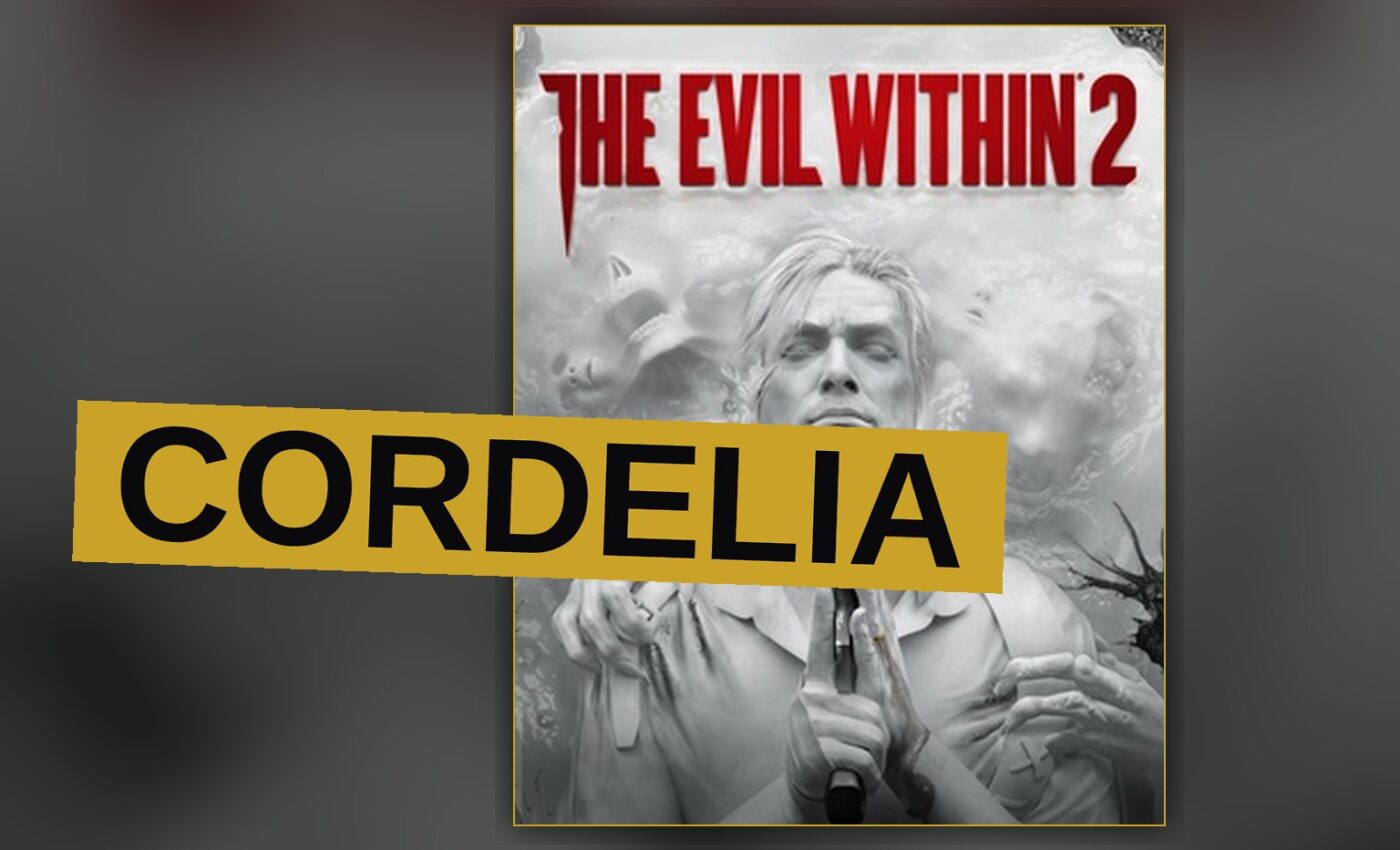
The Evil Within 2 asks a simple question and then makes you live with it: how far will a broken man go into a nightmare to save the daughter he buried? Tango Gameworks built its 2017 sequel around Detective Sebastian Castellanos, a man who lost his job, his wife and his child.
Published by Bethesda Softworks, The Evil Within 2 arrived on PlayStation 4, Windows and Xbox One in October 2017, three years after the first game. It trades some of that game’s raw dread for a wider, stranger world. It is a better game than its predecessor in most of the ways that matter, and a shakier one in the ways that linger.
Trailer, via IGDBcom.
Sebastian Castellanos Leaves the Krimson City Police Department
The setup is grim and efficient. Three years after the events at Beacon Mental Hospital, Sebastian has quit the Krimson City Police Department. He is haunted by what he saw at Beacon, by the disappearance of his wife Myra, and by the death of his daughter Lily in a house fire. His trauma and his grief push him into alcoholism.
He is drinking in a bar when his former partner, Mobius agent Juli Kidman, finds him and tells him Lily is still alive. That news drags him into a secret Mobius facility against his will. There he meets the Administrator, the head of the facility, who explains the situation. Lily is being used as the Core for a new STEM system, a simulation of an idyllic American town called Union. Mobius has lost contact with Lily and its agents inside Union, and it has lost control of the simulation. Sebastian agrees to help, reluctantly, and is plugged into STEM.
Union Is Not the Town Mobius Built
What Sebastian finds inside is a nightmare realm. The inhabitants of Union have been killed or mutated into monsters. Threats come from every corner as the world twists and warps around him. The game’s summary promises that Sebastian can face adversity head on with weapons and traps, or sneak through the shadows to survive. Both paths are real, and the game supports both.
The horror here is not the tight corridor dread of the first game. Union is a town, and the game lets you walk it. That openness is the sequel’s biggest structural bet, and it mostly pays off. You are not pushed down a hallway. You are turned loose in a place that wants you dead and given the tools to decide how you die.
The Communicator, Green Gel and Five Ways to Suffer
The mechanics are where The Evil Within 2 does its best work. Played from a third-person or first-person perspective, the player controls Sebastian as he descends into Union to rescue Lily. Maps are larger than in the first game, and there are multiple ways for players to advance in a level. The Communicator, an item Sebastian carries, highlights objectives, resources and enemies in the world. It also reveals Resonance points, which provide hints about what happened in Union.
Players can explore freely to complete side objectives and scout for resources, which are scarce. Combat is direct: guns, weapons, traps. Stealth is the other option, letting players avoid notice or sneak behind enemies for a silent kill. A crafting system lets players gather resources and make new items such as ammo. Crafting works anywhere, but a workbench requires fewer materials. The Green Gel from the first game returns to customize Sebastian’s abilities across four trees: health, stealth, combat and recovery.
The difficulty settings deserve their own paragraph, because they change what kind of game you are playing.
Casual, Survival, Nightmare, Classic and Akumu
There are five difficulty modes. Casual is the one producer Shinji Mikami recommends. Survival is the middle ground. Nightmare is the setting recommended for players who enjoyed the difficulty curve of the previous game. Classic is mostly identical to Nightmare, but it limits the number of saves and removes upgrades. Akumu is also mostly identical to Nightmare, but the player dies in a single hit from anything.
That spread is not a menu of cosmetic options. It is a statement about who the game is for. A player who wants the story can take Casual. A player who wants the old punishment can take Nightmare, Classic or Akumu and lose the upgrades and the safety net. Few games of this size are this willing to let you choose your own misery.
| Difficulty | What it changes |
|---|---|
| Casual | Recommended by producer Shinji Mikami |
| Survival | Standard middle setting |
| Nightmare | Recommended for players who liked the first game’s difficulty curve |
| Classic | Mostly identical to Nightmare, but limits saves and removes upgrades |
| Akumu | Mostly identical to Nightmare, but any single hit kills the player |
Stefano Valentini and the Photographer in the Shadows
The plot gives Sebastian a cast to work with. Inside Union he finds surviving Mobius personnel: Liam O’Neal, Yukiko Hoffman and Julian Sykes, who help him search for Lily. He also witnesses a mysterious photographer with supernatural powers hunting down and murdering Mobius operatives. That photographer is Stefano Valentini, a war photographer who has kidnapped Lily, and Sebastian learns this as he follows her trail.
The cast is performed in English and in Japanese. Marqus Bobesich and Hiroyuki Kinoshita voice Sebastian. Kiara Gamboa and Sakura Sakai voice Lily. Elizabeth Saydah and Rika Fukami voice Myra. Meg Saricks and Yūko Kaida voice Kidman. Richard Neil and Jin Yamanoi voice the Administrator. Jesse LeNoir and Takuya Masumoto voice O’Neal. Ying Hsiao and Mayumi Sako voice Hoffman. Hari Williams and Tōru Sakurai voice Sykes. Rafael Goldstein and Setsuji Satō voice Stefano.
That is a lot of names for a horror game, and it points at the sequel’s ambition. The first game was a haunted house. The second wants to be a haunted town with people in it.
What the Wider World Costs the Horror
The Evil Within 2 received generally positive reviews from critics. Like its predecessor, it drew praise for its visuals, atmosphere and gameplay, and some criticism for its story and characters. That split is fair, and it is also the most interesting thing about the game.
The atmosphere holds. Union twists and warps, and the game’s art does the work of making a small American town feel like a trap. The gameplay holds, and then some. Larger maps, multiple routes, a Communicator that rewards looking around, scarce resources that make every fight a decision, a crafting system that punishes you for crafting in the open — this is a survival horror game that understands the genre’s real subject is scarcity, not gore.
The story is where the seams show. Sebastian’s grief is the engine of the whole thing, and the game states it plainly: the lost job, the lost wife, the dead daughter, the bottle. Then it hands him a rescue mission and mostly lets the horror do the talking. The characters around him — the Mobius survivors, the Administrator, Kidman — exist to move him from one set piece to the next. Stefano is a war photographer with supernatural powers who hunts down and murders Mobius operatives, but the game gives him less to be than to do.
None of that sinks the thing. It just means the game’s best ideas are mechanical and atmospheric rather than narrative, and the story is the price of admission rather than the reason to come.
The Case for the Wider, Weirder Sequel
Here is what actually matters about The Evil Within 2. It is a sequel that changed its shape instead of repeating itself. The first game was a tighter, more claustrophobic experience. The second opens the map, adds side objectives, adds crafting, adds five difficulty modes that range from a guided tour to a single-hit death sentence, and trusts the player to find their own level of suffering. That is a real design decision, and it is the right one.
The Communicator is the smartest piece of it. A device that highlights objectives, resources and enemies could have been a crutch. Instead it turns exploration into a conversation between the player and the world. You are always deciding whether to follow the marker or wander toward something the game has hinted at. The scarce resources make that decision cost something. The crafting system makes it cost something else.
The Akumu setting is the purest expression of what this game believes. One hit kills you. It is not for most players, and the game knows it. The fact that it exists anyway says Tango understood that survival horror lives or dies on the player’s sense that death is close.
The Verdict on The Evil Within 2
The Evil Within 2 is a survival horror game that improves on its predecessor where it counts and stumbles where it always did. The visuals, the atmosphere and the gameplay are the strongest parts, and the wider Union map, the Communicator and the five difficulty modes give players more room to make the experience their own. The story and characters are the weakest parts, and no amount of atmosphere fully covers for a rescue plot that keeps its best figure — Stefano, the photographer hunting Mobius operatives — at arm’s length.
It is also a game with a clear point of view about its own genre. It believes survival horror should be about scarcity, choice and the constant possibility of death, and it builds its systems around that belief rather than around spectacle. The result is a sequel that feels like an evolution rather than a retread, and a game that earns its place in the genre even when its narrative does not earn its own ambitions.
The Evil Within 2 scores 8.1 out of 10. That is the published critical aggregate across 15 outlets, and it is the right number. Strong systems, real atmosphere, a story that never quite matches them. Worth playing, especially on Nightmare, and worth respecting for choosing to grow instead of repeating.
Get the Notebook.
The day's best stories and every fresh verdict, in plain English, in your inbox by seven. One email a day, no more.


