
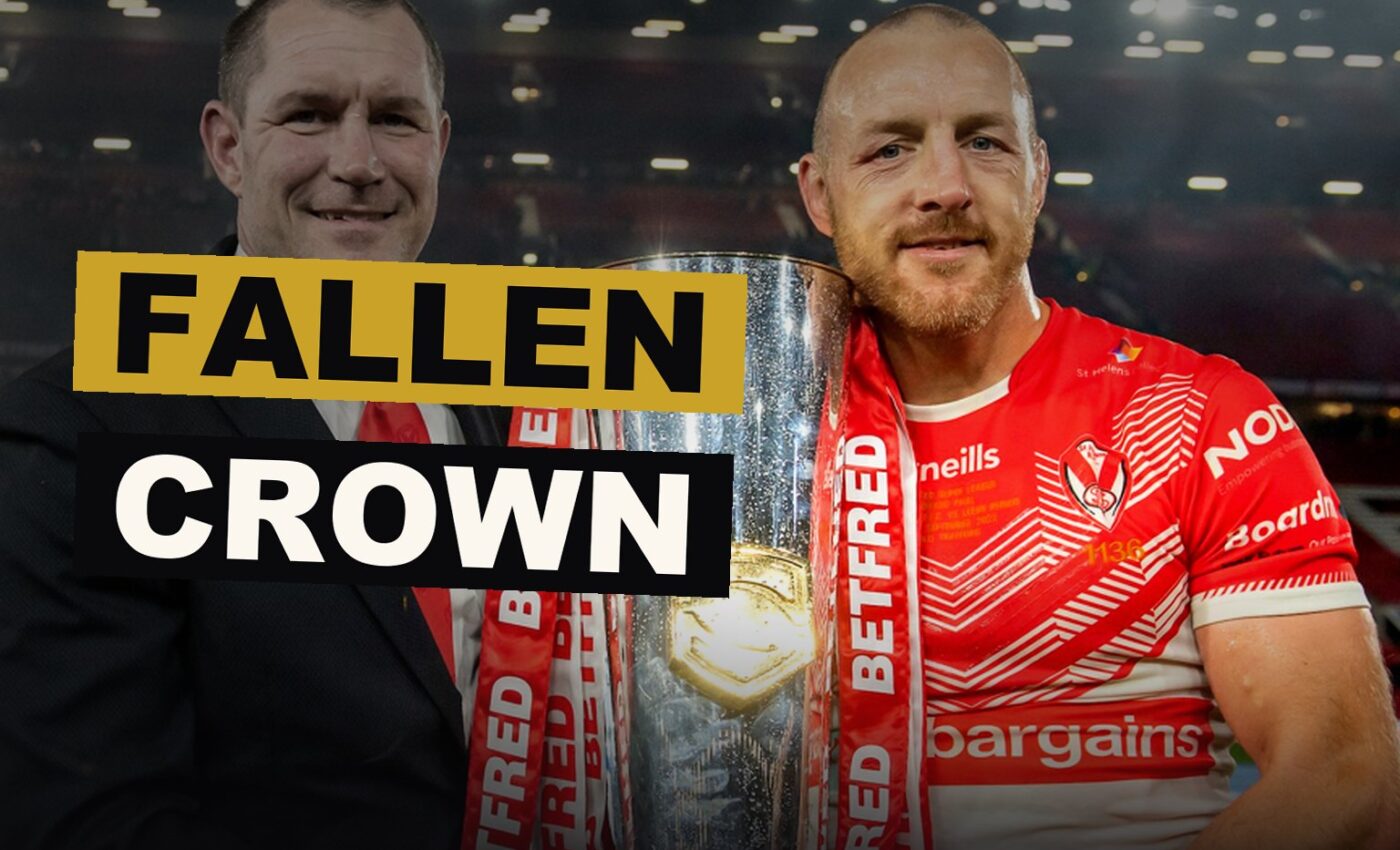
Supporters and pundits have spent the best part of two years, some say longer, working out how a club that once ruled the competition ended up here, according to Sky Sports’ Megan Wellens. St Helens have missed the top finals for the first time, finishing seventh in Super League in 2026.
The last round of the regular Betfred Super League season, Round 27, starts Thursday September 10, live on Sky Sports.
From the bottom of the table to the top of Super League
In 2018, St Helens sat in the middle of the table and parted ways with head coach Keiron Cunningham, bringing in Justin Holbrook. That year ended in disappointment, a Luke Gale drop goal sending them out at the last four stage.
In 2019, they answered back. Saints lost just three matches all season and finished top of the league, then beat Salford Red Devils 23-6 in the Grand Final. The team was full of talent: Jonny Lomax, Tommy Makinson, Alex Walmsley and Lachlan Coote, all in their late twenties and at their best, a mix of local players and Australian talent brought in from outside.
A change of head coach followed. Under Kristian Woolf, the winning continued.
Woolf, Covid and the rise to Everest
Woolf has said in public that the season shutting down for Covid may have saved his job. His team had just lost to Huddersfield Giants and Castleford Tigers when the competition paused. By the time it returned, he had talked with his players about what they wanted from him and from the team around him. What came out of it was a partnership between a strict coach and a group that kept delivering.
Jack Welsby scored one of the best known Grand Final tries the sport has produced, in 2020. Two more Super League titles followed, along with a Challenge Cup and another major trophy.
Then came the moment that topped it all. In 2023, St Helens travelled to face Penrith Panthers in the World Club Challenge, a game few gave them a chance in. Paul Wellens, who had gone from club captain to assistant coach and then head coach after more than a decade in the St Helens system, was in charge. Lewis Dodd landed a golden point drop goal that’s now seen as one of the biggest moments the sport in this country has known.
St Helens had won everything there was to win. They had reached the top of Everest.
The salary cap catches up
Winning it all raises an obvious question: what next? Trust the same group to go again, start fresh, or try both? St Helens took the first path.
That decision ran straight into the salary cap. Makinson, Lomax, Walmsley, Mark Percival, Louis McCarthy-Scarsbrook and Sione had built the club’s success, and by this point most were in their thirties. Success brings bigger contracts, and bigger contracts eat into a fixed cap. Less room to sign new talent. Less room to pay young players properly.
The cap sits at £2.1m. Making it go further means being firm, or persuading experienced players to accept less than they earned in their twenties — never an easy conversation.
Over three seasons under Wellens, St Helens made just 11 signings to take the place of departures including Regan Grace, James Roby, Will Hopoate, Makinson, Dodd and Sione. Those new arrivals were Tee Ritson, Wesley Bruines, Daryl Clark, Waqa Blake, Kyle Feldt, Tristan Sailor, Lewis Murphy, Moses Mbye, Matt Whitley, Shane Wright and Deon Cross. Wright and Cross only became available because Salford Red Devils ran into money trouble. Many argue the openings left by the departing stars have not been filled.
Moneyball under question
Former St Helens CEO Mike Rush described the club’s approach to signings in 2025 as “Moneyball” — a reference to Michael Lewis’ book on how Oakland Athletics general manager Billy Beane used data in 2002 to sign undervalued players, building a capable roster on a limited budget by aiming at particular skills, such as physical defence or making metres, even where players were weak elsewhere.
“We’re always going to get stuff wrong because whether it—” Rush’s explanation was cut short in the original account.
The next 12 months will show whether those running St Helens have accepted the direction the club has been heading in, and for how long.
| Round | Date | Where to watch |
|---|---|---|
| Round 27 (final regular round) | Thursday, September 10, 2026 | Live on Sky Sports |
For a club that spent five years reaching the top of the sport, raising its flag over Penrith Panthers with a golden point win, finishing seventh with no place in the top finals marks new ground entirely.
Source: skysports.com