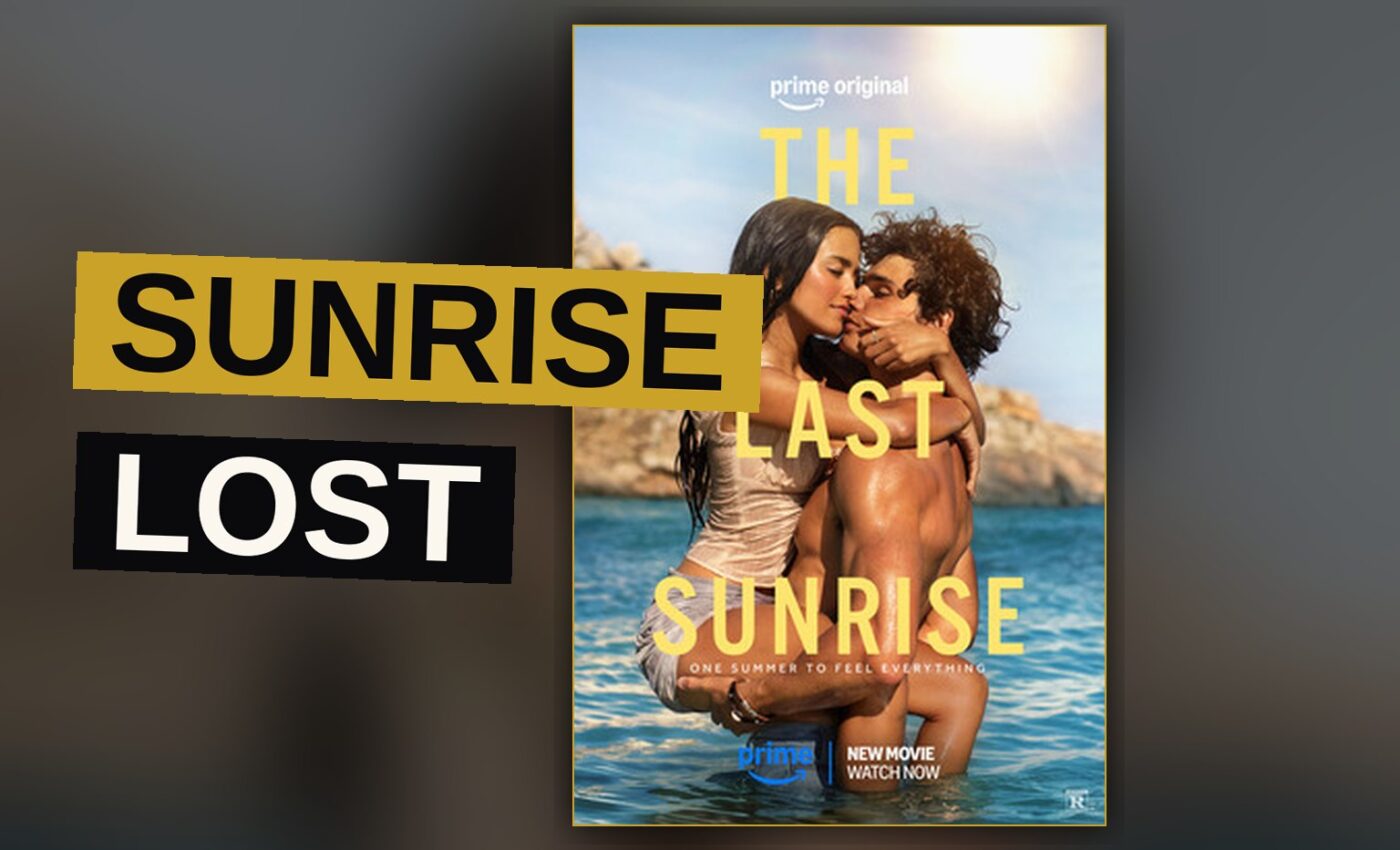
The Last Sunrise wants to be a quiet character study set against the end of the world. It mostly gets there, but the slow middle drags down the promise of its premise. The film takes its time establishing the situation, and the deliberate pace works in the opening hours before the middle sections begin to strain the patience of the audience.
Trailer, via Prime Video.
Two Strangers
Two strangers meet during an apocalyptic event. One man and one woman find each other, both running from something they can’t describe. The film spends its first hour building tension between them, and that’s where it lands best. Their connection is the engine that drives the story, and the script trusts the actors to carry the weight of the early scenes.
The Dragginess
The middle sections stretch out too long. The film repeats itself, showing the same locations again and again while the characters wait for news that never comes. This is where the pacing falters. The repetition of scenes and settings grows tiresome, and the audience has to work harder to stay engaged with the material.
The Climax
The final act picks up again. The stakes get real, and the film finally earns the dread it had been building. It’s a strong finish, but it arrives late. After enduring the slow middle, the payoff feels earned because the film has spent so much time setting up exactly what it delivers at the end.
What Works
- The chemistry between the two leads carries the early scenes
- The disaster backdrop feels lived-in rather than stylized
- The ending delivers on the promise of the setup
What Doesn’t Work
- The middle section drags, repeating itself across multiple scenes
- The review notes some supporting characters feel underwritten
- The scale of the disaster isn’t explained clearly enough
Comparing the Parts
| Section | Length | Effect |
|---|---|---|
| Opening | Short | Engaging |
| Middle | Long | Dull |
| Ending | Short | Rewarding |
The Verdict
The Last Sunrise is a film that knows its strengths but can’t keep them going. The lead performances save it from being a failure, and the final act redeems the slow middle. It’s a solid, uneven watch that proves a good idea can still fall flat even when the execution is mostly there.