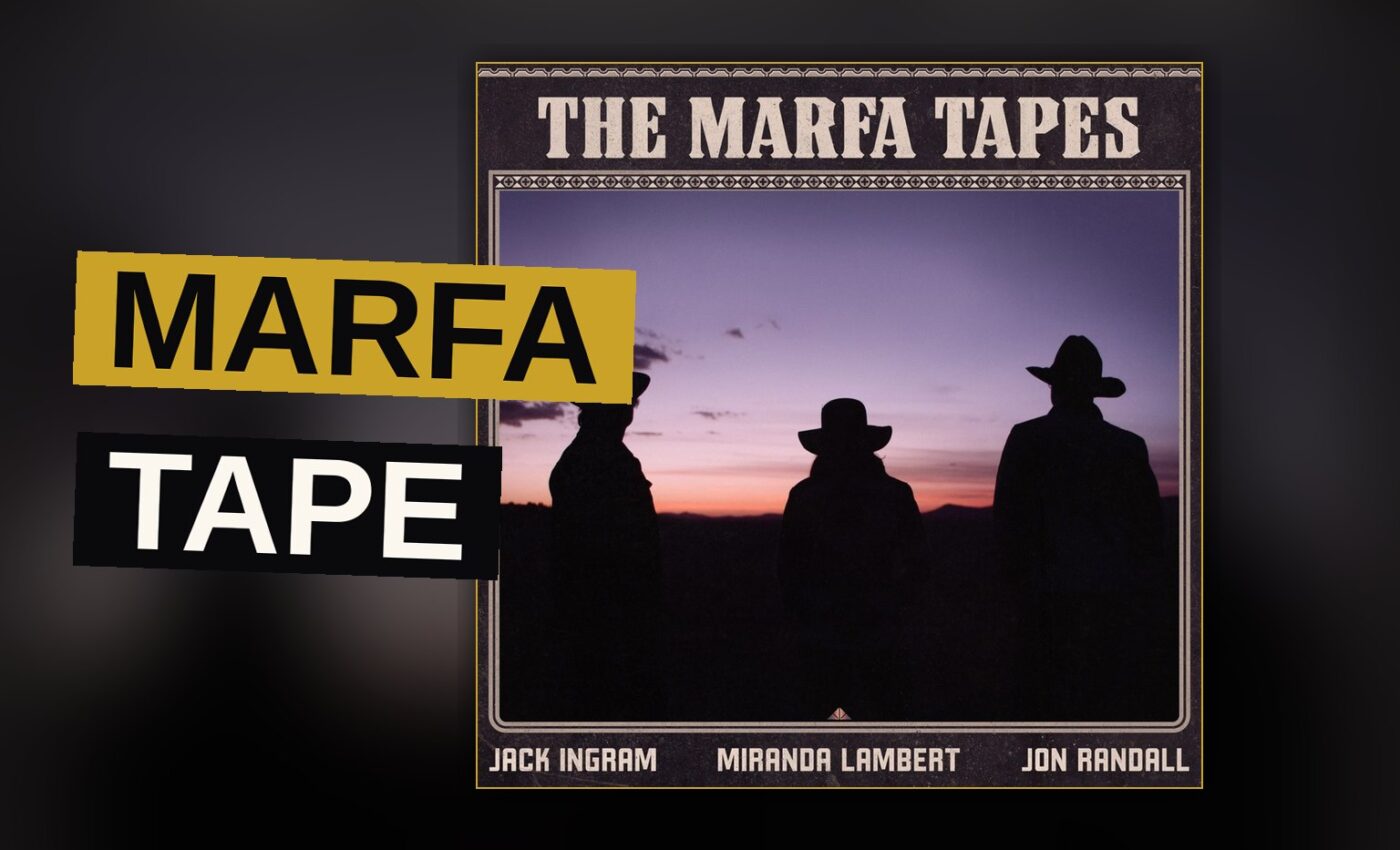
“The Marfa Tapes” is not a studio record. It is three country musicians — Jack Ingram, Miranda Lambert, and Jon Randall — sitting around a single microphone in a West Texas desert town and playing songs the way they sound when no one is pretending. The album runs 15 tracks and 47 minutes, and it wants to feel like a conversation over drinks, not a performance. That honesty is the whole point.
What Marfa Actually Sounds Like
The record was recorded in Marfa, Texas, and it carries the place in its title. The trio built the album from songs they had written together, recorded live in a room with no overdubs and no polish. The sound is bare bones — acoustic guitar, harmonica, a few drums, and three voices that crack and strain when the emotion gets too much. This is Lambert’s most cutting vocal work, and she lets her edge show without hiding behind production.
The critical response has been strong. Metacritic puts the album at 84 out of 100, and the reviews focus on the writing and the absence of filler. One critic noted that there is a hint of the disarming redneck charm Lambert has maintained since 2001, now part of “Marfa”‘s spare and heady brew.
Walking the Track List
The opener, “In His Arms,” sets the tone immediately. It is a simple love song, but the three-part harmony carries real weight, and the recording shows every breath between the lines. “I Don’t Like It” follows with a sharper edge, a complaint delivered with a wink rather than a frown.
“The Wind’s Just Gonna Blow” and “Am I Right or Amarillo” are solid but unremarkable, the kind of mid-album tracks that keep the mood steady without demanding attention. “Waxahachie” slows things down, a quiet reflection that earns its place by building slowly rather than rushing.
“Homegrown Tomatoes” and “Breaking a Heart” are short, sharp cuts that move quickly. Neither stays long enough to disappoint. “Ghost” and “Geraldene” follow, both carrying the weight of a lost relationship, and both land because the writing is specific rather than vague.
“We’ll Always Have the Blues” stretches the runtime with a slow, bluesy groove that feels earned after the lean earlier tracks. “Tin Man” is the album’s emotional peak — Lambert sings about being used and left behind with a delivery that never once reaches for sentimentality. It is a standout track.
“Two-Step Down to Texas” is a quick, danceable break that never overstays its welcome. “Anchor” is a plea for stability, and “Tequila Does” closes the main run with a wry, funny look at a relationship that has survived far too much alcohol. Both are singled out by critics.
“Amazing Grace (West Texas)” ends the record with a cover that feels less like a statement and more like a gesture of gratitude, the trio singing a hymn in a room full of dust and light.
Comparing the Tracks
| Track | Critical Standing |
|---|---|
| “Tin Man” | Standout |
| “Tequila Does” | Standout |
| “In His Arms” | Solid |
| “Am I Right or Amarillo” | Solid |
The album’s strength comes from its refusal to pad. There is no filler here, and the trio knows exactly what they are doing. Lambert’s vocals carry the weight, and Ingram and Randall fill in around her with a warmth that never tips into sentimentality.
This is Lambert’s most cutting vocal work, and she plays it straight. The record is a reminder that country music does not need spectacle to work — it just needs honest voices and honest songs.
- In His Arms2:30
- I Don’t Like It3:18
- The Wind’s Just Gonna Blow2:32
- Am I Right or Amarillo3:31
- Waxahachie3:17
- Homegrown Tomatoes2:53
- Breaking a Heart2:19
- Ghost3:00
- Geraldene3:08
- We’ll Always Have the Blues3:57
- Tin Man4:25
- Two‐Step Down to Texas2:31
- Anchor3:21
- Tequila Does4:00
- Amazing Grace (West Texas)3:10