
The line for Ramen del Barrio’s new location stretched down the block on opening day, a hot Saturday in late July. Wait times ran between ninety minutes and two hours. One woman fainted from heat exhaustion. Strangers rushed her inside, sat her at a table, and gave her water. Owner-chef Christopher Krinsky insisted on feeding her immediately. She turned out to be a longtime customer from the old spot, a stall inside Asian grocer Hana World Market that closed in December 2025. “She decided to come back the next day and stand in line all over again,” Krinsky says. “Hopefully with an umbrella.”
That first day, Krinsky and his team served 486 bowls of ramen.
A Kitchen Three Times Bigger
More than a month later, the line still forms for lunch and dinner. Some days, the kitchen sells nearly six hundred orders. Capacity is now 690 bowls, up from a maximum of 240 at the original counter, which earned a Bib Gourmand from Michelin and a semifinalist nod for Best New Restaurant in the 2024 James Beard Awards.
The new space is dramatically larger. The old kitchen measured 500 square feet. Krinsky now cooks in a kitchen three times that size, inside a 2,600-square-foot interior. His staff has grown from 9 to 22. The food has not suffered with the scale. It has improved so much that I returned after one visit to eat there twice in one day.
Carnitas Tonkotsu and the Chilaquiles Option
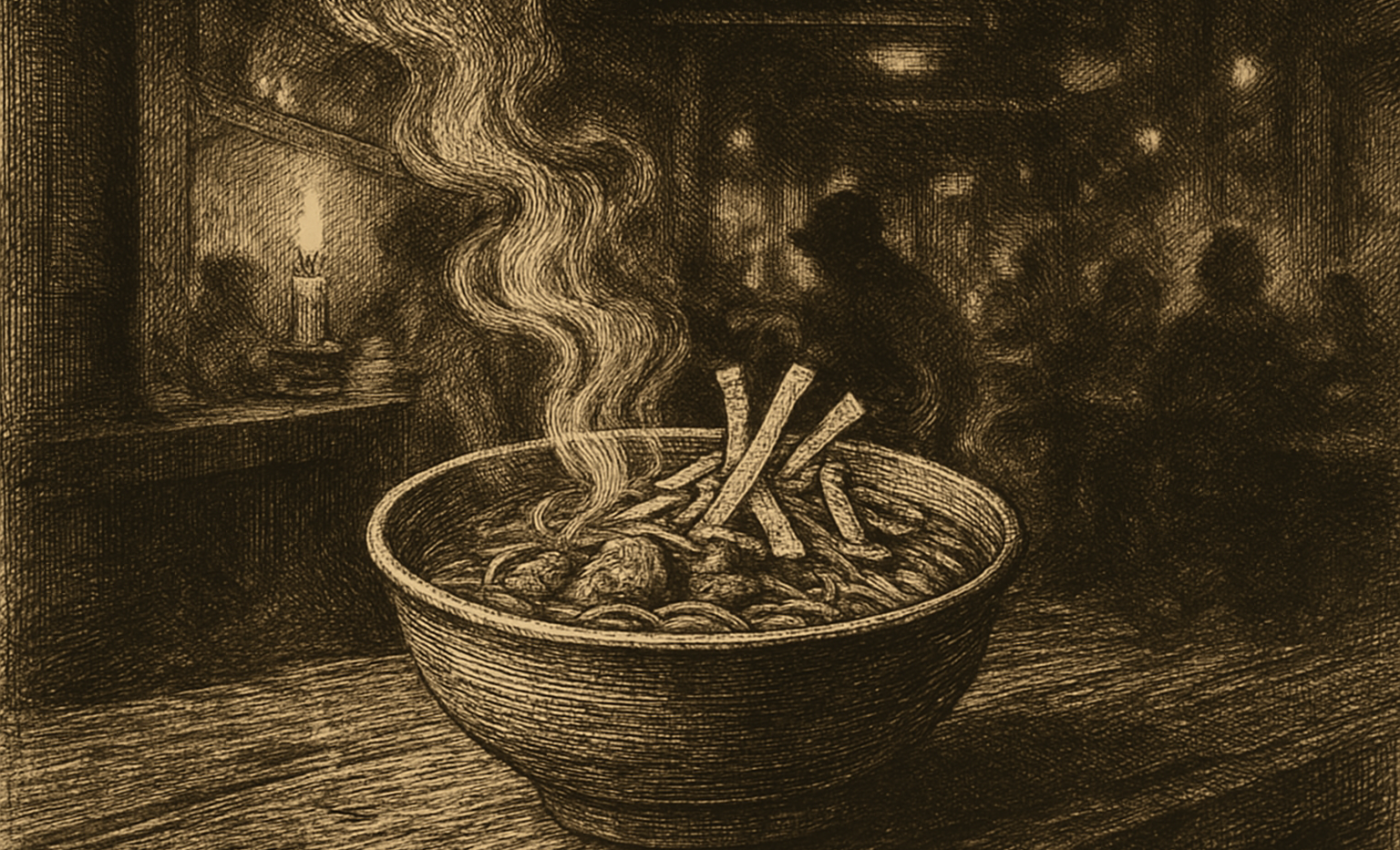
The signature carnitas tonkotsu is the draw: braised and shredded pork in a cloudy, lard-spiked broth, with crunchy tortilla strips resting against the bowl’s edge. It holds up even when the temperature sails past the century mark. A side of habanero mayu adds spice and savory depth.
The chilaquiles ramen brings Mexican breakfast elements—including finishing squiggles of crema—to the same carnitas, but with thicker, chewier noodles. The pozole tonkotsu features small white pearls of hominy in a broth with either green or red salsa.
The Regular Called Mr. Jeff
The red salsa pozole is a favorite of a regular the staff calls Mr. Jeff. Every customer gets greeted with “irasshaimase,” a Japanese expression of welcoming. Mr. Jeff gets his personalized.
“Everyone kind of drops silent and just looks at him,” Krinsky says. “We’re like, ‘He’s Mr. Jeff,’ and everyone’s like, ‘Who the f— is Mr. Jeff?'”
Mr. Jeff adds half an avocado and a creamy soft-boiled egg soaked for four days in soy, mirin, and sake to his pozole tonkotsu rojo.
New Tacos, Tostadas, and a Full Bar
Lighter options exist too. The bluefin tostada features folded fans of dark pink tuna on a crisped corn tortilla. The taco menu has changed: the lengua taco is gone, replaced by a tripa taco—firm beef intestine glazed with a sweet piloncillo tare sauce, swiped with black beans, splashed with salsa roja, and finished with chicharron flakes standing in for furikake.
Krinsky added a full beverage program. Cooks toast rice and cinnamon and soak them overnight for the horchata. The sake list includes two options for mixing with aguas frescas, including agua de jamaica made from hibiscus. Whiskey, tequila, and mezcal cocktails round out the menu.
How the Two Locations Compare
| Original Counter | New Location | |
|---|---|---|
| Kitchen size | 500 square feet | Three times larger |
| Staff | 9 | 22 |
| Daily capacity | 240 bowls | 690 bowls |
| Opening-day service | — | 486 bowls |
The Break That Changed Everything
Krinsky was happy to have a break when the first location closed. He had suffered impostor syndrome during the initial run. The time off changed that.
“The seven-month break we had finally allowed me to settle into it and take a look back and say, ‘I do deserve this. We deserve this. We’ve earned this as a team,'” Krinsky says.
He used the time for pop-ups across Austin and trips home to Mexico. He visited his parents in Cancún and went to Oaxaca, where he found salsas made with dried shrimp. That camarón seco now shows up in the spicy mayo on the bluefin tuna tostada. “It’s got to be stinky, man,” Krinsky says.
Why the Wait Is Worth It
Krinsky is considering adding an omakase service. The new space offers room for further study and testing of Japanese-Mexican fusion. He was hungry to get back into it.
The place was packed during every visit in August. I initially doubted the move, visiting the space under construction weeks before opening and thinking it seemed too big. I was wrong. Krinsky, for his part, seems prouder of his team than of the food.
Here is what makes the new Ramen del Barrio worth the queue:
- The carnitas tonkotsu, a pungent broth with crunchy tortilla strips
- The pozole tonkotsu rojo, Mr. Jeff’s pick, with hominy and red salsa
- The bluefin tostada with camarón seco in the spicy mayo
- The tripa taco with piloncillo tare and chicharron flakes
- The horchata, made from rice and cinnamon soaked overnight
The restaurant has grown, the menu has evolved, and the line has not gone away.
Source: texasmonthly.com
Get the Notebook.
The day's best stories and every fresh verdict, in plain English, in your inbox by seven. One email a day, no more.