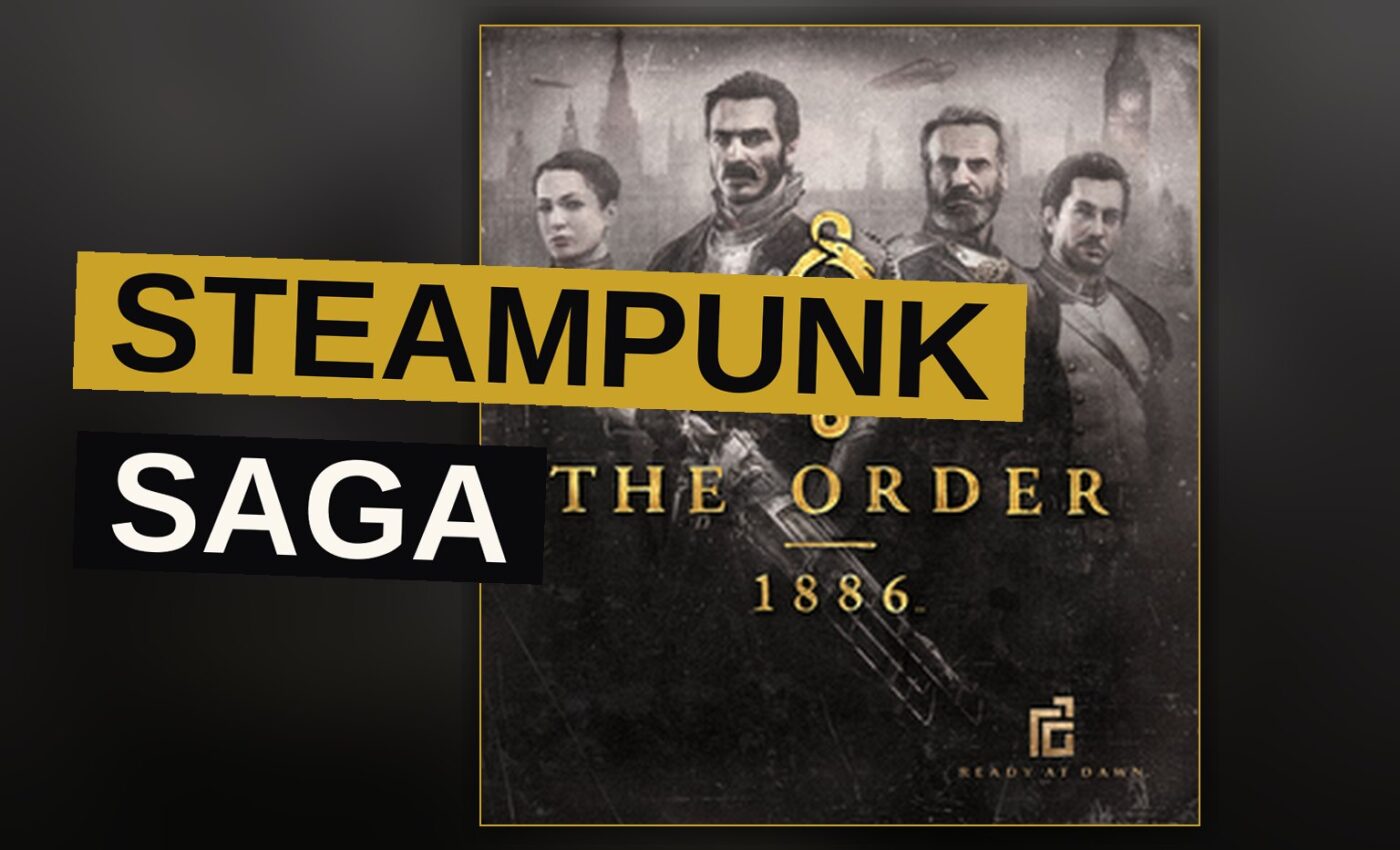
The Order: 1886 asks a simple question: what if the war between man and monster that ended the world began earlier? The answer is a Victorian-era shooter that trades modern military hardware for swords, pistols, and steam-powered gear. It is also a game that wants to look like a film, a museum exhibit, and a historical epic all at once. The problem is that none of those ambitions land with the force they should.
Developer Ready at Dawn built The Order: 1886 around a central idea: the Loyalists, a secret society of humans, fight the Seelie, a fairy-like race, to protect the British Empire. The story follows Sir Galahad, a knight of the Order, and his fellow soldiers as they defend London from the Seelie invasion. It sounds promising. In practice, the plot is slow, overwritten, and overly serious for its own good.
Trailer, via IGDBcom.
The Setting
The game’s greatest strength is its setting. London in 1886 is rendered with a level of detail that few games manage. The streets are wet, the fog hangs low, and the architecture feels lived-in. The Order: 1886 captures the romantic notion of Victorian England far better than most period dramas. The problem is that this visual ambition rarely translates into gameplay.
Movement through the city is slow. The game forces you to walk past countless side alleys and backstreets, searching for the next objective marker. The pacing suffers because the level design is built around spectacle rather than flow. A cinematic opening gives way to a slog through narrow streets that feel more like a guided tour than a playable space.
Combat
Combat is where The Order: 1886 stumbles badly. Players control Galahad and a small team of soldiers, switching between them to coordinate attacks. The system is awkward. Switching characters mid-combat is clunky, and the AI teammates often stand still while enemies close in. The cover system is shallow, and the enemy encounters rarely vary in difficulty.
The weapons are a mixed bag. Pistols and rifles feel accurate, but the game’s insistence on close combat with swords means you spend a lot of time dodging and parrying. The sword fights are meant to feel tense, but they often resolve with a single strike. The enemy types are limited, and the fights grow repetitive fast.
Storytelling
The narrative is the biggest letdown. The game tries to build a grand myth about ancient orders, lost artifacts, and the fate of humanity. It fails to make any of it feel urgent. Characters speak in stiff, formal dialogue that reads like a bad history textbook. The story is full of exposition dumps and moralizing speeches that stop the action cold.
The game’s tone is consistently grim and portentous. It treats the conflict as a sacred duty, which makes the violence feel hollow. The Order: 1886 never explains why anyone is fighting, and the stakes never rise beyond abstract concepts of duty and honor. The ending, in particular, is a letdown. It wraps up the story with a final battle that feels rushed and anticlimactic.
Technical Issues
The game’s technical problems are significant. On the PS4, frame rates drop during large battles, and the draw distance can be poor. Textures pop in and out, and the lighting effects sometimes overwhelm the details they are meant to highlight. The game looks beautiful in screenshots, but the actual experience is often muddy.
The multiplayer mode, called “Faction War,” is a separate mode where players compete for territory on a persistent map. It is a welcome break from the main campaign, but it is not a reason to buy the game on its own. The mode is shallow, and the online infrastructure is thin.
What Works
Not everything fails. The game’s sound design is excellent. The ambient music blends period instruments with orchestral arrangements, and the sound of footsteps on cobblestone adds to the atmosphere. The voice acting is committed, even if the script is weak. The loading screens are filled with concept art and lore, which gives the game a sense of depth that the gameplay itself never quite matches.
The game also includes a collection of collectibles and audio logs that reward exploration. These extras add context to the world, even if they do not fix the core problems.
Where It Falls Short
The Order: 1886 fails because it never commits fully to any of its ideas. It wants to be a cinematic adventure, but it is too linear to support that. It wants to be a historical drama, but its characters are too wooden to care about. It wants to be a tactical shooter, but its mechanics are too clumsy to deliver.
The game’s best moments are brief. A well-timed reveal, a stunning vista, a tense sword fight — these flashes of quality are scattered across a campaign that drags for hours. The pacing is uneven, and the middle stretch is a slog through similar environments and similar battles.
Here is how the game’s strengths and weaknesses stack up:
- Visuals: The game’s best quality, with detailed environments and atmospheric lighting.
- Sound Design: Strong, with immersive music and sound effects.
- Multiplayer: A decent addition, though not essential.
- Combat: Weak, with awkward controls and repetitive enemy encounters.
- Storytelling: Overwritten and overly serious, with a weak ending.
- Technical Performance: Poor on PS4, with frame rate drops and texture issues.
The Verdict
The Order: 1886 is a game with a strong concept and a weak execution. Its ambition is clear, but its delivery is inconsistent. The visuals are beautiful, the sound is excellent, and the setting is memorable, but the gameplay, story, and technical performance hold it back.
For completionists, there is enough content to justify a playthrough. For anyone else, the campaign is a chore. The game is a curiosity, a glimpse of what a Victorian shooter could have been if it had been built around gameplay rather than spectacle.
The Order: 1886 scores 6.2 of 10.
Get the Notebook.
The day's best stories and every fresh verdict, in plain English, in your inbox by seven. One email a day, no more.