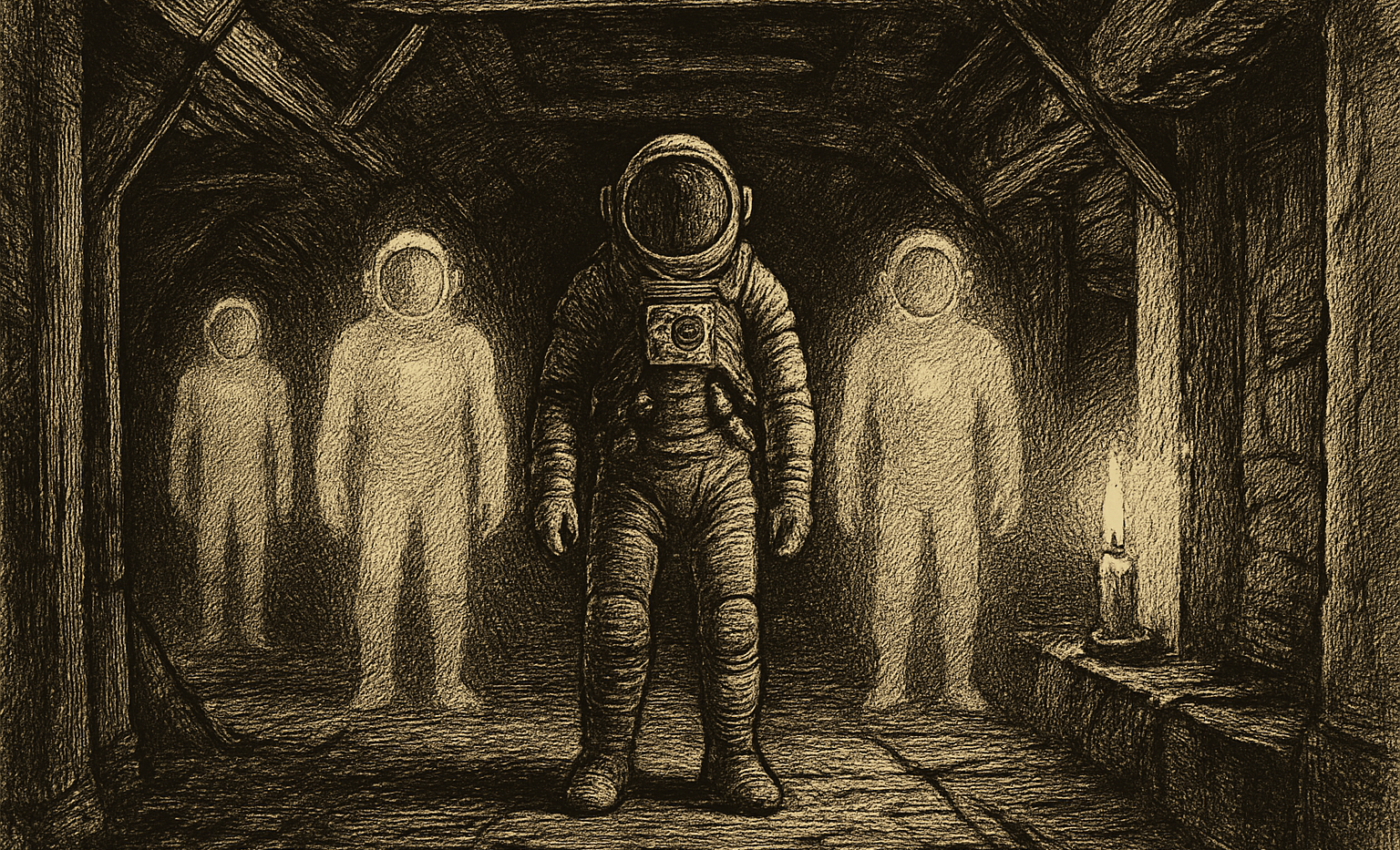
The Swapper is a puzzle game about cloning yourself, and it is also one of the most atmospheric games of its generation. You play as a lone astronaut stranded on a derelict space station called Theseus.
The station is empty, the lights are failing, and the only tool you have is a gun that creates copies of your body.
The game was released in 2013 for PC and Linux, with PS3 and PS4 versions arriving later. It was developed by Facepalm Games, a small studio from Finland. The game earned widespread praise for its clever puzzles and its heavy, quiet mood. It holds a published critical score of 8.8 out of 10, an IGDB critic aggregate drawn from 10 outlets, and that figure matches the experience it delivers.
Trailer, via facepalmgames.
Rules of the Clone Gun
The central mechanic is simple. You can fire the gun to place up to four clones of yourself in the environment. You can then swap your consciousness into any of those clones. The catch is that you cannot move while the gun is active, and you cannot swap into a clone that is in direct light.
The puzzles build on these rules with careful precision. Early rooms teach you the basics, and later rooms combine the mechanics into intricate chains of movement and timing. Each solution feels logical, and the game never cheats you.
When you solve a room, you feel smart, not lucky.
The manual for the gun is a small detail, but it does a lot of work. It reads like a piece of corporate documentation, dry and bureaucratic, which fits the game’s tone. It tells you the limits of the tool without explaining why the limits exist. That restraint is part of the game’s charm.
Walking Through Theseus
The setting is a character in itself. Theseus is a space station built for mining and research, and it has gone quiet. You walk through its corridors, read its logs, and piece together what happened. The story unfolds through environmental details and short text messages left by the crew.
The game asks a question about identity. If you clone yourself and then destroy the original, are you still you? The crew of the station debated this question, and their arguments are scattered across the logs.
The game does not give you a clean answer. It lets the question sit with you.
The art direction does a lot of the heavy lifting. The game uses a stop-motion style that looks like clay models filmed in low light. The palette is mostly grey, blue, and red, and the lighting is dramatic. The effect is striking, and it has aged well. The game still looks distinctive more than a decade later.
Sound, Silence, and Music
The audio is sparse. There is no constant music, and the ambient sound is mostly the hum of machinery and the echo of your footsteps. This silence makes the few moments of sound stand out.
When the game does play a piece of music, it feels like an event.
The composer, Carlo Castellano, wrote a short score that appears at key moments. The music is melancholic and slow, and it fits the mood of the station. It does not overstay its welcome. The game trusts its silence, and that trust pays off.
The voice acting is limited to the logs and the occasional transmission. The performances are restrained, and they avoid the melodrama that often plagues sci-fi games. The writing is plain and functional, which makes the emotional beats land harder.
Rough Playthrough Schedule
A full run of The Swapper takes about six to eight hours, depending on how quickly you solve the puzzles. The game is divided into several areas, and each area has a distinct visual identity. The following table is a rough approximation of how a typical playthrough might break down, based on general pacing rather than any official structure.
| Approximate Time | What You Encounter |
|---|---|
| 30 minutes | Learning the clone gun |
| 1 hour | Basic light and swap puzzles |
| 1.5 hours | New mechanics and moving platforms |
| 1.5 hours | Large-scale puzzle chains |
| 1 hour | Combining all rules |
| 30 minutes | Narrative resolution |
The pacing is even, and the difficulty curve is steady. The game never feels like it is padding its length. Each stretch introduces something new, and the final puzzles are challenging without being unfair.
Final Score for The Swapper
The Swapper is a rare game that balances intellect and emotion. The puzzles are tight, the setting is memorable, and the story asks questions that linger after the credits roll. It is a short game, but it respects your time, and it does not waste a single room.
The only minor weakness is that the game does not offer much replay value. Once you know the solutions, there is little reason to return. But the journey is worth taking once, and the experience stays with you.
The Swapper earns its reputation as a modern classic of the puzzle genre. It is a quiet, careful game that rewards patience and thought. If you have not played it, it is worth your time.
The Swapper is a strong 8.8 out of 10.