
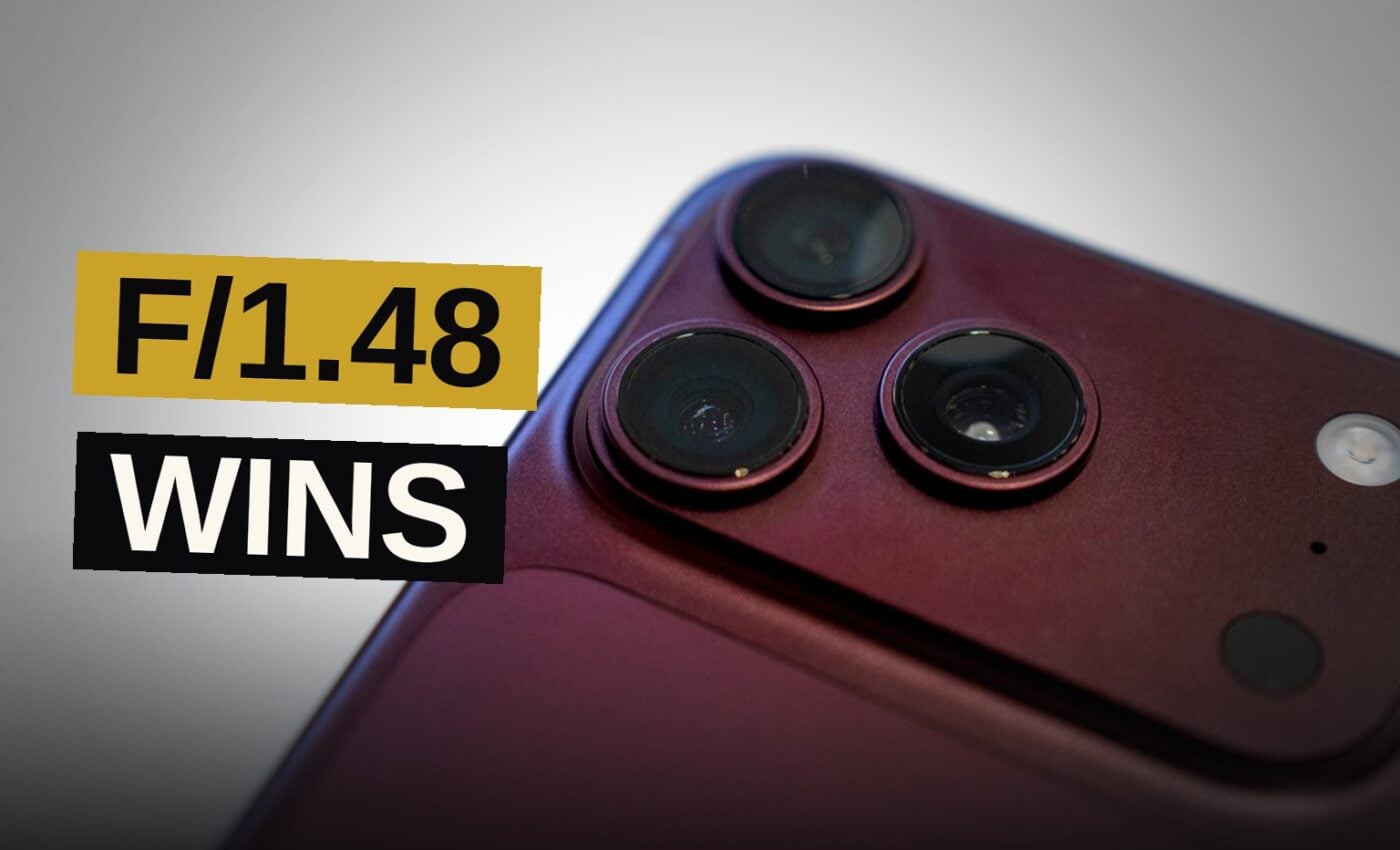
Apple’s iPhone 18 Pro and Pro Max come with a new variable aperture camera system, and the company is making a big show of it. The adjustable mechanical iris lets users shoot at f/1.48, f/1.8, f/2.8, and f/4, with manual controls for shutter speed, white balance, and focus now built into the native camera app. But the variable aperture isn’t the cool part of the iPhone 18 Pro’s camera. The new f/1.48 lens is.
The adjustable iris
The two Pro models both feature a mechanical iris on their main camera modules that can be adjusted to admit more or less light onto the sensor. The aperture can be selected automatically by the camera, or you can set it manually along with the rest of the new pro controls.
It’s the kind of thing you’d normally need a third-party app like Halide to do, and now it’s all baked into the 18 Pro’s native camera app. It’s almost as if Apple poached a key person directly from Halide.
It would be wise not to set expectations too high, because the variable aperture will likely top out somewhere around mid-range at most.
Why f/4 won’t blow you away
A smartphone’s sensor remains quite small, which means most subjects stay reasonably sharp until you come within a short distance. Closing the aperture to f/4 probably won’t produce noticeably sharper images like it does on full-size cameras, nor will it bring any other special characteristics except for some sunstar effects in specific kinds of lighting.
Because of lens diffraction, images can actually lose some sharpness when shot wide open at f/4, compared to narrower settings like f/1.8 or f/2.8.
Stopping down helps with depth of field when photographing close subjects, keeping more people in focus during large group shots in bright conditions, and offers greater freedom when shooting video in very bright settings such as direct sunlight. These circumstances will probably not come up often.
Even wide open, smartphone sensors are small enough to keep plenty in focus at mid-range and farther distances. That’s likely the reason Samsung and Xiaomi have tried variable apertures and then dropped them quietly.
The f/1.48 advantage
The standout capability here is the f/1.48 maximum opening, and it’s the reason people don’t need to stop down. The wide aperture is what produces the sought-after soft blur.
The look that tends to please people is a little shallower last year’s Pro iPhones had an f/1.7 aperture. At f/1.48, the 18 Pro should work better in low light and have a slightly shallower depth of field. Will the difference in bokeh be huge? Probably not. It’, though it’s barely noticeable.
Experience shooting full-frame cameras with a 50mm lens set at f/1.2 is the source of this reasoning. Such a lens offers a fast aperture and a depth of field so shallow that it produces a distinctive look that’s simple to overuse. Still, the effect nearly always works: portraits emerge with that blurred, “dreamy” blur isolating subjects from their backgrounds, and people can’t help but swoon.
The iPhone 18 Pro’s f/1.48 obviously won’t matches an f/1.2 lens on a full-frame camera. That is the look that smartphone users try to copy with their devices. Wide apertures on large sensors are what people chase, and that is precisely why Portrait Modes were created for phones in the first place.
Manual controls in the native app
The added controls are exciting and fun, even if manual controls aren’t always welcome when taking quick snapshots. It’ll be nice to have them right at your fingertips without installing a more specialized app.
The aperture setting may get overlooked once the new phone honeymoon phase ends and users stop messing with it.
What this means for everyday photos
Most high-end phones tend to come with excellent cameras, and the iPhone 18 Pro is probably no exception. The variable aperture does offer some genuine control, even if its actual uses remain limited. It’s the f/1.48 lens that will make the biggest difference in everyday shots, particularly in dim lighting and portrait work.
The gift that keeps on giving
Even long after the honeymoon phase ends, f/1.48 will be the gift that should keep on giving. That’s the feature worth getting excited about — not the iris you’ll probably stop touching.
Key numbers
- Aperture settings: f/1.48, f/1.8, f/2.8, f/4
- Last year’s Pro iPhones: f/1.7 maximum aperture
- New manual controls: shutter speed, white balance, focus
- Competitors: Samsung and Xiaomi tried variable apertures, then dropped them
Source: theverge.com
Get the Notebook.
The day's best stories and every fresh verdict, in plain English, in your inbox by seven. One email a day, no more.