
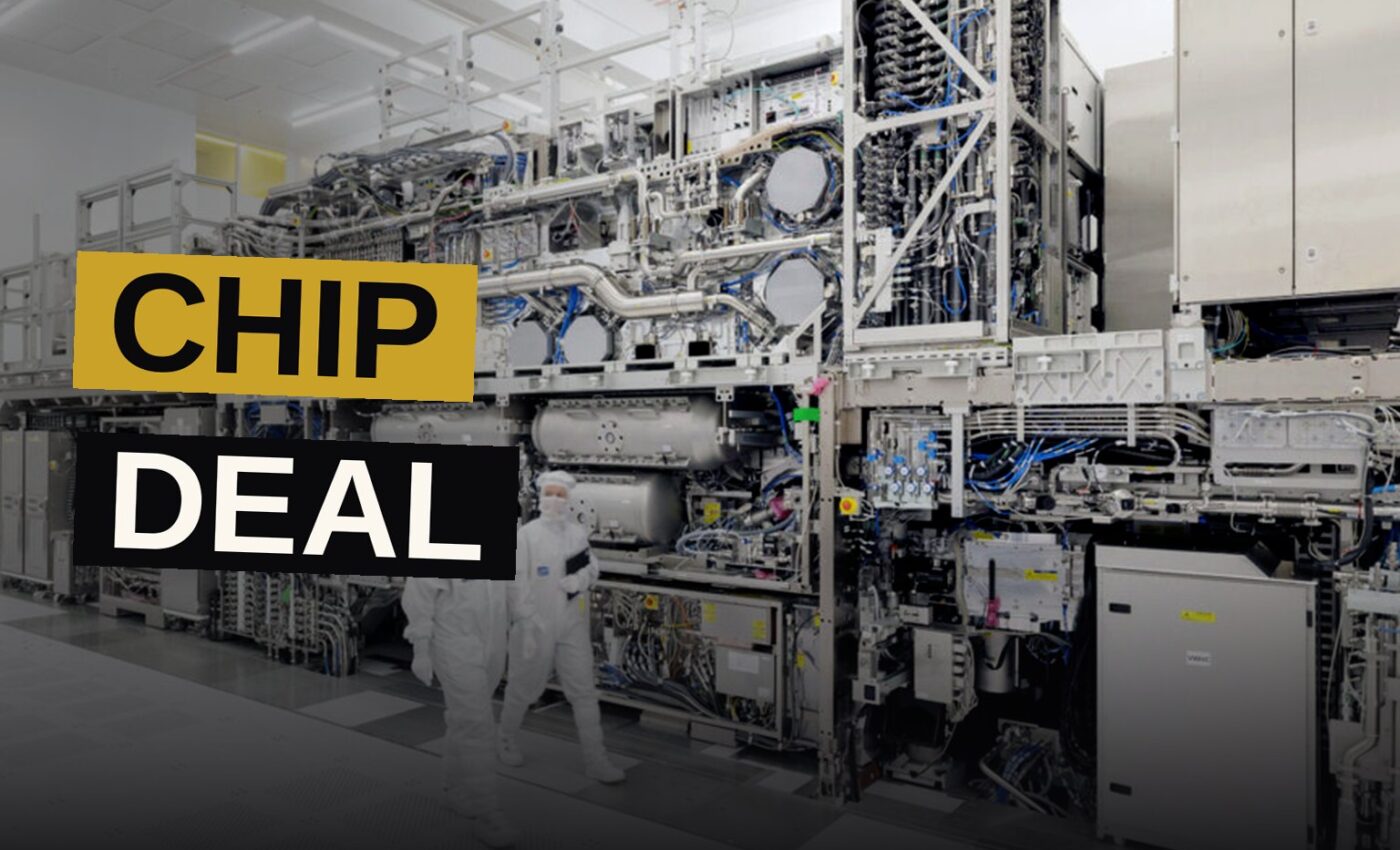
Samsung Electronics and Taiwan Semiconductor Manufacturing Co. have announced plans to adopt ASML’s latest chipmaking machines within the next several years. They also joined Intel in agreeing to a technology change that could raise chip production on the new machines by 40 %.
The move signals the semiconductor industry’s wider embrace of high NA EUV technology, which can cost up to $400 million per machine and is only provided by the Dutch company ASML, Bloomberg reports. The machines allow chip designers to build smaller features into more powerful and efficient next-generation chips for AI data centers and consumer electronics like smartphones, tablets, and laptops.
How ASML’s Machines Work
ASML’s EUV (extreme UV) machines use powerful laser light to mark patterns on wafers, layer by layer, building the circuits that makes chips work. EUV uses a shorter light band than older deep UV methods, creating smaller features on the wafers.
The system is complex. Lasers continually strike molten tin, turning it into a hot gas with temperatures around 200,000° C, while mirrors collect the light and direct it into a “bus-size” tool that projects the patterns, ASML researchers wrote for IEEE Spectrum. The newest high NA machines use bigger mirrors and an improved optical system to focus the light more precisely.
The Two Companies’ Timelines
| Company | Focus | Target Year |
|---|---|---|
| Samsung | Memory chips | 2028 |
| TSMC | Advanced chips for customers | 2030 |
South Korea’s Samsung plans to use the high NA EUV machines for memory chip production by 2028. Taiwan’s TSMC aims to use the technology for its most advanced chips starting in 2030.
The Agreement’s Scope
- Intel agreed to the technology change.
- Samsung joined that agreement.
- TSMC joined that agreement.
All three chipmakers now stand behind it.
The 40 % production gain is a key draw.
Customers Waiting on TSMC
TSMC’s customers include AMD, Apple, Nvidia, and Qualcomm. Those companies rely on TSMC for cutting-edge production.
The 2030 timeline means those chips are still years away. Samsung’s 2028 target for memory chips comes first.
ASML remains the sole supplier of this technology. That gives the Dutch firm a central role in the industry’s future direction.
The agreement across three major chipmakers shows a shared choice of the new machines. The industry is moving toward one costly, complex path.
Source: arstechnica.com
Get the Notebook.
The day's best stories and every fresh verdict, in plain English, in your inbox by seven. One email a day, no more.