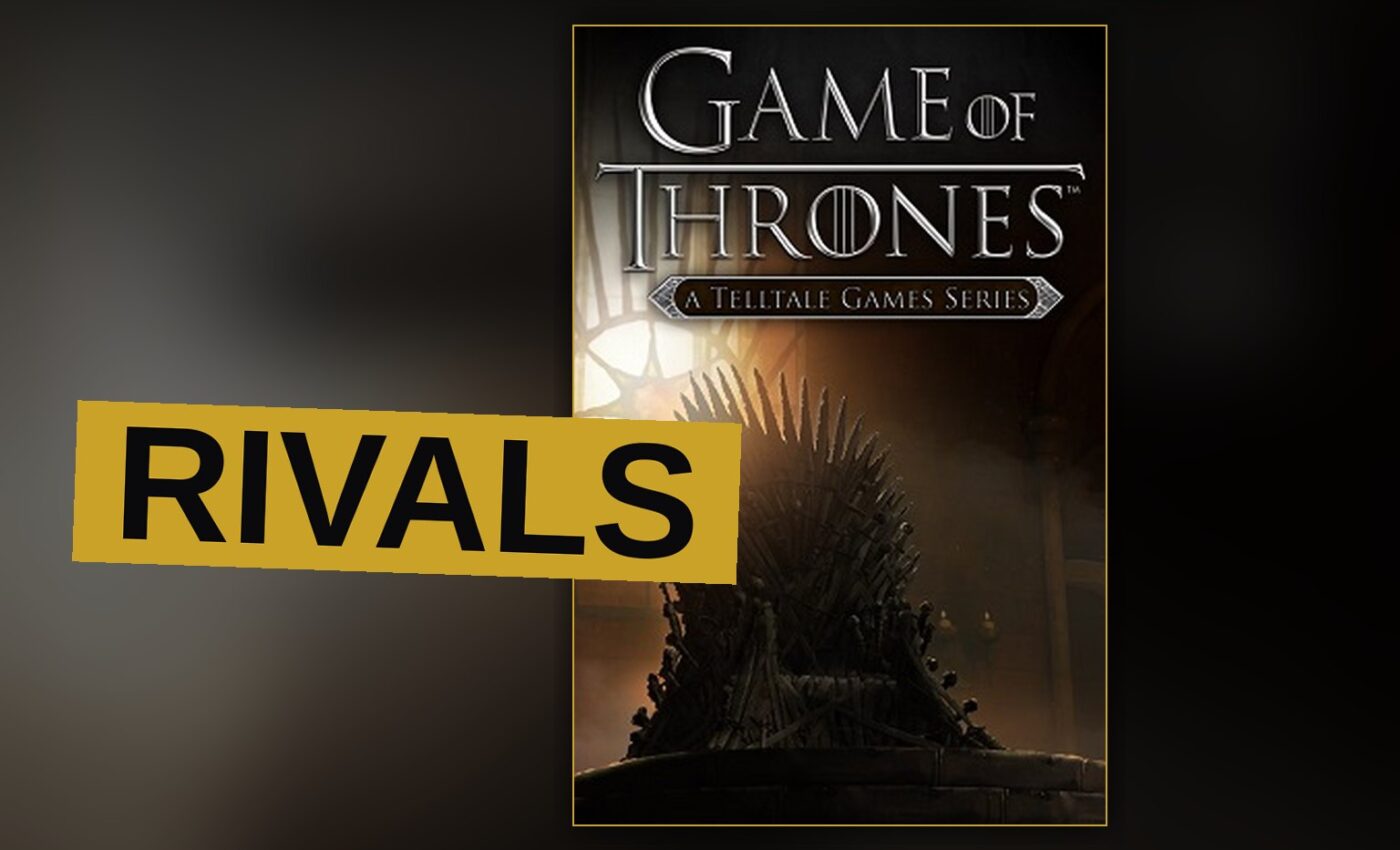
Game of Thrones: A Telltale Games Series asks players to make choices that shape the fate of people they barely know. That tension runs through every episode of this five-part adventure, and it never quite resolves itself.
The game is built around Bran Stark, whose journey through Westeros becomes a stand-in for the audience’s own struggle to keep track of who lives and dies. Players move between three timelines: Bran’s present, his memories, and the stories of other characters across the Seven Kingdoms. The structure is ambitious, but it also fragments the emotional stakes.
Trailer, via IGDBcom.
Bran’s Journey
Bran is the focus of the early episodes, and his sections are where the game finds its strongest moments. His interactions with Hodor and Summer, the wolf he shares a bond with, feel intimate in a way the broader political plotting does not. The game leans heavily on the idea of the Three-Eyed Raven, whose teachings about memory and power give Bran’s arc a philosophical weight that the rest of the series often lacks.
But the game is less interested in Bran’s character development than in using him as a lens for the wider story. His sections are frequently interrupted by scenes following other characters, which breaks the momentum of his personal journey. By the middle of the series, Bran’s presence feels more like a framing device than a central player.
The Political Machine
The other threads follow Sansa Stark, Arya Stark, and Gendry, along with several minor characters caught up in the machinations of House Bolton and the Iron Bank. These episodes are where the game’s reputation for dark, mature storytelling comes from. Violence is frequent, betrayal is expected, and death is rendered bluntly rather than dramatically.
The game’s approach to violence is one of its defining features. Battles are quick and brutal, with little room for strategy beyond choosing who to save. This works in some episodes, where the chaos of war feels earned. In others, it feels like filler between plot points, a way to stretch out the runtime without adding depth.
The political plotting is dense and often confusing, especially for newcomers to the books or TV show. Characters are introduced, alliances shift, and locations change at a pace that can be exhausting. The game assumes familiarity with the source material, which puts new players at a disadvantage. Even those who know the story may find themselves pausing to look up a name or a location they cannot place.
Choices and Their Weight
Telltale Games is known for branching narratives, and Game of Thrones follows that pattern closely. Choices made in earlier episodes affect later ones, sometimes in small ways and sometimes in large ones. The game tracks these decisions through a companion app, which lets players see the consequences of their actions across multiple playthroughs.
The problem is that many of these choices feel superficial. A conversation option might change a line of dialogue but not the outcome. A decision about who to trust might shift a scene slightly but leave the plot unchanged. The illusion of consequence is strong, but the actual impact is often thin.
When the choices do matter, they land with real force. One episode forces a player to choose between saving a child and saving a leader, and the game commits to the consequences of that choice in a way few games manage. These moments are rare, but they are memorable.
Performance Across Platforms
Game of Thrones: A Telltale Games Series launched on PS3, PS4, Android, PC, and other platforms. The performance varies by system, with the console versions generally offering smoother playback than the mobile editions. The game is a visual adaptation of the source material, with environments and character designs that draw directly from the books and TV show.
The voice acting is uniformly strong, with actors delivering lines with the gravitas the material demands. The animation is competent but occasionally stiff, particularly in close-up shots where the mouth movements don’t always match the spoken words. The score, composed for the game, shifts between tense orchestral pieces and quieter, folk-inspired melodies, though it tends to repeat its themes rather than evolve them.
The pacing is inconsistent. Some episodes move at a brisk clip, while others drag through extended stretches of dialogue. The game is designed to be played in installments, which helps break up the slower sections, but it also means players may lose momentum between sessions.
A Fragmented Story
The episodic structure is both a strength and a weakness. It allows the game to release content regularly and build anticipation, but it also means the story is never fully resolved until the final episode. Players who finish one episode are left waiting for the next, which can be frustrating.
The game’s use of multiple timelines is clever, but it also fragments the narrative. By the end of the series, the threads have been pulled so tightly together that the connections between them feel more like a puzzle than a coherent story. The payoff is there, but it requires patience to get to.
The game also suffers from a lack of consistency in tone. Some episodes lean into the grimdark fantasy of the source material, with torture and death presented unflinchingly. Others dip into comedy, with light-hearted moments that feel out of place next to the violence. The tonal shifts are jarring, and they undermine the sense of a unified vision.
What Works Best
Despite its flaws, Game of Thrones: A Telltale Games Series succeeds when it focuses on character relationships rather than political maneuvering. The scenes between Bran and Summer, and between Sansa and Arya, are the most emotionally resonant parts of the game. They are also the most grounded, drawing on the personal bonds that make the larger story worth telling.
The game’s best episodes are the ones that strip away the grandeur of Westeros and let the characters breathe. These moments are rare, but they are the reason the game holds together at all.
A Mixed Legacy
Game of Thrones: A Telltale Games Series is a flawed but worthwhile entry in the genre of interactive drama. It pushes the boundaries of what a video game can do with narrative, even if it doesn’t always succeed. The choices feel meaningful in the best moments, and the performances are consistently excellent.
It is not a perfect adaptation, and it is not a perfect game. But it is a game that respects the intelligence of its audience, even when it frustrates them. The story is messy, the pacing is uneven, and the choices are often shallow. But the ambition is real, and the best episodes justify the effort.
Game of Thrones: A Telltale Games Series is a mixed bag, but it is a bag full of ambition. The highs are high, and the lows are low, but the whole package carries a weight that few games manage. It is a game worth playing, even if it is not a game worth praising without qualification.
| Episode | Focus |
|---|---|
| 1 | Bran’s journey |
| 2 | Bran’s journey |
| 3 | Political threads (Sansa, Arya, Gendry) |
| 4 | Political threads (Sansa, Arya, Gendry) |
| 5 | Payoff episode |