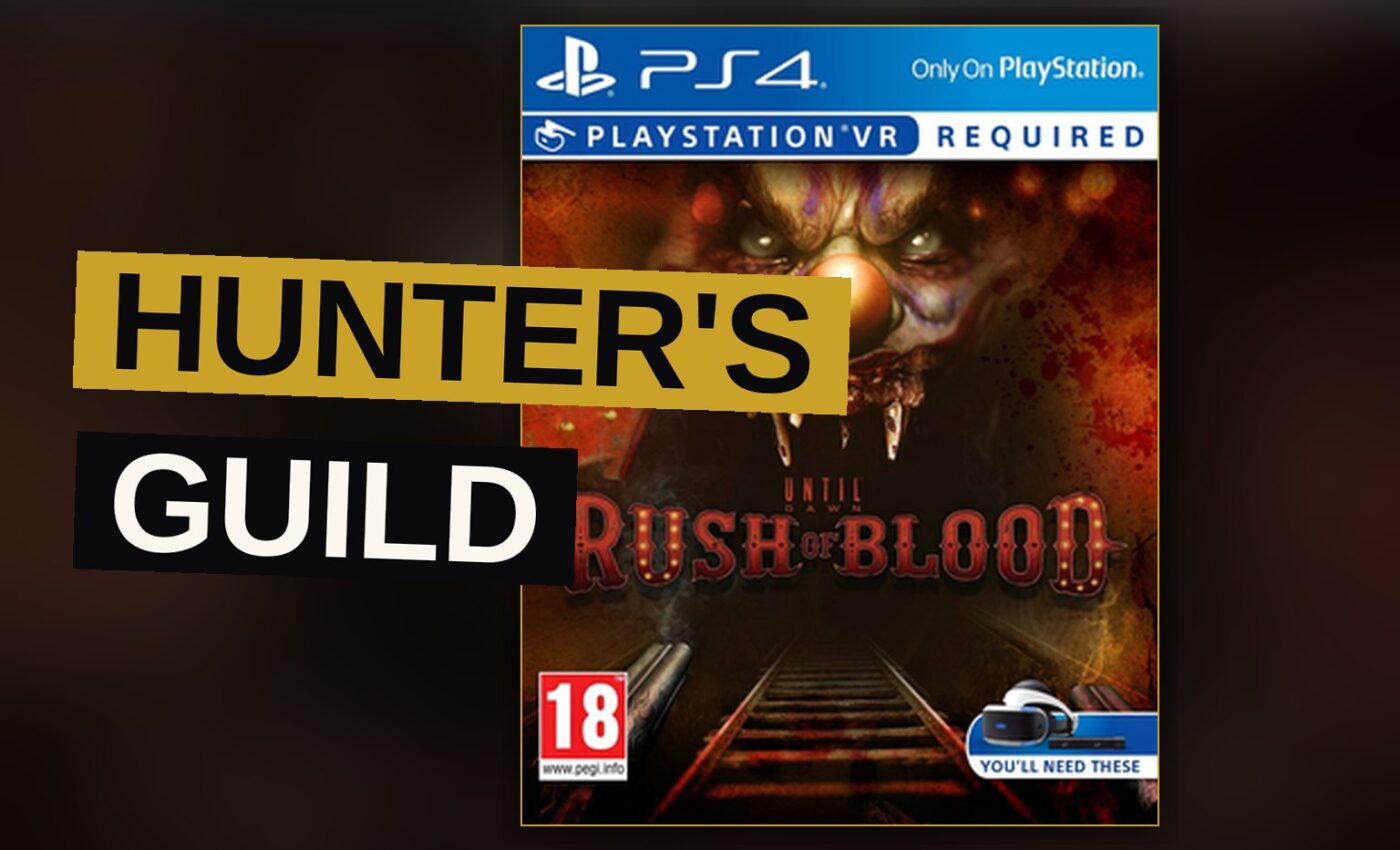
Until Dawn: Rush of Blood is a rail shooter built for PlayStation VR, and it does not pretend to be anything else. Supermassive Games, the team behind the PlayStation 4 horror game Until Dawn, released it on 13 October 2016 for the PlayStation VR headset on PlayStation 4. Sony Interactive Entertainment published it. You sit in a roller coaster cart. You shoot what comes at you. The track decides where you go. Seven levels of pure terror, the pitch goes, and a global leaderboard waits at the end if you survive them.
Trailer, via PlayStation.
A cart, a handgun, and a carnival
The setup is a horror-themed carnival amusement park, and it gets worse as you go. The game ships seven different roller coasters. They reuse locations and characters from Until Dawn, but with new themes. You start with handguns by default, and other weapons are available as you move through the game. The perspective is virtual reality, and the genre is shooter. It is single player only.
That is a narrow design, and Rush of Blood commits to it. You duck. You dodge. Enemies and monsters come at you from all angles, and the headset puts you inside the ride rather than in front of it. The pitch promises no two rides will ever be the same, and the game backs that with multiple paths to take.
It is also, at seven levels, short. That matters more than the pitch admits.
Dan T. runs the ride
The player begins at the carnival, where an operator named Dan T. explains how to handle the upcoming level. The name is a play on Dante. That is the kind of joke Rush of Blood likes: broad, a little cheap, and delivered without apology.
Dan T. is not just a tutorial voice. He is the spine of the thing. As the player nears the end of the first level, the Psycho appears and changes the tracks, sending the cart into a lodge. The Psycho and his minions attack. Before the player can escape the lodge, the Psycho forces the player to inhale gas, and the player goes under.
When the player wakes, Dan T. says the gas will make them see things that are not there. The game then proves it. A giant Psycho shows up at the end of the second level and eats the player character.
Gas, ghosts, and a giant spider
From there Rush of Blood stacks set pieces. The player beats a ghost in a hotel. The player confronts the Psycho in a sanitorium and kills him in an explosion. The player kills a giant spider. The player escapes the Wendigos, the main antagonists from the first game. Through all of it, the player hallucinates two girls who call out to them.
None of this is subtle, and none of it is meant to be. The gas is the game’s excuse for whatever it wants to show you next, and it uses that excuse constantly.
Can you survive seven levels of pure terror to top the global leaderboards?
The hallucination framing is doing real work, though. It lets Supermassive move between a carnival, a lodge, a hotel and a sanitorium without pretending they connect. A rail shooter does not need a map. It needs a reason for the next room to be worse than the last one. Rush of Blood has one, and it costs the game nothing.
What the hospital bed means
The ending is where Rush of Blood stops being a carnival ride. After each level, the game cuts to the real world. The player character is in a hospital, being cared for by Dan T.
In the final level, the player reaches a hellish cavern and confronts Dan T., who is now a horrific man-eating beast. The player avoids his attacks long enough to send him into a lava pit. Dan T. grabs the player and drags them down with him.
Then Dan T. tells the player they may need to try the procedure a few more times.
That line reframes everything before it. The seven levels were not a rescue. They were a treatment, and the treatment is not finished.
Finish the game on Psychotic difficulty and the game shows a scene from Until Dawn in which two people find the player eating flesh from a corpse. It is shot from the player’s point of view. That confirms the player character is Joshua Washington from Until Dawn.
Where the aggregate lands
Rush of Blood holds a 7.0 out of 10 on the IGDB critic aggregate, across 11 outlets. That number is fair, and here is the reasoning behind it.
The game is a launch-window PlayStation VR title, and it understands its hardware better than most of them did. A rail shooter removes the two problems VR had in 2016: movement and aim. The cart moves you. You only turn your head and fire. The carnival setting gives Supermassive permission to throw anything at the screen, and the gas gives it permission to throw anything at the story.
What holds it at 7.0 rather than higher:
- Seven levels is a thin campaign, and the multiple paths do not add up to a second playthrough so much as a slightly different first one.
- The horror is borrowed. The Psycho, the Wendigos and Joshua Washington all come from Until Dawn, and Rush of Blood leans on that recognition instead of building its own.
- The Dan T. twist lands, but it lands at the very end. The middle levels are set pieces without much connective tissue beyond the gas.
- The Psychotic difficulty ending is the best idea in the game, and most players will never see it.
That last point is the real criticism. Rush of Blood buries its strongest material behind a difficulty setting, which is a strange place to hide the answer to what the game was actually about.
What Rush of Blood gets right
The best thing Rush of Blood does is refuse to explain itself early. Dan T. is a carnival operator with a joke name, and the player has no reason to read him as anything else. The gas is a plot device. The giant Psycho is a gag. The game lets you enjoy all of it as a ride.
Then the hospital bed. Then the line about trying the procedure again. The whole thing turns over, and the turn is earned because the game played it straight until the last possible moment.
The Psychotic ending completes it. Joshua Washington, from Until Dawn, eating flesh from a corpse, seen through his own eyes. It is a bleak joke about what a horror game does to the person holding the controller, and Rush of Blood is smart enough not to underline it.
That is a better idea than most launch VR games had. It is not a better game than most of them, though.
Buy it for the ride
Until Dawn: Rush of Blood is a tight, mean, well-built arcade shooter that knows exactly what PlayStation VR could do in 2016 and does it. The cart, the handguns, the seven coasters, the giant spider, the Wendigos: it all works. The problem is volume. There is not much here, and the part that would make you tell someone about it is locked behind Psychotic difficulty.
Buy it for the ride. Stay for the hospital. Do not expect the ride to last.
7.0 of 10.
Get the Notebook.
The day's best stories and every fresh verdict, in plain English, in your inbox by seven. One email a day, no more.