
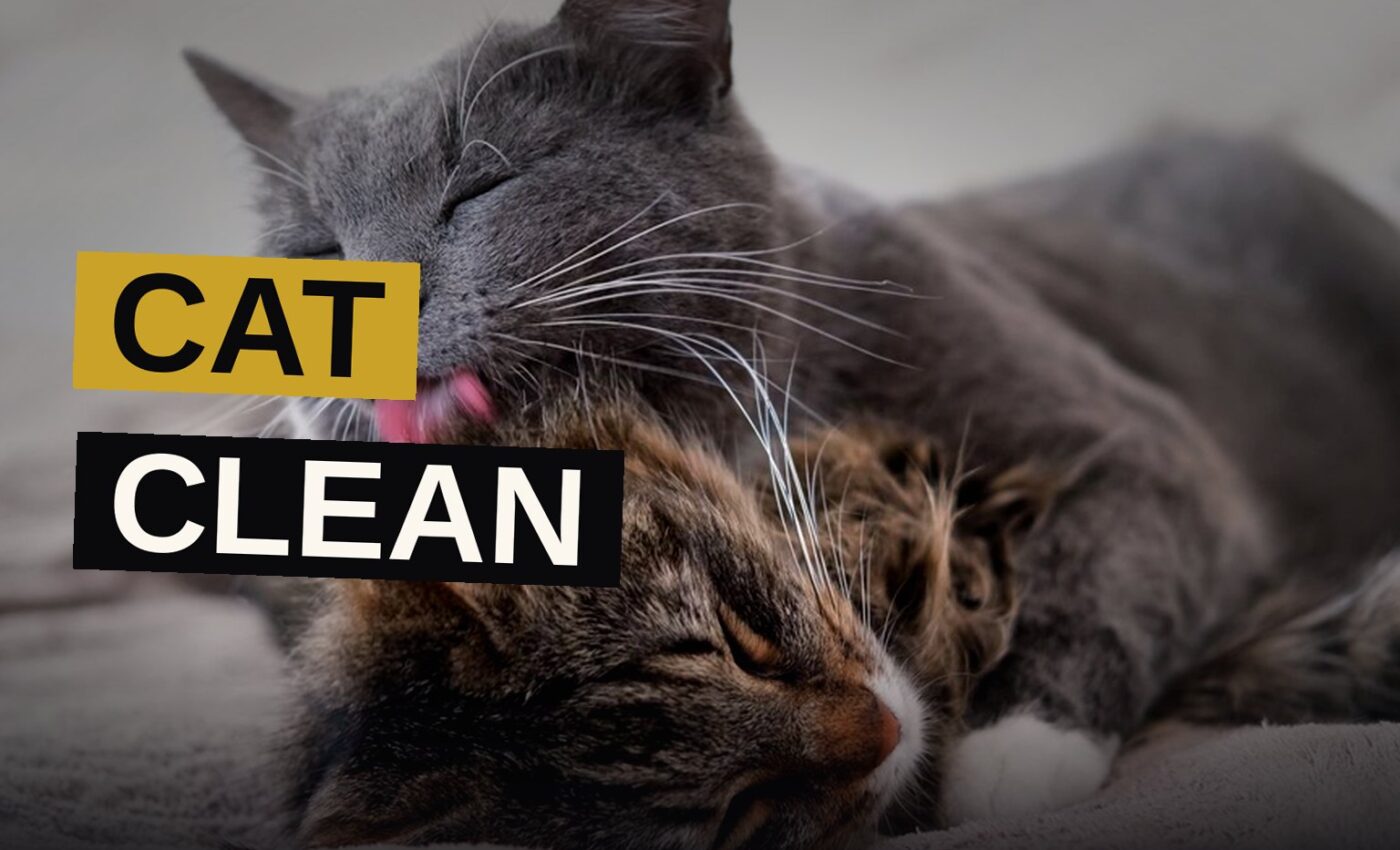
When two cats live together, one will sometimes bend its head down to clean another’s fur, ears or face. This act, known as allogrooming, has long been interpreted by humans as a sign of affection between the animals. But recent scientific findings suggest that the explanation is not so simple.
Cats grooming one another carries a range of meanings beyond simple friendliness. One cat licks another, and that act can signal a bond, ease tension, avoid conflict — or, in certain cases, a quiet threat. The science is still building, yet the findings to date suggest that cats do not always intend kindness when they clean each other.
What Counts as Allogrooming
When one cat cleans another, that’s allogrooming. It usually takes the form of licking, although the precise position can differ. This kind of interaction happens among cats living together, whether they’re part of an outdoor colony or sharing a household with multiple cats. Most people read it as a sign of fondness, and the reasoning behind that interpretation is straightforward: cats who share space need to maintain a working relationship, and grooming appears to be a means of showing that connection.
Aggressive behavior has been observed during allogrooming sessions, and it does not always signal friendliness. In fact, a 1998 study of 25 cats living together in an indoor-outdoor enclosure found that aggression appeared in roughly 35% of allogrooming sessions. This finding implies that the behavior serves a purpose beyond social bonding. Given the close quarters of a confined space, a full fight could be dangerous, so allogrooming may instead function as a way to ease tension before it escalates.
Bonding or Tension Relief?
For years, researchers believed that cats who live freely together groom each other to build and hold onto social bonds. Mutual grooming is how they share a common scent across the colony, keeping the group connected. The 1998 study, however, raised questions about that explanation. During allogrooming sessions, aggression appeared, pointing toward a different purpose for the behavior.
A team led by Morgane Van Belle, a cat behavior scientist at Ghent University in Belgium, examined videos of allogrooming from 53 two-cat homes. Their findings suggest that the social purpose of allogrooming can shift based on context.
Researchers observed cats grooming each other while huddled together, mimicking one another’s body positions. During these interactions, allogrooming likely builds social bonds, they suggested. The majority of licking targeted the ears, which may promote relaxation since that area contains a high density of sensory nerve endings. Allogrooming has similar effects in other species: it slows the heart rate in horses and sparks the release of feel-good hormones in monkeys.
In some cases, allogrooming turned into playful wrestling, where the cats grabbed each other with their front legs and tumbled about. That outcome suggests that allogrooming can act as a cue to begin play.
In some instances, allogrooming came before a fight. Signs of conflict included ears turned back, pawing and biting. When these happened, one cat stood or leaned over the other, with both showing small signs of stress such as lip licking, head shaking or self-scratching.
Based on these observations, Van Belle’s team thinks allogrooming may be an “appeasement signal” in fraught moments that could lead to conflict or injury. It may keep a spat from turning into a real fight. Similar behavior has been seen in meerkats, where subordinate individuals groom dominant ones to placate them.
A catch exists here: because the licking often targets the neck — an area cats bite during fights — it can also signal a subtle aggressive threat. The researchers proposed that the licking might serve as a means to establish dominance without sparking a full confrontation.
The Stress-Relief Theory
Researchers keep finding that allogrooming has a calming effect. When cats huddle together and match postures, the licking helps them relax. The ear-licking in particular may target the sensory nerve endings in that area, which produces a soothing response.
Support for this claim comes from the horse and monkey examples. In horses, allogrooming lowers the heart rate, while in monkeys it sets off the release of feel-good hormones. That same principle could be at work with cats too.
Hygiene and Grooming
Practical benefits also come from allogrooming beyond its role in social signaling. Van Belle and her colleagues believe it aids with hygiene, particularly in spots on a cat’s body that are hard for the animal to clean on its own.
A cat’s head and neck are among the hardest parts of its body for it to clean itself. In other species, social grooming has a known hygienic purpose. Ants work to keep their colony free of disease by grooming those with heavy infections more often than others. Primates tend to focus their grooming on areas the recipient cannot easily reach on its own. Cats may do the same, though whether they do remains unresolved.
No parasites, infections or skin cleanliness were measured by Van Belle’s study to determine whether grooming actually cuts down on dirt or bugs. Further investigation remains necessary.
Dr. Terry Curtis, a veterinary behaviorist whose work has explored how often allogrooming takes place, believes cats may groom each other for hygienic purposes. She questions whether feral cats, who probably carry more fleas than house cats, might show a distinct allogrooming pattern.
The Skepticism Factor
Curtis finds the explanations put forward by Van Belle and colleagues reasonable, yet not conclusive. Given how many things influence a cat’s behavior, she doubts researchers will ever be able to state with true certainty exactly why one cat grooms another.
After working as a veterinary behaviorist for 25 years, Curtis has concluded it is often impossible to understand what’s going on in a cat’s mind.
“Congratulations, you got a cat,” she said. “Let the mystery begin.”
What We Know So Far
Several roles for allogrooming emerge from the evidence, each pointing in a different direction. A brief summary of what the research suggests follows.
- Social bonding: When cats huddle together and copy each other’s body postures, allogrooming strengthens social bonds.
- Stress relief: Ear-licking may help cats relax due to the rich sensory nerve endings in that area.
- Play initiation: Friendly wrestling follows some allogrooming sessions, suggesting the behavior can signal the start of play.
- Appeasement: In tense situations, allogrooming may defuse conflict and keep a spat from turning into a real fight.
- Aggressive threat: Because the licking often targets the neck, the same area cats bite during fights, it may signal a subtle aggressive warning.
It’s clear the behavior serves many purposes at once. Cats do not always show affection when they groom each other, nor do they always avoid conflict. What matters most is the setting around them.
What Cats May Be Thinking
The study leaves many questions open rather than settling them. Van Belle’s team pointed out that allogrooming frequently focuses on the neck, which is also where cats go for when they fight with each other. This observation opens up the possibility that the behavior might serve as a quiet sign of aggression instead. The researchers proposed that the licking could actually help ease the tension and prevent a quarrel from becoming something worse.
It pays to keep Curtis’s doubt in mind when thinking about cats. Their habits come from a great deal of influences, and it might not ever be possible to settle on one explanation for a particular lick. What remains within reach is watching carefully, recording what happens and putting forward guesses about what might explain it.
The bottom line is straightforward: allogrooming does not always signal friendship. It can indicate closeness, but it can also serve other purposes, such as managing tension, starting play, or asserting control. Next time you notice one cat grooming another, pay attention to the body language and the setting around it. You might discover more about your pets than you initially thought.
The mystery is real, and it is worth letting it continue.