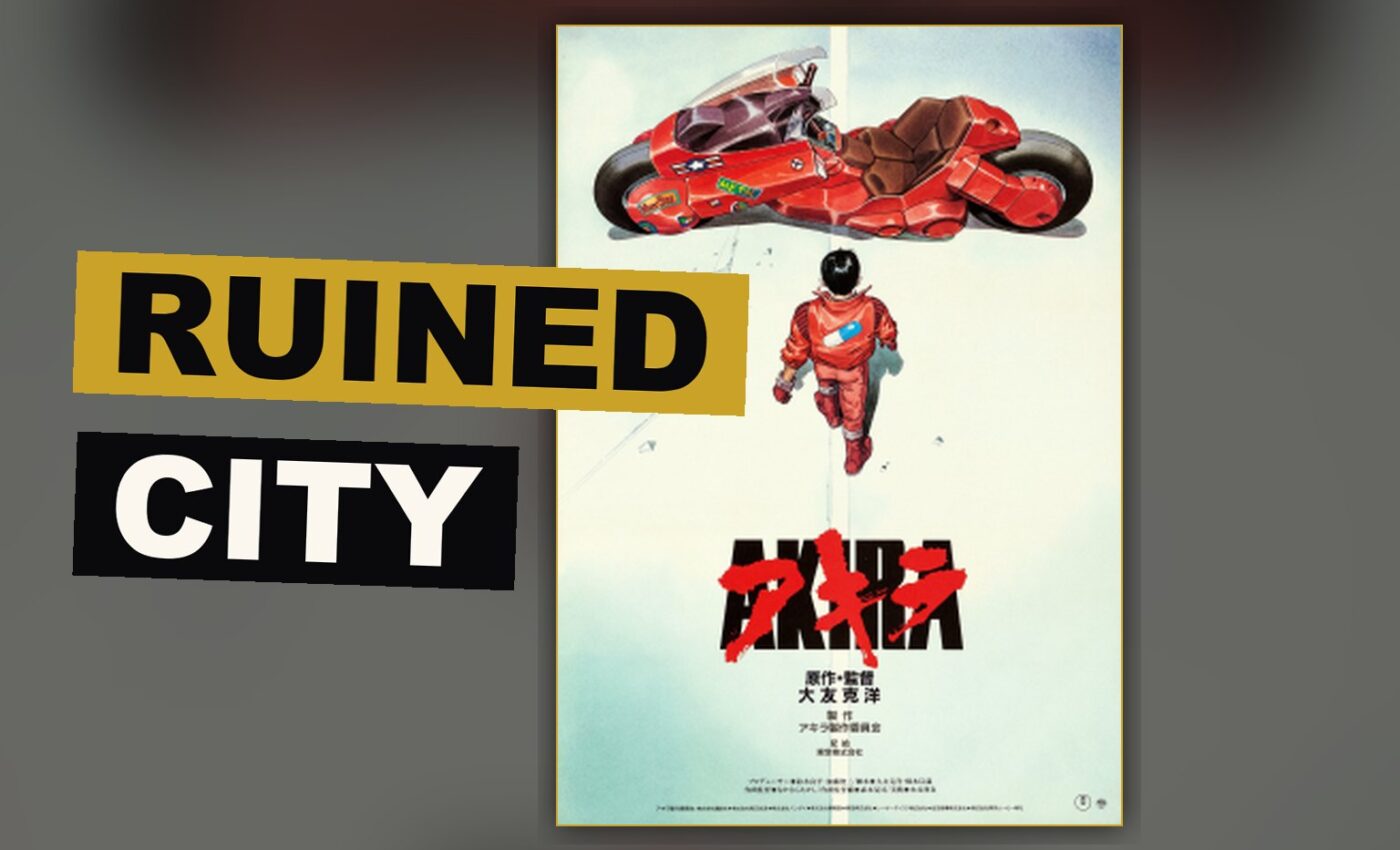
The film called Akira arrives on screen with a force few animated works have matched since it opened in 1988. Katsuhiro Otomo built the picture from his own long comic story, and it set a new bar for what animation could show and sound like. 38 years later, Akira still holds up as one of the finest achievements of its medium.
The Ruined City
The story follows the leader of a group of young riders and his oldest friend, whose secret power wakes up after an accident on his motorcycle. As that power grows past his own control, the government moves to hold him down, and the mystery of a boy named Akira, buried at the heart of the city’s ruin decades earlier, comes into full view.
The city itself works almost as a character in its own right. It is shown as a wide space of light, waste, and open want, built on the remains of a war never fully explained to the audience. That choice works in the film’s favor. Akira trusts its viewers to sit with the unknown rather than spell out every last detail of its world.
The Drawings and the Music
The animation remains the most praised part of the film. Otomo’s team made over 160,000 drawings for the picture, a huge number for its time, and that level of care shows in every frame, from the light off a motorcycle’s frame to the way a body changes shape near the film’s end.
Three things stand out about how the film was made:
- The drawn animation, which gives weight and texture to fire, mobs, and body horror alike.
- The music, built from voices and older sound from its native land mixed with newer forms, which turns strange and troubling without warning.
- The sound work, which sets loud machine noise against quiet moments to guide the mood scene by scene.
That mix gives Akira a hold on the senses that few animated films before or since have tried for.
Two Friends and a Power That Grows
The arc of the friend who gains power carries most of the weight in the film. He begins as the smaller, less noticed one of the pair, and his change into a being with power he cannot hold works as a picture of youth, hurt, and anger with no place to go. The drawing pushes hard into body horror during his last change, and it remains one of the most disturbing scenes in animated film.
His friend, by contrast, stays plain and steady. He is not given any special gift or grand fate. He is simply loyal and set on his path, willing to chase his friend into ruin, and that plain manner makes him an easy figure for the viewer to hold to.
Akira is not without weak points. The film packs a much longer written story into just over two hours, and that squeeze shows. Side figures, including a young woman tied to a secret group working against the state, get clear aims early on, then drop out of view as the story moves fast toward its end.
The last part, while striking to look at, moves fast enough that some threads feel dropped rather than closed. Viewers new to the story may end up with no clear sense of what Akira truly is, or what the state’s secret testing was meant to achieve. The film seems to assume outside knowledge it never gives.
Still, these missing parts rarely hurt the watch while it plays out. They show up more on later thought, once the picture and sound have worn off.
What It Left Behind
Akira’s reach goes well past 1988. Its images, from the hero’s red motorcycle to the shape of his ruined city, have turned up across film, television, music videos, and games for decades. It helped bring a wide new set of viewers outside its native land to animation as a true art form rather than a small oddity, and its mark on the look of science fiction stays clear in work made long after it.
Akira holds its place not by chance but because Otomo and his team built something made with care and full of big ideas, strong enough to stand up to close study years on. The film asks large questions about power, control, and the price of progress, and it does so with command over image that still lands.
Akira is worth seeing for anyone with interest in animation, science fiction, or the history of film from its native land. It is not without weak spots, and its missing parts are real, but its care and reach earn it a lasting place among the greats.