
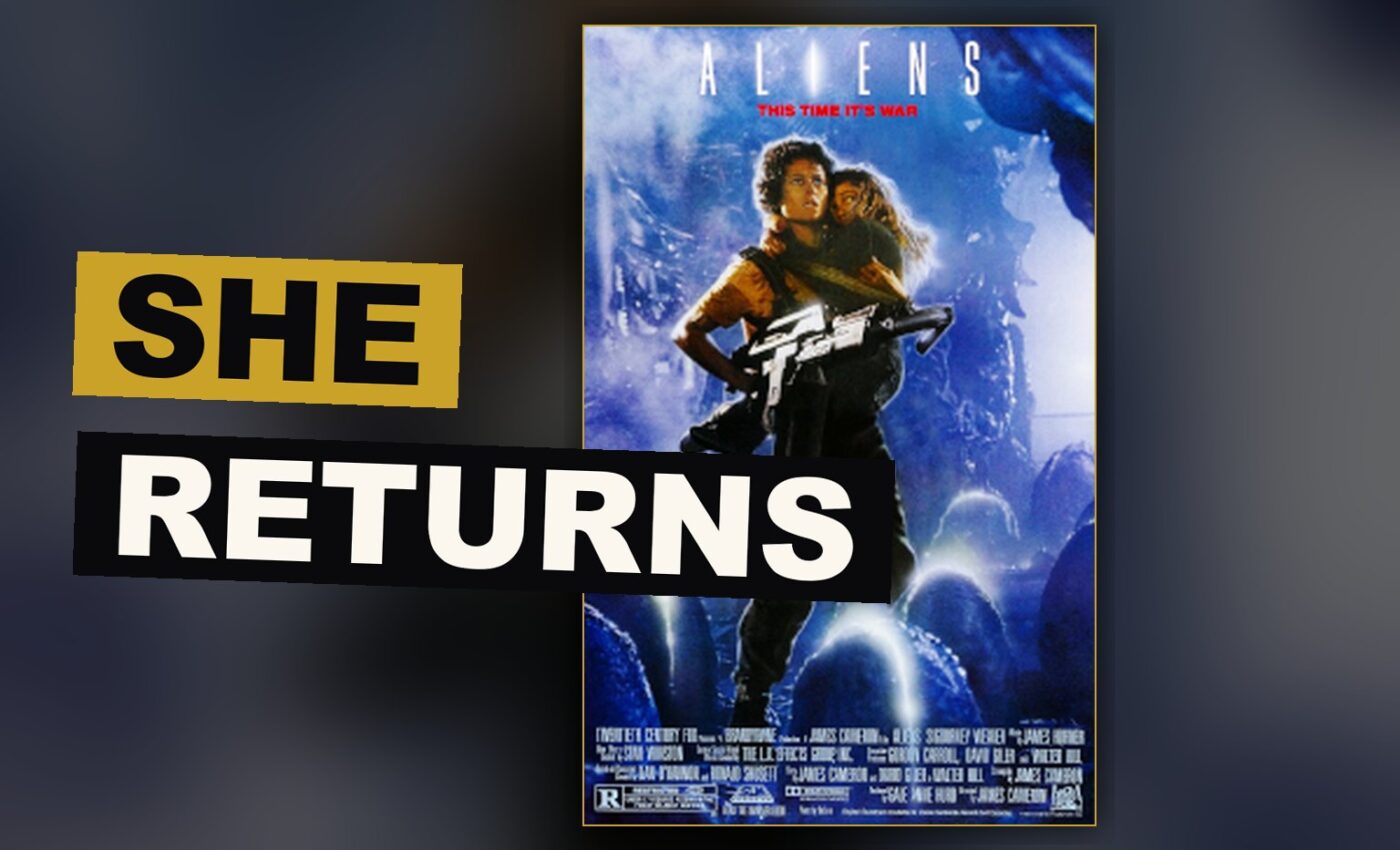
James Cameron’s Aliens swaps horror for action and science fiction, and the trade works. Sigourney Weaver returns as Ellen Ripley, the sole survivor of the Nostromo, drifting through hypersleep for 57 years before a salvage crew finds her escape shuttle. Her employers at Weyland-Yutani doubt her account of alien eggs on the exomoon LV-426. Then the colony there goes quiet.
A Sequel That Took Years to Reach the Screen
Despite the success of Alien, the follow-up stalled for years. Lawsuits, a lack of enthusiasm from 20th Century Fox and repeated management changes kept it grounded. Cameron, relatively inexperienced, was hired to write a story in 1983 on the strength of his scripts for The Terminator and Rambo: First Blood Part II. The project stalled again until new Fox executive Lawrence Gordon pushed for it. Principal photography ran from September 1985 to January 1986 on a budget of roughly $18.5 million, and the shoot was rife with conflicts between Cameron and the British crew at Pinewood Studios.
Weaver, Biehn and a Girl Named Newt
Weaver initially rejected offers to return. She had to be convinced Aliens was not being made only for money. She took $1 million and a cut of the box-office profits, the highest salary of her career at the time.
The supporting cast does the heavy lifting:
- Michael Biehn as Corporal Dwayne Hicks
- Paul Reiser as the company man Carter Burke
- Lance Henriksen as Bishop, the android Ripley cannot bring herself to trust
- Carrie Henn as Newt, the colony’s only surviving child
Cameron wanted an unknown for Newt. Agents found Henn at school in Lakenheath, England. She had no acting experience. Cameron said she had a “great face and expressive eyes.”
Down Into the Processing Station
The Marines land on LV-426 and find the colony battle-ravaged, with two live facehuggers in containment tanks. The only colonist left is Newt. The team follows the other colonists’ signals beneath a fusion-powered atmosphere processing station, descending into corridors coated in alien secretions. At the center: opened eggs, dead facehuggers and cocooned colonists serving as incubators.
A newborn alien bursts through a colonist’s chest. The Marines kill it. That rouses the adults, who ambush them and kill or capture most of the unit. Gorman, the inexperienced commanding officer, panics. Ripley takes command and rams an armored personnel carrier into the nest to pull Hicks, Hudson and Vasquez out.
The Stowaway on the Dropship
Hicks orders the dropship to recover the survivors. A stowaway alien kills the pilot, and the escape route collapses. The tagline — “This time it’s war.” — is not marketing noise. Cameron spends the back half of the 137 minutes earning it.
What Cameron Gets Right
The action is the draw, and it holds up. What makes Aliens more than a body count is Ripley’s distrust of Bishop, rooted in what the Nostromo’s android Ash did: betraying its crew to protect the alien on company orders. Henriksen plays that suspicion straight, and the film is better for refusing to wink at it.
Why the Intensity Is the Point
Aliens is a sequel that changes genre without losing the dread underneath. Weaver carries it, and the Marine ensemble gives the film a texture the first one never had. The intensity that some reviewers found excessive is the point. It is a hard, loud, efficient machine, and it still runs.
Get the Notebook.
The day's best stories and every fresh verdict, in plain English, in your inbox by seven. One email a day, no more.


