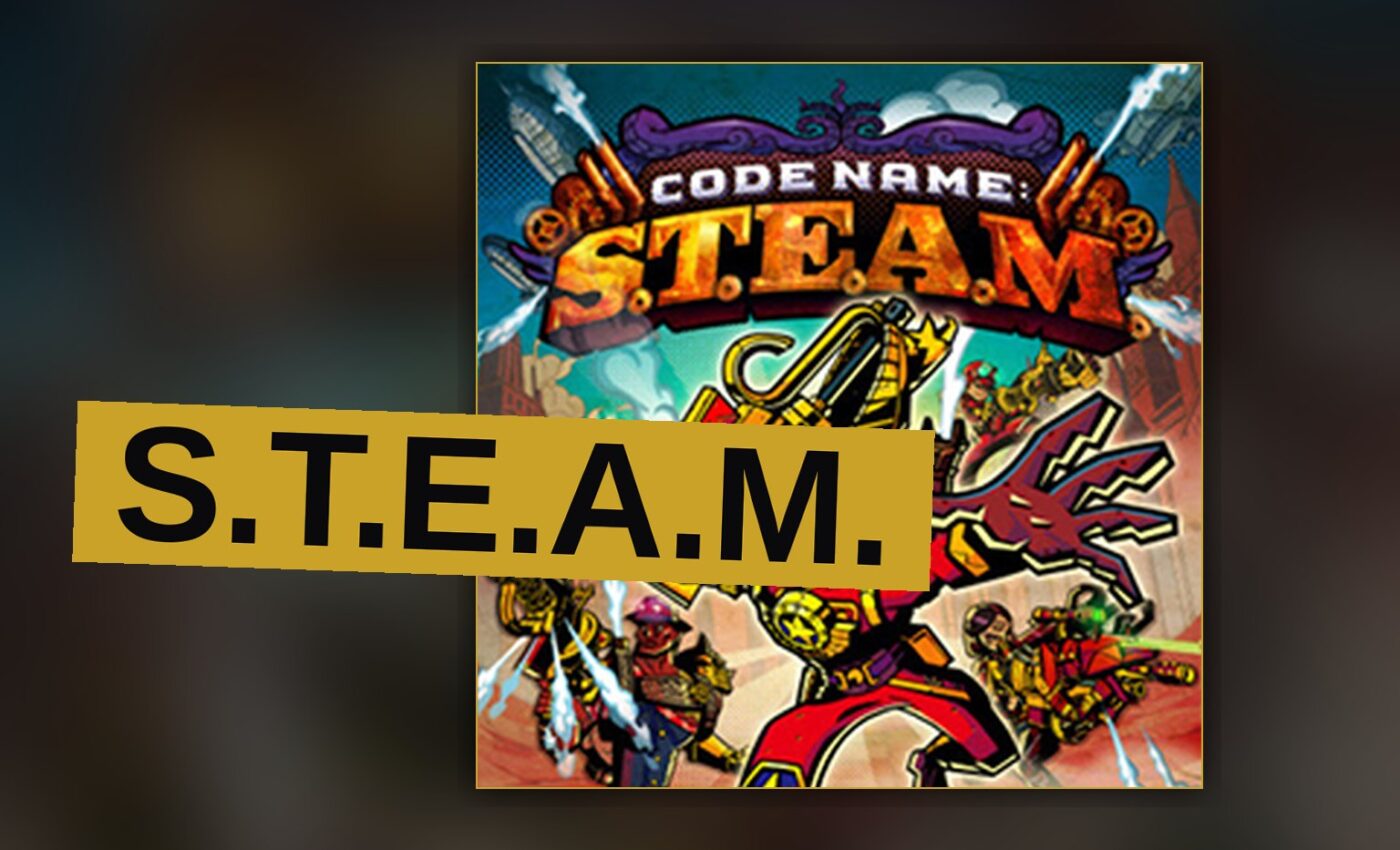
Code Name S.T.E.A.M. is a strange beast. It is a tactical role-playing game built around a cast of literary characters pulled from classic stories, and it wants very badly to be clever. It mostly succeeds, but it stumbles often enough that its ambitions outpace its execution. This is a game that loves its source material more than it loves its own systems, and that love sometimes gets in the way of fun.
The premise is simple on paper. You lead a team of heroes from literature—Dracula, Robin Hood, Frankenstein’s monster—against an invasion of alien insects. The twist is that the battles are fought in real-time, with each character able to move and act independently while you give commands from a separate screen. It sounds like a bold idea, and in theory it is. In practice, it is a mess of menus and a slow pace that keeps the player at arm’s length from the action.
Trailer, via Nintendo of America.
The Cast and Their Quips
The roster is the game’s strongest asset. Each character is drawn from a different work of fiction, and the developers have clearly spent time studying their personalities. Dracula speaks in brooding, theatrical lines about honor and betrayal. Robin Hood cracks jokes about the nobility. Frankenstein’s monster is awkward and sincere. The dialogue is witty, and the writers lean into the absurdity of casting these figures as soldiers.
The quips during battles are particularly memorable. After a kill, a character might remark on:
- the quality of the insect’s wings
- the shape of its carapace
- the color of its exoskeleton
These moments are small, but they add a layer of personality that a more straightforward strategy game would never bother with. It is the kind of detail that shows care, even if the underlying systems do not always match it.
The Real-Time Mess
The real-time element is where Code Name S.T.E.A.M. falls apart. Battles are fought on a grid, with each character moving independently. You issue orders from a separate screen, telling a character to move, attack, or wait. The problem is that the interface is clunky, and the game rarely tells you why a command failed or what the enemy is doing.
This creates a frustrating loop. You tell a character to move to a specific square, and nothing happens. You check the other screen, and the character is still standing there. You try again, and the same thing occurs. The game expects you to guess what is blocking the path, or what rule is preventing the action. It is a system that works in theory, but in practice it demands patience and guesswork.
The pacing suffers too. Battles can drag on for minutes, especially in the early hours, as you learn the rhythm of issuing commands and waiting for responses. The game tries to mitigate this with a fast-forward option, but it is a stopgap, not a solution. The core problem is that the real-time format does not mesh well with the genre’s need for quick decision-making.
The Story and Its World
The story itself is a thin shell. You are told that an alien force is invading Earth, and your job is to stop it. That is about it. The narrative does not spend much time exploring why the aliens are here, or what the consequences of the war are. Instead, it leans on the characters’ banter and the occasional plot device to keep things moving.
The world is similarly shallow. The game is set in a generic, vaguely European city, with a few locations that stand in for different regions. There is no sense of place, no lore to dig into, and no real stakes beyond the immediate battle. The result is a campaign that feels more like a series of puzzles than a story.
That is not necessarily a bad thing. Some players will enjoy the tactical challenges without caring about the plot. But the game does not make the distinction clear. It asks you to invest in these characters, only to offer them a story that barely rises above filler.
The Technical Woes
The game is not technically ambitious. The graphics are competent but unremarkable, and the sound design is serviceable. The biggest technical hurdle is the interface, which is slow to respond and often confusing. Menus are buried beneath layers of options, and the game rarely offers clear feedback when something goes wrong.
There is also a problem with the difficulty curve. Early fights are forgiving, which can make the learning curve feel gentle. Later fights, however, ramp up suddenly, throwing new enemies and tactics at you without warning. This creates a frustrating experience for players who expect a steady progression.
The multiplayer mode is a mixed bag. It allows you to play with friends online, using your own custom teams. The mode is fun, but it suffers from the same issues as the main campaign: clunky controls and unclear feedback. It is a feature, not a flaw, but it is a feature that needs polish.
The Numbers Behind the Game
| Feature | Strength | Weakness |
|---|---|---|
| Character roster | Diverse, well-written | Shallow story |
| Real-time combat | Novel concept | Clunky interface |
| Multiplayer | Fun with friends | Same issues as campaign |
| Difficulty curve | Gentle start | Abrupt spikes later |
The game also includes a few modes that extend the experience. One lets you build your own missions, complete with enemy placements and rewards. Another lets you fight waves of enemies in a survival-style setup. These modes are a nice addition, but they do not address the fundamental problems with the core gameplay.
What Works and What Does Not
The best moments in Code Name S.T.E.A.M. come when the game stops trying to be clever and simply lets you enjoy its characters. A well-timed joke, a clever quip during a battle, a surprising move by a teammate—all of these shine brightly. The worst moments come when the game loses sight of the player, burying you in menus and unclear feedback.
The game’s strengths are its heart. The developers clearly love the characters they are working with, and that affection shines through in the writing. The weaknesses are structural. The real-time combat, the slow pacing, and the opaque interface all conspire to make the game harder to enjoy than it should be.
It is a game that is better than its reputation suggests, but worse than its ambition promises. The final score reflects that tension: 6.8 out of 10.
Get the Notebook.
The day's best stories and every fresh verdict, in plain English, in your inbox by seven. One email a day, no more.