Shenmue III Is a Faithful, Stubborn Return That Never Justifies Its Scale
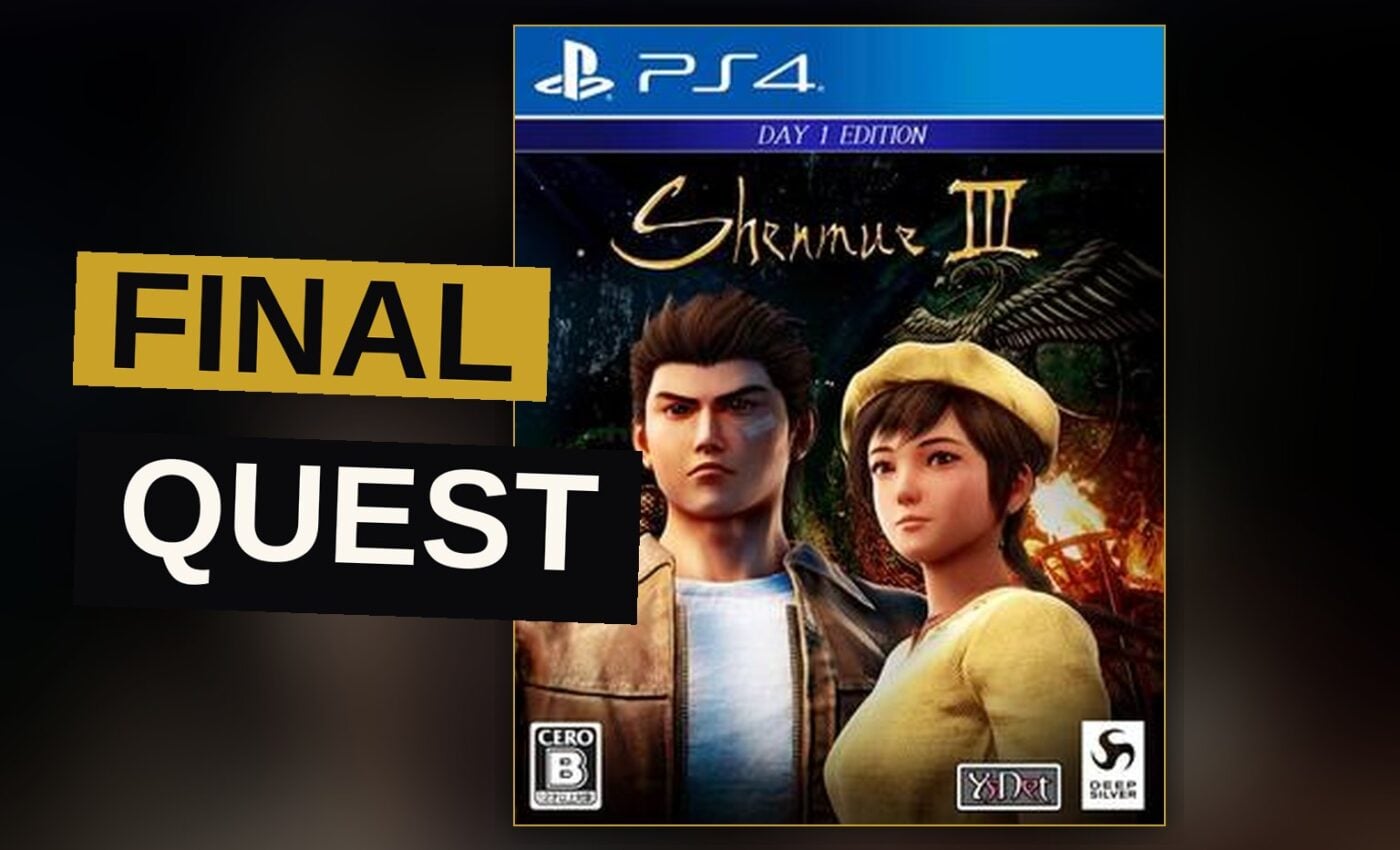
Shenmue III arrived in 2019, eighteen years after Shenmue II, and it carries the weight of that gap in every frame. Developed by Ys Net and published by Deep Silver for PlayStation 4 and PC, the game resumes the story of teenage martial artist Ryo Hazuki in the mountains of Guilin, China, in 1987. It is a faithful continuation and a stubborn one. It is also, at 6.8 out of 10, a game that satisfies the faithful without ever quite justifying its own scale.
- Platforms: PlayStation 4, PC (Microsoft Windows)
- Release year: 2019
- Kickstarter target: $2 million USD
- Time to hit target: under eight hours
- Total raised: over $6 million
- Score: 6.8 of 10
Trailer, via Shenmue 3 Official.
Bailu Village and the Phoenix Mirror
The game opens on March 21, 1987. Ryo has come from Yokosuka, Japan, to Guilin in search of his father’s killer, Lan Di. He meets Shenhua Ling, a new travelling companion, and learns of a legend from her village that foretold their path together.
Shenhua suspects Lan Di and the Chi You Men abducted her adoptive father, Yunshen Yuan, a stonemason. Ryo and Shenhua find that thugs have raided several stonemasons looking for the Phoenix Mirror, which Ryo brought from his father’s dojo. Another stonemason, Guowei Xu, is also missing.
Ryo defeats two of the thugs, then is defeated by their leader, Yanlang. He convinces JiuSi Sun, a local martial arts master, to teach him a powerful Bajiquan move, and uses it to defeat Yanlang. After that win, Shenhua interrogates Yanlang and learns her father and Xu are in Niaowu. Chai, a familiar face, attacks them; during the attack, Chai reveals Yuan and Xu have been taken to Niaowu. Ryo drives him off.
The plot is dense with lore. Ryo learns Lan Di’s father, Zhao Sunming, visited Bailu Village with Ryo’s father to train under the local grandmaster, and died years later under mysterious circumstances. The phoenix and dragon mirrors, it turns out, were made by Yuan’s grandfather at the request of the Chinese emperor, and their creation ties to the local Verdant Bridge, built to honor a Chinese envoy.
That is a lot of story. Shenmue III tells it slowly, and the slowness is the point and the problem.
A Stamina System That Fights the Player
The structure is the same as the earlier games: open-world exploration in Guilin, brawler battles, quick time events, a day-and-night cycle, variable weather, non-player characters with daily schedules, and minigames. Ryo earns money by gambling, fishing, wood chopping, forklift driving, and selling foraged herbs. The 3D fighting system resembles Virtua Fighter; Ryo practices moves to increase their power, and the system was redesigned to be accessible to less experienced players.
Shenmue III adds a stamina system. Ryo’s hit points decline as the player explores. If they drop too low, he loses the ability to sprint. Sleeping and eating restore them.
This is the design decision that defines the game. It turns ordinary movement into a resource to manage, and it grinds against the pace the story wants. The world is built for wandering; the stamina bar punishes it.
Kickstarter History and the Weight of $6 Million
The money behind Shenmue III is part of the story. Director Yu Suzuki conceived Shenmue as a saga spanning multiple games. The original Shenmue and Shenmue II were developed by Sega AM2 and published by Sega for the Dreamcast in 1999 and 2001. The first game was the most expensive video game ever developed at the time, though that development also covered some of Shenmue II and groundwork for future games. They earned positive reviews and a cult following, and were commercial failures.
At E3 2015, Suzuki launched a Kickstarter campaign to crowdfund Shenmue III, with Sega licensing Shenmue to his company Ys Net. The campaign met its $2 million target in under eight hours and ended the following month having raised over $6 million, making it the highest-funded video game in Kickstarter history at the time. Further funding came from Sony and Deep Silver, plus crowdfunding on other platforms. The development team was much smaller than that of previous Shenmue games. In this paper’s view, the seams show.
Niaowu and the Red Snakes
The back half moves Ryo and Shenhua by boat to Niaowu, where a gang called the Red Snakes holds Yuan and Xu. Ryo reunites with his Hong Kong ally Wuying Ren, who came to Niaowu chasing the treasure tied to the mirrors.
At the Red Snakes’ hideout, Ryo and Ren are defeated by their boss, Ge, who uses an animalistic fighting style. Ryo meets a cormorant fisherman, Grandmaster Bei, who teaches him a Bajiquan move. Earlier, Ryo convinced Sun to teach him a powerful Bajiquan move to beat Yanlang, and a village elder helped them find a map to the treasure connected to the mirrors.
The structure repeats: find a master, learn a move, win the fight. It worked in 1999. Here it reads as a loop, and the smaller team leaves the seams visible.
What Shenmue III Gets Right, and What It Costs
The faithfulness is real and it is the game’s best argument. The daily schedules, the weather, the minigames, the slow accumulation of clues — this is Shenmue as Suzuki always built it, and nobody else makes games like this. For players who waited eighteen years, Bailu Village and Niaowu deliver the texture they came for.
But faithfulness is not the same as growth. The stamina system adds friction without adding meaning. The combat redesign lowers the barrier without deepening the fights. The plot advances the saga while leaving the central search unresolved. The Kickstarter money bought continuation, not resolution, and the game is honest about that in a way that is hard to admire.
Shenmue III is a game for the people who funded it. Everyone else gets a slow, specific, occasionally beautiful artifact of a saga that still has not arrived at its end. That is worth something. It is not worth more than 6.8.
Get the Notebook.
The day's best stories and every fresh verdict, in plain English, in your inbox by seven. One email a day, no more.