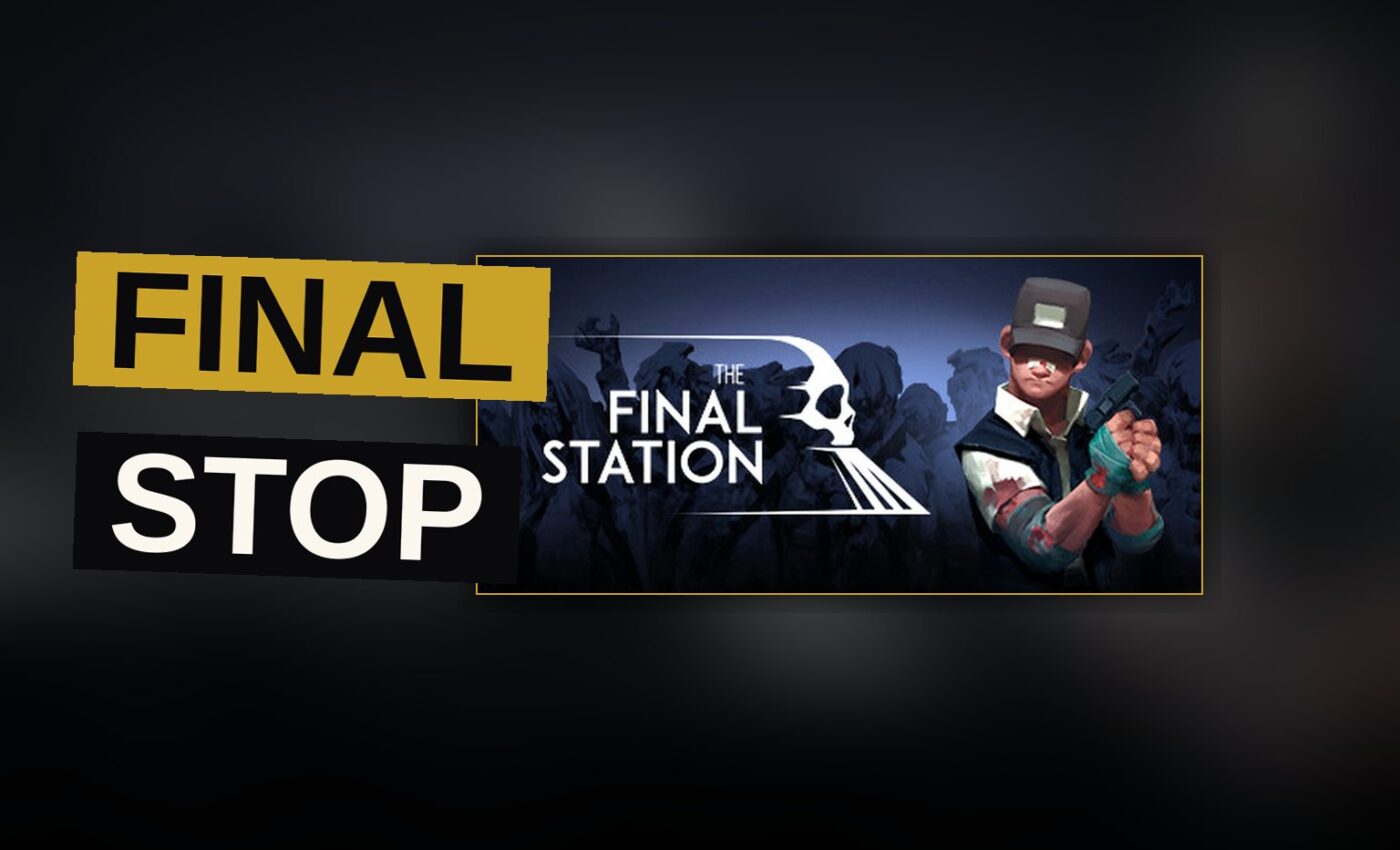
The Final Station asks a simple question: what happens after the disaster? It is a train simulation about survival, set in a world that has ended, and it answers that question with quiet, steady dread. The game follows a lone survivor who boards a subway car to escape the city, but the journey is not fast. It is slow, deliberate, and packed with people who are not going to make it out alive.
The game is built for PS4, Linux, PC, and Mac, and it runs on a simple premise: you manage a train, keep its systems running, and protect the passengers from the chaos outside. That premise is small, but it carries a lot of weight.
Trailer, via tinyBuildGAMES.
The Train and Its Passengers
The train itself is the main character. It has a power grid, a ventilation system, and a door that can be locked. These systems break down, and the player must repair them. The tools are limited, and the parts are scarce. That scarcity drives most of the tension in the game.
The passengers add to it. Each one has a name, a face, and a story. Some are kind. Some are desperate. Some will betray you. The game tracks their health, their morale, and their needs. Feed them, and they trust you. Ignore them, and they panic. Panic spreads fast on a train that is running low on food and oxygen.
The writing leans on dialogue trees, and the choices matter. A wrong word to a passenger can trigger a fight, and a fight on a train that is already sinking is dangerous. The game does not punish you for being cruel, but it punishes you for losing control.
The World Outside
The setting is a ruined city, and the game shows it through the windows of the train. The scenery is sparse but effective. The sky is gray, the streets are empty, and the buildings are crumbling. The sound design sells the isolation. The wind, the distant screams, and the occasional roar of something unseen all contribute to a sense of dread that never fully lets up.
The world is not explorable in the way a traditional open-world game would allow. The train moves along a fixed route, and the stations it stops at are brief, tense moments. The game uses these stops to deliver content, not to give the player freedom. That focus keeps the game tight, but it also limits the scope of what can happen.
Mechanics and Difficulty
The core loop is resource management. Water, food, medicine, and fuel all run out, and the player must find ways to replenish them. This is where the game shines. The systems are interconnected, and neglecting one can collapse the whole operation. A dead generator means no water pumping, which means no clean water, which means illness, which means death.
The difficulty curve is steep. Early on, the game feels generous. Later, it feels ruthless. A mistake at the wrong moment can cost you half your passengers, and the game does not offer many second chances. This is a game about consequences, and it treats them seriously.
The controls are simple. The player clicks to interact, moves objects, and makes decisions. There is no combat in the traditional sense, but there is violence. The game simulates it through the actions of panicked passengers, and the player must mediate those conflicts while keeping the train running.
Story and Pace
The narrative is thin but effective. It follows a single survivor named Alex, who boards the train with a plan to escape the city. The story unfolds through text, through the conversations with other passengers, and through the environmental details scattered across the stations. It does not explain everything, and that ambiguity works in its favor.
The pacing is slow, and some players will find that frustrating. The game spends a lot of time showing the train moving from station to station, and not all of that time is engaging. There are stretches where the player is simply waiting for the next stop, repairing a system, or managing a passenger’s complaint. The game is better when it is focused on a crisis, but those crises are few and far between.
Sound Design
The audio is a strong element. The train hums, the engine rumbles, and the announcements crackle over the speakers. The music is minimal, mostly ambient, and it stays out of the way. The sound of footsteps, of doors slamming, and of the wind howling through the broken windows all contribute to a sense of immersion that the visuals sometimes struggle to match.
The voice acting is competent but unremarkable. The passengers speak with a weary, hollow quality that fits the setting, but the delivery is not memorable. The game is more about the systems than the performances, and that is fine.
Technical Performance
The game runs well on PS4, PC, Mac, and Linux, and it looks serviceable rather than striking. The art style is minimalist, with pixelated textures and a muted color palette. It is not trying to be pretty, and it does not need to be. The focus is on the systems, not on the spectacle.
There are a few technical issues. The frame rate dips occasionally, and the loading times between stations can be long. These are minor complaints, but they are noticeable in a game that otherwise runs smoothly.
Comparison to Other Games
The Final Station shares DNA with other survival games, but it differs in scale. It is smaller than a game like The Last of Us, which has a larger cast and a more expansive world. It is also more mechanical than a game like Gone Home, which focuses on exploration and discovery. The game sits somewhere in between, using the train as both a setting and a tool.
The closest comparison might be a game like Don’t Starve, which also uses resource management as its central mechanic. The Final Station is less chaotic than Don’t Starve, though. It is more controlled, more focused, and more grim.
Where It Falls Short
The game is not perfect. The pacing drags in places, and the lack of exploration can feel restrictive. The story is thin, and the characters are often reduced to archetypes rather than individuals. The game also lacks a multiplayer mode, which some players might have wanted.
The difficulty spikes can also be punishing. A player who is not paying attention can lose a large portion of their passengers in a single mistake, and the game does not always communicate clearly what is happening. This can lead to frustration, especially during the later stages of the game.
The Final Word
The Final Station is a solid, if modest, entry in the survival genre. It does not reinvent the wheel, but it executes its systems well. The train simulation is a clever framing device, and the resource management is consistently engaging. The story is a vehicle for the gameplay, and it does not disappoint in that role.
The game is best enjoyed at a steady pace, with patience. It rewards careful planning and quick thinking, and it punishes carelessness. It is not a game for everyone, but it is a game that knows what it wants to be.
KEY FACTS BOX
– Title: The Final Station
– Platforms: PS4, Linux, PC, Mac
– Genre: Survival simulation
– Focus: Train management, resource allocation, passenger survival
– Critical score: 7.2/10
The Final Station earns a score of 7.2 out of 10.
Get the Notebook.
The day's best stories and every fresh verdict, in plain English, in your inbox by seven. One email a day, no more.