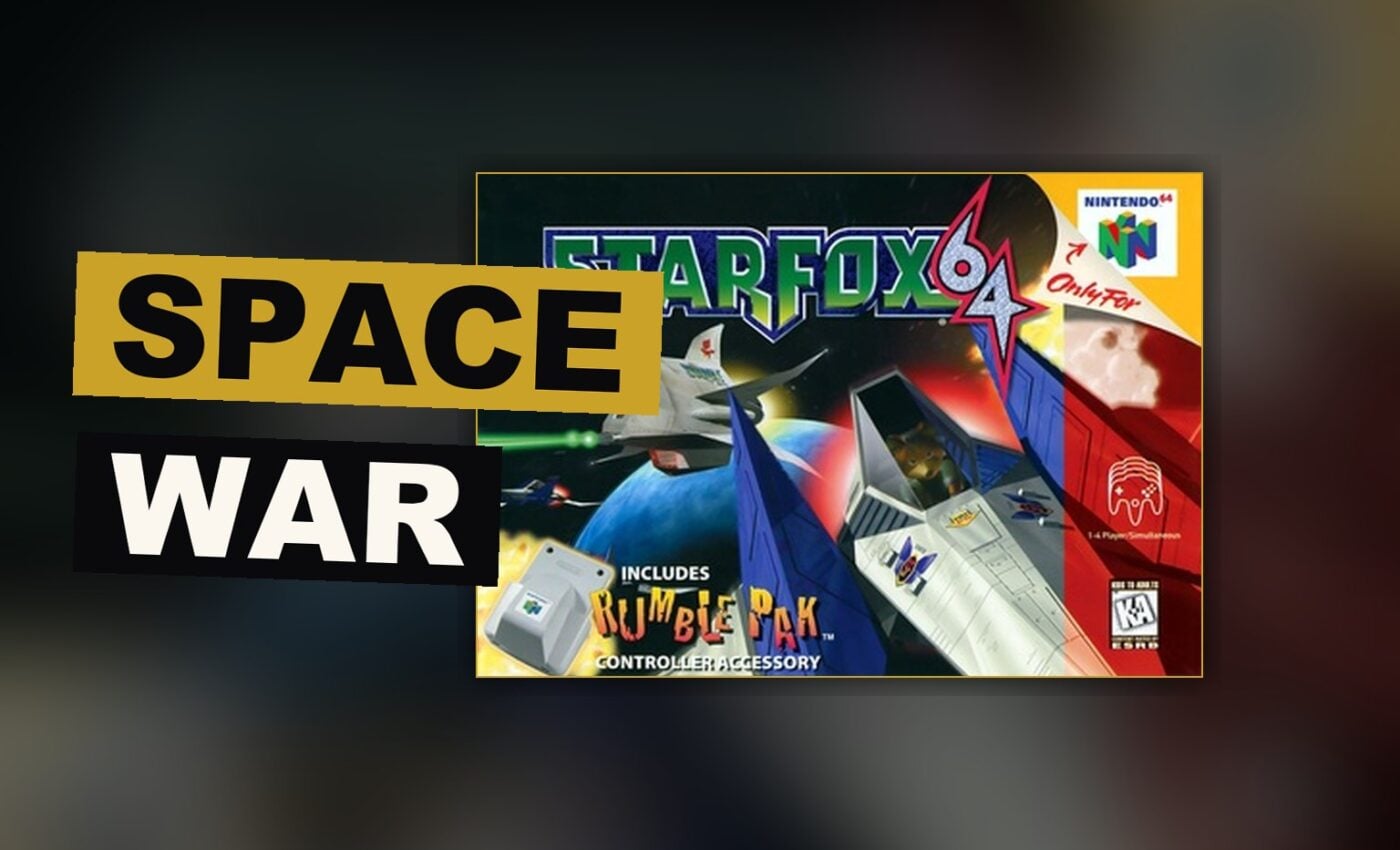
Nintendo developed Star Fox 64 after canceling Star Fox 2 for the Super Nintendo. The 1997 sequel arrived as the second game in the series, built by Nintendo Entertainment Analysis & Development and published by Nintendo for the Nintendo 64. It sold more than 4 million copies, the best-selling game in the series and the ninth best-selling Nintendo 64 game. The game shipped in Europe as Lylat Wars.
Fox McCloud and the Lylat System
The story is simple and it works. Andross, a disgraced scientist, is exiled to Venom by General Pepper for nearly destroying Corneria with biological weapons. Five years later, Pepper detects suspicious activity on Venom and hires the Star Fox team — James McCloud, Peppy Hare, and Pigma Dengar — to investigate. Pigma betrays them. Andross captures James and kills him. Peppy barely escapes with his life.
Two years after that, Andross attacks across the Lylat system. Pepper summons a new Star Fox team, led by James’ son, Fox McCloud. Peppy returns as mentor. Falco Lombardi and Slippy Toad fill out the roster. Fox is the only playable character in Story Mode, flying the Arwing through most of the game.
The supporting cast does real work. Slippy scans bosses and puts their shields on your screen. Peppy calls out advice mid-flight. Falco looks for shortcuts and alternate routes. Each wingman helps differently, and each one can get chased into your field of view, forcing you to shoot down the pursuer before the wingman retreats to the Great Fox for repairs. That character sits out the next stage unless enough time passes.
Corridor Mode and All-Range Mode
Star Fox 64 is a 3D rail shooter. Most stages run in Corridor Mode, which pins Fox’s vehicle to an on-rails path straight forward. You dodge obstacles, somersault behind enemies, and deflect fire with the barrel roll — an aileron roll in real aviation terms, though nobody at Nintendo cared. The Arwing and the Landmaster tank both charge laser cannons for a lock-on shot.
Some stages, most boss fights, and multiplayer move to All-Range Mode. There the vehicle moves freely inside a large arena, and the Arwing gains a U-Turn to reverse direction. Power-ups include silver and gold rings that refill shields, weapon upgrades, wing repairs, extra lives, and Nova bombs.
The game contains 15-plus levels and three difficulty paths — easy, medium, difficult — with forward-scrolling stages alongside full 3D realms. A submarine level breaks up the Arwing action, and the 8-megabyte cartridge carries voice samples from 23 different characters instead of the animal noises of the original.
Star Fox 64 was the first game to feature Rumble Pak support.
That first matters. Nintendo bundled the Rumble Pak with retail copies before selling a standalone version. The rumble is a gimmick in isolation. In a rail shooter where you are constantly clipping shields and dodging projectiles, the feedback tells you something your eyes miss.
A Three-Part Multiplayer Mode
Multiplayer splits a four-player screen three ways. It is thin by modern standards and it does not pretend otherwise. The mode runs at speed, and that is most of what it has to offer.
The branching paths carry the replay value. Star Fox 64 is short if you fly the easy route once. It is not short if you chase every alternate route and every stage the difficult path unlocks. The level count is real, but the paths are the reason people kept the cartridge in the slot.
What Star Fox 64 Gets Right
The controls are the whole argument. Precise, responsive, and tuned so that a barrel roll lands exactly when you need it. Voice acting was uncommon on the Nintendo 64 in 1997 and Star Fox 64 uses it to give the team personality between firefights. The characters talk during missions. It makes the squad feel present rather than decorative.
The ranking of what matters here:
- The controls, which hold up decades later.
- The branching paths, which turn a short game into a long one.
- The wingmen, who create real tactical pressure.
- The voice work, which gives the team a pulse.
- The multiplayer, which is fun and forgettable.
The weak spots are honest ones. The multiplayer modes lack the depth of the campaign. The story is thin, and Andross is a mad scientist with a grudge and not much else. The game knows this and never asks you to sit through a cutscene longer than it needs.
Star Fox 64 was remade for the Nintendo 3DS as Star Fox 64 3D in 2011, and for the Nintendo Switch 2 as Star Fox in 2026. It also served as the basis for Star Fox Zero on the Wii U in 2016, which borrowed ideas from the unreleased Star Fox 2. Nintendo keeps returning to this game because it solved something the series has never fully solved again: how to make a rail shooter feel like it is listening to you.
The 4 million copies and the ninth-place spot on the Nintendo 64 sales chart are history now. What matters is that the barrel roll still feels right, the wingmen still get themselves in trouble, and the paths still pull you back for one more run. That is the whole case for Star Fox 64, and it is enough.
8.8 of 10.
Get the Notebook.
The day's best stories and every fresh verdict, in plain English, in your inbox by seven. One email a day, no more.