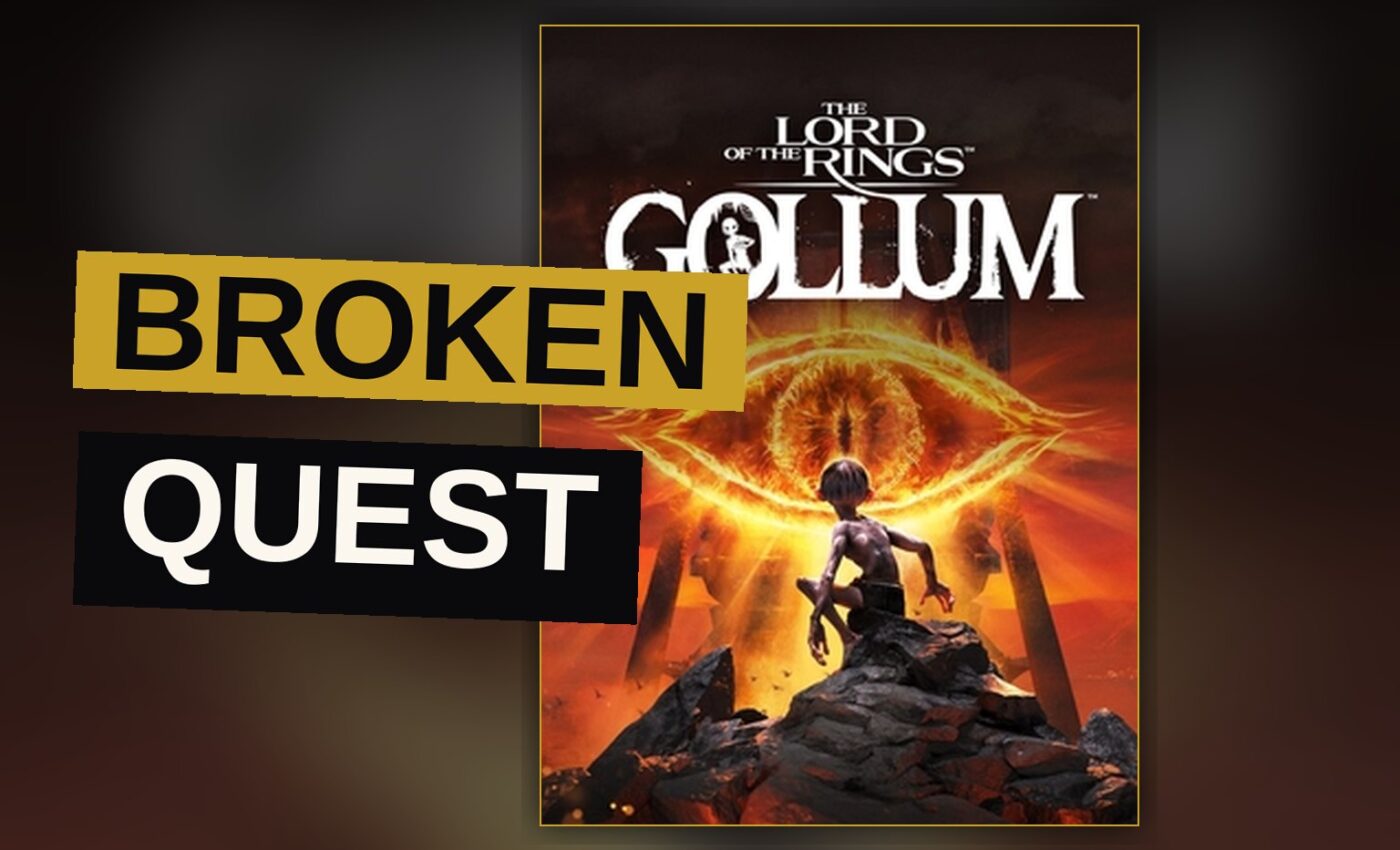
The Lord of the Rings: Gollum put players in control of the most pitiable creature in Middle-earth. Daedalic Entertainment developed the action-adventure game. Nacon and Daedalic published it. It launched on 25 May 2023 for PlayStation 4, PlayStation 5, Windows, Xbox One and Xbox Series X/S, with a Nintendo Switch version also listed. Metacritic ranked it the worst game of 2023.
The score is 3.4/10. That is not a joke at the game’s expense. It is what happens when a stealth game is built around a character who cannot fight, cannot run, and cannot be trusted to reach a ledge.
Trailer, via Nacon.
Gollum Slips Past Guards in Mordor
Players take the role from a third-person view. Gollum climbs around levels, using marked ledges and vines to cross environments. In hostile areas the player must stay away from guards. Getting caught triggers an instant game over. Long grass and shadows give the player cover. A helmetless orc can be taken out. A button press highlights useful objects or waypoints when the player is lost or confused.
Periodically the player selects between dialogue representing the two sides of Sméagol. The game is set primarily in Mordor and other areas within Middle-earth.
None of that reads like a bad design document. It reads like a decent one. A stealth game with no combat fallback, where every guard is lethal and every shadow matters, is a real idea. The problem is what Daedalic built around it.
Cirith Ungol, Barad-dûr and Mirkwood
The story sits between the events of The Hobbit and The Fellowship of the Ring. The player guides Gollum through locations including Cirith Ungol, Barad-dûr and Mirkwood, as he tries to find Bilbo Baggins and retake the One Ring while battling and avoiding Sauron. The game depicts Gollum’s capture, as shown in Tolkien’s Unfinished Tales.
The plot runs through the year 3017 of the Third Age, 66 years after Bilbo Baggins takes the One Ring from Gollum in the Misty Mountains. Aragorn captures Gollum in the Dead Marshes and turns him over to Gandalf. Gollum had reached the confines of Mordor in 2980, meeting Shelob. He retells the events of the previous five years to Gandalf.
In 3012 Gollum is in Mordor. He follows a bird into Mount Doom. He follows several orcs and tries to ambush them, and is easily taken down. Three Nazgûl surround him and force him to tell them that Baggins took the One Ring to The Shire.
Gollum wakes in a slave pit beneath Barad-dûr. A frail man teaches him the work expected of him. Gollum helps the frail man steal tower plans and blow up a bridge in a bid for freedom, but orcs catch him. Facing execution, he blames either the frail man or an orc who steals his food, and is freed. The next day he dispenses food in the Breeding Pits. He is taken to the Tower and meets the Candle Man, who questions him. Gollum blames either a mine orc or himself. His life is spared.
Weeks later he hatches a bird egg, names the bird “Little One,” and befriends it. The Candle Man forces him to serve. Years later Gollum befriends a new prisoner and helps him survive prison life. Gollum escapes with his friend, and his friend is captured and eaten by Shelob. Elves of Mirkwood capture Gollum and Gandalf interrogates him.
That is a real story. It has a shape, a middle and a betrayal. It is also almost entirely a story about waiting, serving and surviving, which is a hard thing to hand a player who has been promised stealth.
The Two Halves of Sméagol
The dialogue choice between Gollum and Sméagol is the game’s one clear claim to invention. Tolkien’s creature argues with himself. A game that lets you pick a side, repeatedly, across a prison sentence measured in years, could say something about how a person becomes what Gollum became.
The Lord of the Rings: Gollum does not get there. The choices arrive periodically, between stretches of climbing and hiding, and they do not gather into a character. A player selects a line. The line passes. The creature stays the same.
| Element | What the source describes | What it delivers |
|---|---|---|
| Perspective | Third-person | Gollum on screen at all times |
| Traversal | Marked ledges and vines | Climbing as the main verb |
| Stealth | Guards, long grass, shadows | Instant game over on capture |
| Combat | Helmetless orcs can be taken out | One narrow exception |
| Choice | Dialogue between Gollum and Sméagol | Periodic, not cumulative |
| Setting | Mordor, Cirith Ungol, Barad-dûr, Mirkwood | Middle-earth as backdrop |
The table is the review. Every row is a promise the source material makes and a delivery that does not match it. The stealth is thin. The combat is a single exception. The choice system does not build.
A Commercial Failure With a Body Count
The game was a commercial failure and drew negative reviews. Poor reception and sales caused Daedalic Entertainment to cancel plans for a second Lord of the Rings game and close its development division, laying off staff and moving to a publishing-only model. It was later reported that the company had imposed poor working conditions, which affected development of Gollum.
That is the part worth weighing. A 3.4/10 is a score. The closure of a development division and the loss of staff jobs is the actual cost of this release, and it lands on people who did not set the launch window.
The game was announced in March 2019. The delays are not the story. The staff who worked through them are.
What 3.4 Out of 10 Means Here
The Lord of the Rings: Gollum is not interestingly bad. It is bad in the way that a game built on one good idea and no follow-through is bad. The idea — a stealth game with no combat, where the protagonist is weak, hunted and divided — is worth someone trying again. This version does not earn the attempt.
Metacritic ranked it the worst game of 2023. That ranking is a fact about the year, not a verdict on the design. Plenty of worse games ship quietly and hurt no one.
What sets The Lord of the Rings: Gollum apart is not the 3.4. It is that poor reception and sales caused Daedalic to cancel plans for a second Lord of the Rings game, close its development division, lay off staff and move to a publishing-only model. The Lord of the Rings: Gollum will be remembered less as a bad game than as the release that ended Daedalic’s development arm.
Get the Notebook.
The day's best stories and every fresh verdict, in plain English, in your inbox by seven. One email a day, no more.