Inversus is a game about color, shape and rhythm. It asks you to move through a grid of blocks, push them around, and clear the screen before the enemy closes in. That sounds simple. It isn’t. The game, made for PS4 and PC, turns a small idea into a demanding test of timing and memory, and it mostly earns that difficulty.
Trailer, via PlayStation.
The Core Idea
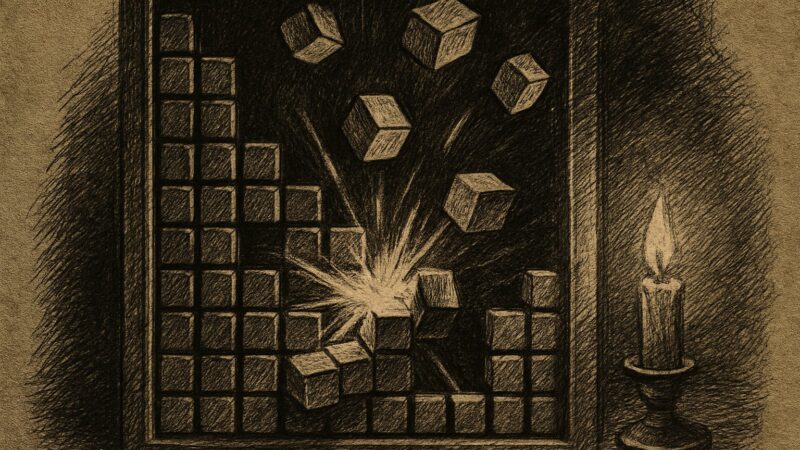
The premise is easy to explain. You control a colored shape on a grid. Other shapes try to push you off the screen. You can push back, split into copies of yourself, or build walls out of the blocks around you. The goal is always the same: make room for yourself by clearing the grid of everything else.
That core loop is the whole game. There are no guns, no health bars, no enemies to kill. Just a shape, a grid, and a constant need to find space. It sounds dull on paper. In practice, it becomes tense fast.
Learning the Rules
The early levels teach you slowly. Each new ability — splitting, pushing, building walls — arrives one at a time, and the game explains each clearly before letting you use it. This pacing is smart. It lets the game build complexity without overwhelming you.
Once you have all the tools, the game opens up. Levels start to look like puzzles, and the enemy shapes become less like foes and more like obstacles you need to outthink. The best levels ask you to plan several moves ahead, remembering where you placed walls and which direction the enemy is moving.
Splitting and Pushing
Splitting is the heart of Inversus. You can divide yourself into two or three copies, each moving at once, and the game rewards players who learn to manage multiple versions of themselves at once. It’s a clever twist on the usual action game, where one character is all you get.
Pushing is simpler but just as useful. You push the blocks around you, sending them flying in the opposite direction. The trick is learning which blocks to push, and when. One wrong push can seal you in a corner. The game punishes carelessness without ever feeling cruel.
Building Walls
Building walls is the defensive tool. You can turn any block into a wall that stops the enemy, and the game encourages you to use it often. But walls also fill the screen, and a screen full of walls is a screen without room to move.
That tension is the game’s biggest strength. You’re always weighing offense against defense, aggression against safety. The best players learn to build just enough to survive, then push through before the walls trap them.
Multiplayer Modes
Inversus includes a multiplayer mode, and it’s where the game shows its teeth. Players face off directly, trying to push each other off the screen while clearing the grid. The mode is fast, chaotic, and very unforgiving.
It’s a different animal from the campaign. The campaign teaches you patience and planning. Multiplayer demands quick reactions and a willingness to take risks. Both modes exist side by side, and both are worth playing.
Sound and Look
The visual style is clean and bright. Each shape has its own color, and the blocks behind them change color too. It’s simple but effective, giving the game a distinct identity that stays with you after you put it down.
The sound design matches the visuals. Simple, repetitive tones play over each action, building into a rhythm that matches the pace of the game. It’s not music in the traditional sense, but it does its job.
“A small idea turned into a demanding test.”
How It Holds Up
The game doesn’t reinvent the genre. It takes a simple idea and pushes it further than most games of its kind dare to go. The difficulty curve is steep, and some players will find the later levels frustrating. But frustration here feels earned, not cheap.
The campaign is short, which is a fair trade for how much it packs into its runtime. The multiplayer adds replay value, though it’s limited to a few modes.
| Mode | Focus | Length |
|---|---|---|
| Campaign | Single player puzzle | Short |
| Multiplayer | Competitive | Short |
| Splitting | Offensive | Central |
| Pushing | Defensive | Central |
| Building walls | Defensive | Central |
That table captures what the game is really about: a handful of tools used in different ways across different modes. Nothing wasted, nothing added.
Final Verdict
Inversus is a game about finding space. It asks you to think about the grid in front of you, to plan your next move, and to trust your instincts when the pressure rises. It’s not for everyone, and its short length means it won’t hold attention forever. But for the time it asks of you, it delivers a precise, satisfying experience.
Get the Notebook.
The day's best stories and every fresh verdict, in plain English, in your inbox by seven. One email a day, no more.