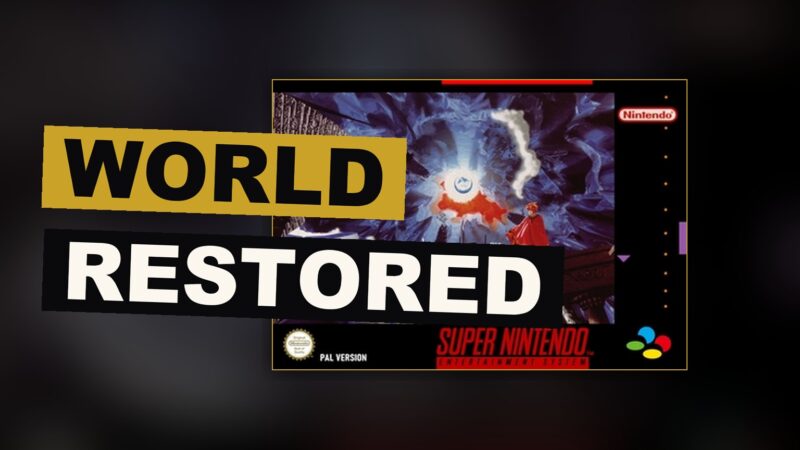
Ys Seven launched on the PlayStation Portable in Japan in September 2009. It was the first Ys game Nihon Falcom built specifically for the PSP, using the widescreen format and hardware. The seventh numbered entry marked a major redesign of the series’ combat, and that redesign shaped the combat systems of the games that followed.
Trailer, via IGDBcom.
Adol and Dogi Reach Altago
Adol Christin and Dogi arrive in Altago after the Romun Empire ends its restrictions on foreign travel to the kingdom. In the capital they intervene when local Dragon Knights threaten the sisters Tia and Maya. The two are arrested on charges of espionage. King Kiemarl then releases them from prison and summons them to his chambers, where he asks for help investigating a series of earthquakes and other disturbances across Altago.
Three Attack Types, One Party
Combat runs in real time on the field map. The active party holds up to three characters. The player controls one directly while the game’s artificial intelligence runs the other two, and can switch at any time during exploration or combat. Characters and weapons carry one of three attack types:
- Slashing, effective against soft-bodied enemies and never fully useless
- Striking, good against armored foes and at inflicting stun, but inaccurate against agile ones
- Piercing, able to reach fast or distant enemies, weaker against hard bodies
The redesign also introduced learnable combat skills, Extra Skills, and the timing-based Flash Guard mechanic.
The Five Great Dragons
The disturbances trace back to the Five Great Dragons worshipped across Altago. Each grants Adol part of its power and points the group toward a ritual meant to prevent a recurring calamity. The destruction is part of a natural cycle of creation and extinction the dragons control. Tia, descended from the people who built the ritual, means to let the cycle continue after witnessing the suffering caused by Altago’s divisions and exploitation. Her adopted sister Maya is selected as the sacrifice. Adol’s party refuses, defeats the calamity’s final form, prevents Maya’s sacrifice, and ends the cycle. Tia disappears after helping in that last fight.
A Framework That Outlasted Its Hardware
Xseed released the PSP version in North America in August 2010 and Europe that November. A Windows version came to China in 2012, and a separate port with higher-resolution rendering and 60 frames per second went international in August 2017. The PSP original carries over 30 hours of gameplay.
| Release | Platform | Date |
|---|---|---|
| Japan | PSP | September 2009 |
| North America | PSP | August 2010 |
| Europe | PSP | November 2010 |
| China | Windows | 2012 |
| International | Windows | August 2017 |
What Later Ys Games Took From This One
The party system, the three attack types, the learnable skills and Flash Guard together became the basis for the combat in Ys: Memories of Celceta, Ys VIII: Lacrimosa of Dana and Ys IX: Monstrum Nox. That framework is the real story here. The cycle plot is competent, but the mechanics carried forward.
Get the Notebook.
The day's best stories and every fresh verdict, in plain English, in your inbox by seven. One email a day, no more.